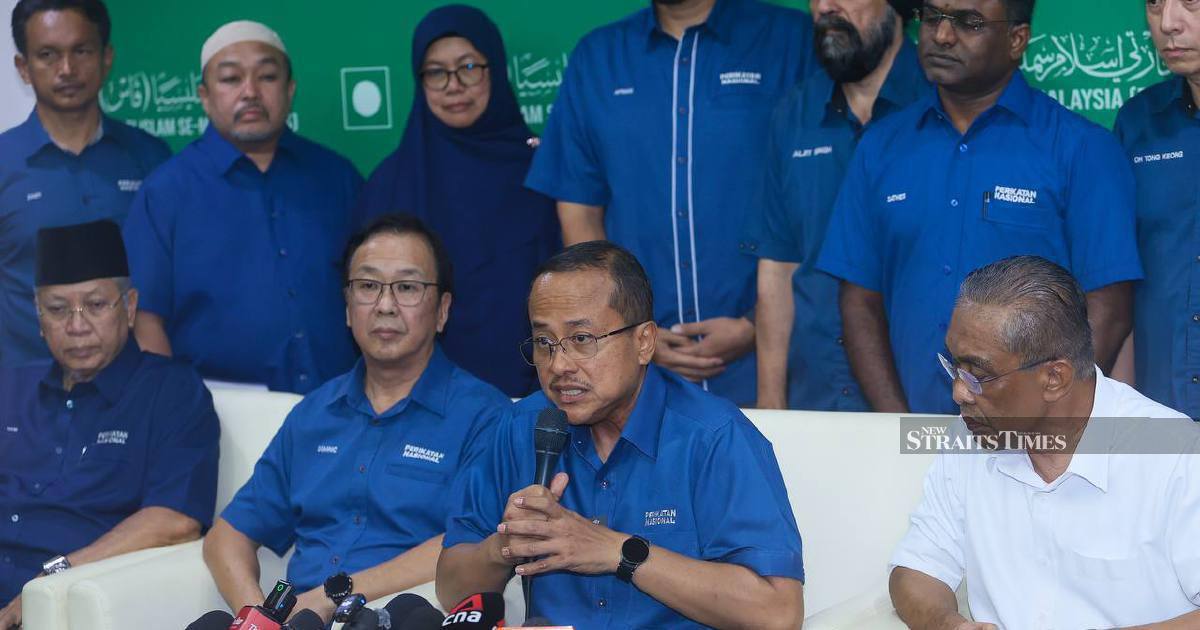
Perikatan Nasional has expanded its political coalition by accepting two new member parties, according to PN chairman Datuk Seri Dr Ahmad Samsuri Mokhtar, who announced the decision following an emergency Supreme Council gathering in Kuala Lumpur. The move reflects the coalition's ongoing efforts to broaden its political base and strengthen its position ahead of anticipated electoral challenges. However, the meeting notably bypassed discussions on contentious internal matters, signalling that PN leadership is prioritising coalition growth over resolving outstanding governance questions.
The admission of the two new parties marks a significant development for PN at a time when Malaysian politics continues to experience considerable flux. Coalition expansion typically serves multiple strategic purposes: it enhances parliamentary representation, distributes ministerial portfolios across a broader political spectrum, and potentially attracts voter interest by projecting organisational momentum. For PN, which has positioned itself as an alternative to the Pakatan Harapan-led federal government, increasing its member count strengthens its negotiating position should political realignments occur or snap elections materialise.
Whatever the identities of these incoming parties, their integration into PN's existing structure will require careful management of internal dynamics. The coalition currently comprises Parti Islam Se-Malaysia (PAS), Bersatu, and several smaller parties, each with distinct ideological foundations and regional strongholds. Adding two more actors to this already-complex political equation demands attention to resource allocation, candidate selection protocols, and decision-making procedures. The fact that Samsuri did not publicly elaborate on the parties' names or policy positions suggests PN may be managing the announcement strategically, possibly to control narrative flow or allow for gradual public familiarisation.
More striking than the admission itself was what the Supreme Council meeting did not address. The deliberate deferral of discussions concerning Wawasan—a term that could refer to either a specific political vision document or organisational framework—indicates unresolved strategic disagreements within PN's upper echelons. Whether Wawasan represents a comprehensive policy roadmap, an internal restructuring proposal, or something else entirely, its shelving suggests that PN leaders judged it safer to postpone contentious debates rather than risk deepening divisions during a pivotal expansion moment.
The logo question presents another telling omission from tonight's agenda. Political party symbols carry immense significance in Malaysian politics, functioning as visual identities that voters instantly recognise and associate with particular parties' values and track records. Logo discussions at coalition level typically arise when mergers occur, partnerships deepen, or branding strategies require adjustment. PN's decision to defer this matter alongside Wawasan suggests multiple unresolved questions about the coalition's long-term trajectory and identity.
For Malaysian political observers, PN's selective agenda-setting reveals how coalition leadership navigates competing pressures. Ahmad Samsuri and his fellow leaders clearly determined that announcing party expansion generated sufficient positive momentum without requiring them to hash out internal disagreements on fundamental questions. This pragmatic approach—addressing growth opportunities while postponing divisive matters—may reflect realistic assessments of what the coalition's membership can presently absorb.
The implications for Southeast Asian regional politics merit consideration. Malaysia's coalition politics directly influences Asean-wide diplomatic positioning and intra-regional alignments. An expanding PN signals shifting domestic political configurations that could eventually affect Malaysia's policy priorities, international partnerships, and voting patterns on regional issues. Neighbouring governments and investors monitor PN developments partly because Malaysian political stability undergirds broader regional stability.
For ordinary Malaysians evaluating their electoral choices, PN's expansion raises practical questions about representation and governance capacity. Two new parties joining an already-complex coalition necessarily dilute collective decision-making efficiency. Whether this expansion serves genuine public interest or primarily serves faction-building among political elites remains an open question that voters will ultimately assess through their ballot choices.
The contrast between PN's willingness to admit new members and its reluctance to debate fundamental coalitional questions reflects a broader dynamic in Malaysian politics: short-term tactical manoeuvring often trumps long-term institutional design. While expanding coalition membership offers immediate political advantages, deferring discussions about Wawasan and logos leaves substantive questions about the coalition's purpose and identity unresolved. This pattern suggests that PN's future cohesion may depend less on shared ideological commitments than on the continued electoral viability of its constituent parties.
Samsuri's announcement underscores how Malaysian political coalitions operate through layered, sometimes opaque decision-making structures. The emergency Supreme Council meeting mechanism itself demonstrates how PN leadership can rapidly mobilise formal processes to achieve particular outcomes while strategically controlling which issues receive deliberation. As PN navigates the competitive Malaysian political landscape, these internal management choices will significantly shape both its electoral prospects and its capacity to govern should opportunities arise. The coming weeks will likely reveal more detail about the two new parties and, eventually, why Wawasan and logo discussions required postponement.

