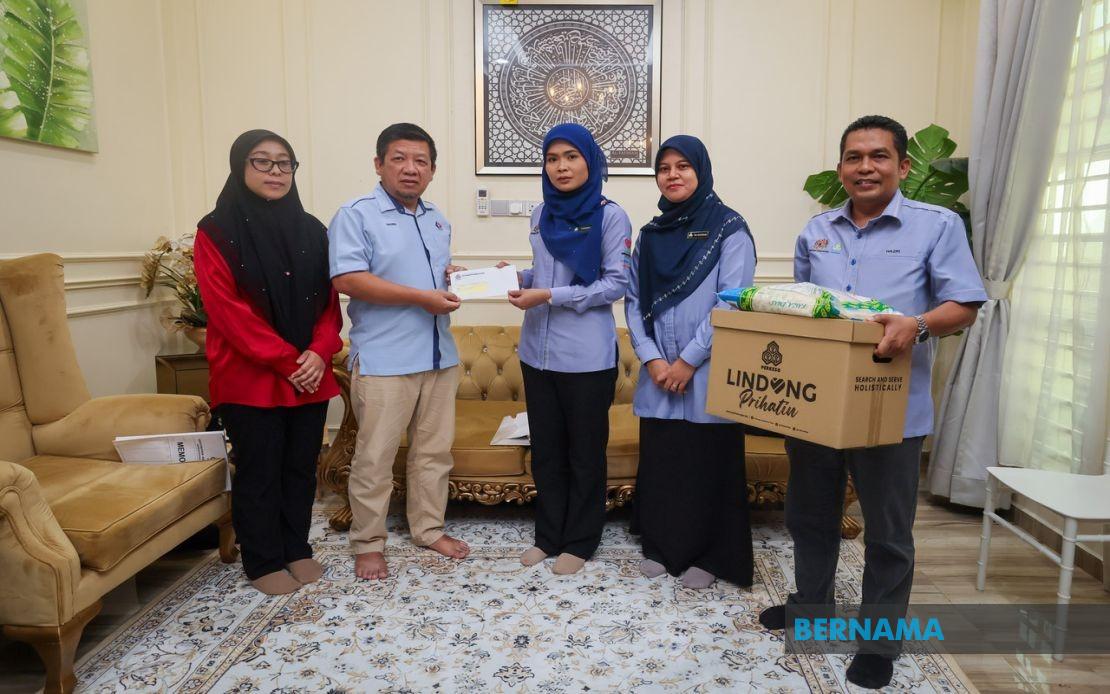
The Social Security Organisation (PERKESO) has channeled nearly RM3.5 million in various benefits to workers and their families across Kelantan during the first half of 2024, underscoring the critical role of Malaysia's mandatory social security system in protecting the workforce during times of hardship and tragedy. According to Nor Aziemah Ismail, deputy director of PERKESO's Kelantan office, the distribution reflects the organisation's commitment to ensuring that covered employees receive timely support when workplace incidents disrupt their livelihoods or when families face the devastating loss of a breadwinner.
The bulk of the distributed funds came from Temporary Disablement Benefit (TDB) payments, which accounted for RM2.388 million of the total. This benefit scheme, operating under the Employees' Social Security Act 1969, provides income replacement for workers who suffer job-related injuries and cannot perform their regular duties during their recovery period. The substantial proportion of TDB payouts reflects both the prevalence of workplace accidents in Kelantan and the critical importance of this safety net for affected employees and their households.
Beyond the disablement benefits, PERKESO disbursed RM73,000 in Dependants' Benefit payments to families who lost loved ones in employment-related accidents during the same period. These payments ensure that the surviving dependants of workers killed on the job receive financial support to help them adjust to the loss of the primary income earner. The existence of such provisions demonstrates the comprehensive nature of Malaysia's occupational safety framework, which extends protection beyond the individual worker to include their families.
The organisation also distributed approximately RM1 million through its Funeral Benefit scheme, which provides standardised payments of RM3,000 to eligible families to assist with burial and related expenses. This benefit recognises the immediate financial strain that funeral costs impose on grieving families, particularly in lower-income households where such unexpected expenses can create severe hardship. Notably, PERKESO prioritises processing these claims within 24 hours when documentation is complete, allowing families to proceed with funeral arrangements without bureaucratic delays.
A particularly significant development in PERKESO's Kelantan operations has been the expansion of coverage under the 24-Hour Employment Injury Scheme, a relatively recent addition to Malaysia's social security landscape. Unlike traditional workplace accident coverage that typically applies only during work hours, this scheme extends protection to workers throughout the entire day, recognising that employment-related injuries can occur in various contexts beyond the formal workplace. Nine claims have been approved under this scheme in Kelantan, resulting in RM1,300 in sick leave benefit payments to eligible recipients.
The inclusive nature of the 24-Hour scheme is evident in the variety of approved claims, which have encompassed incidents such as motorcycle convoy accidents and traffic incidents occurring while workers were transporting children to tuition classes. These examples illustrate a pragmatic understanding that workplace fatigue, stress, and occupational demands can increase accident risk even during personal time. The scheme's flexibility in recognising such cases has expanded the safety net for Malaysian workers, particularly those in physically demanding or high-stress professions.
For Malaysian readers, particularly those in Kelantan, understanding PERKESO's available benefits is essential for maximising workplace protection. Many workers remain unaware of the full scope of their coverage or the procedures required to lodge claims promptly. The emphasis placed by the Kelantan office on rapid claim processing suggests that administrative delays need not prevent workers from receiving timely assistance. The 24-hour processing target for funeral benefits, in particular, demonstrates that government agencies can move quickly when circumstances demand compassion and efficiency.
The distribution of nearly RM3.5 million during just six months indicates robust claims activity and suggests that workplace injuries remain a persistent challenge in Kelantan's economic landscape. The state's manufacturing, agriculture, and construction sectors are known to present significant occupational hazards, and the volume of benefits being distributed reflects real incidents affecting real workers and their families. Understanding these patterns can inform both workplace safety initiatives and individual decisions about career choices and protective measures.
Regionally, Malaysia's PERKESO system offers insights for other Southeast Asian nations grappling with social security reform. The expansion of coverage through schemes like the 24-Hour Employment Injury provision demonstrates how traditional systems can evolve to address modern work realities. However, the relatively modest benefit amounts and the dependence on claims being processed correctly suggest that workers should not view PERKESO payments as comprehensive income replacement, but rather as essential baseline protection that should be supplemented by personal savings and private insurance where possible.
For employers and industry associations in Kelantan, these benefit figures serve as a reminder of the human and financial costs of workplace accidents. While PERKESO provides crucial compensation, the true measure of corporate responsibility lies in preventing accidents before they occur through rigorous safety protocols, worker training, and hazard management. The organisation's successful distribution of benefits is, in many respects, a reflection of prevention failures elsewhere in the system.
Looking ahead, sustained engagement between PERKESO and the working population of Kelantan will remain essential. Worker education campaigns highlighting claim procedures, benefit eligibility, and the expanded coverage under schemes like the 24-Hour Employment Injury provision could ensure that more affected individuals access support to which they are entitled. The Kelantan office's proactive stance on rapid claim processing and accessible information delivery sets a positive example for other regional PERKESO operations.
Ultimately, the RM3.5 million in benefits distributed to Kelantan workers and families during the first half of 2024 represents both a success and a sobering reminder. It is a success in that thousands of individuals received crucial financial support during vulnerable moments. Yet it also underscores that workplace injuries, illnesses, and fatalities continue to impact Kelantan's workforce with sufficient frequency to necessitate substantial social security expenditure. Only through coordinated efforts in workplace safety, worker awareness, and efficient benefit administration can Malaysia progressively reduce the need for such compensation while ensuring comprehensive protection for all workers.

