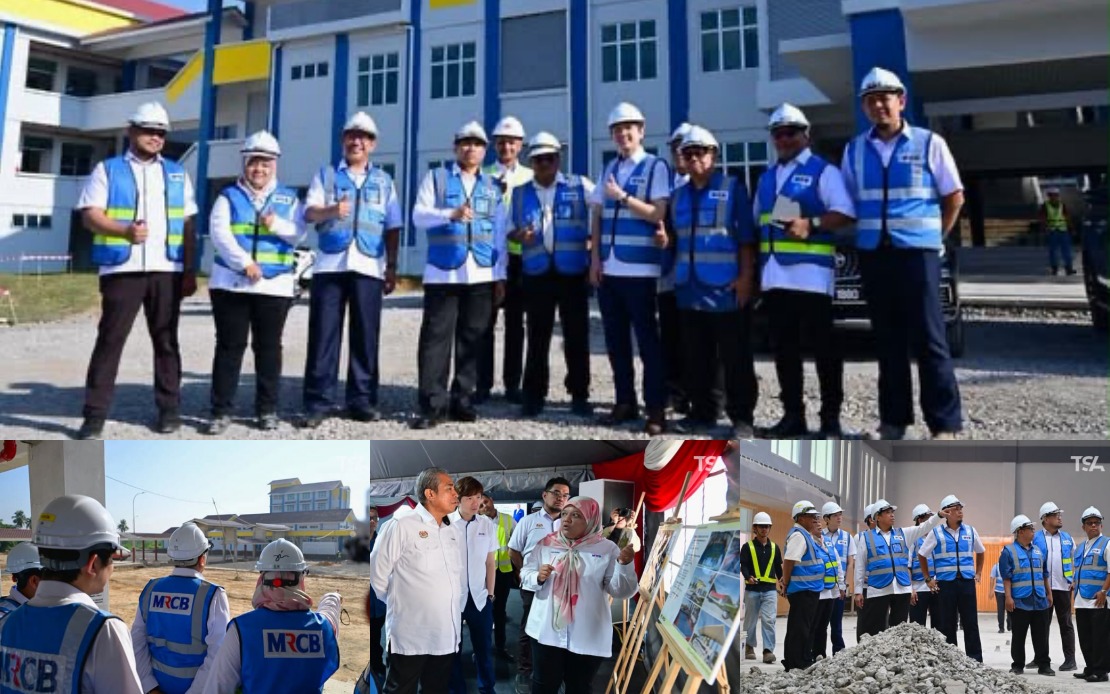
The Perlis Malaysia Sports School project in Bukit Chabang, Padang Besar, is expected to reach completion by January 2027, marking a turning point for infrastructure that has languished incomplete for over a decade. Chief Secretary to the Government Tan Sri Shamsul Azri Abu Bakar made the announcement following an inspection of the site, stating that the first construction phase now stands at between 85 and 90 per cent completion. The declaration comes as substantial progress under new management, having been transferred to a government-owned company by Prime Minister Datuk Seri Anwar Ibrahim in April last year to accelerate implementation and prevent further delays.
The decision to transfer stewardship of the Perlis Malaysia Sports School reflected growing frustration with the project's chronic underperformance. Originally meant to serve as a premier facility for developing athletic talent in the northern region, the site has remained largely dormant since 2013, symbolising broader concerns about project management and accountability in large government infrastructure ventures. Multiple obstacles had accumulated over the years, including insufficient staffing, unreliable contractors, and coordination failures that collectively prevented meaningful progress. The handover to a government-linked company signalled a commitment to breaking this stagnation by consolidating project control and streamlining decision-making processes.
Tan Sri Shamsul Azri's optimism is grounded in tangible improvements observed during recent site visits. His team identified that many of the systemic problems plaguing the project—particularly labour shortages and contractor performance issues—had been substantially resolved through the new management structure. This represents a critical shift from the ad-hoc approach that characterised earlier phases. The establishment of clearer accountability structures and more robust oversight mechanisms has apparently enabled smoother coordination between different stakeholders, reducing the friction points that historically derailed construction timelines. For Malaysian readers and regional observers, this signals potential lessons in how structural reform and centralised oversight can resurrect troubled infrastructure projects.
The Perlis Malaysia Sports School's eventual opening will have meaningful implications for Northern Malaysia's sporting infrastructure landscape. The facility is intended to function as a training ground for youth athletes, potentially filling a gap in Malaysia's talent development pipeline outside the Klang Valley and other more established sporting hubs. With proper completion and operation, the school could help identify and nurture athletic talent from Perlis, Kedah, and surrounding states, contributing to national sporting ambitions. The facility's existence also reflects government recognition that Malaysia's competitive advantage in regional and international sporting competitions depends on broader geographic distribution of training facilities and coaching expertise.
Beyond the specific sports school project, Tan Sri Shamsul Azri used the platform of the Iltizam 2026 Convention at Universiti Utara Malaysia to discuss the Government Service Efficiency Commitment Act 2025, which was formally gazetted on May 22, 2025, and entered into full force on December 1, 2025. This legislative framework represents a fundamental shift in how the Malaysian government approaches administrative reform, moving from policy-level commitments to legally binding obligations. Rather than functioning as a mere administrative directive, Act 867 creates enforceable standards for service delivery, establishing legal recourse mechanisms for citizens and businesses when government institutions fail to meet prescribed efficiency benchmarks. For regional observers, this approach mirrors international best practices in administrative accountability, positioning Malaysia within a broader movement toward measurable governance standards.
The Bureaucratic Red-Tape Reform initiative operating under the Public Service Reform Agenda constitutes the operational backbone of these efficiency improvements. Launched in 2024, the programme has already completed 439 individual reform projects, each targeted at eliminating unnecessary administrative procedures that generate costs without corresponding benefits. The estimated compliance cost savings of RM2.95 billion attributed to these reforms provides quantifiable evidence of the initiative's economic impact, representing funds that remain available to individuals and businesses rather than being consumed by bureaucratic processes. For Malaysia's business community and foreign investors evaluating the country's regulatory environment, such metrics carry considerable weight in assessing operational friction and hidden costs associated with government engagement.
These efficiency reforms directly address one of Malaysia's persistent competitive disadvantages in attracting foreign direct investment. Complex bureaucratic procedures, unpredictable timelines, and opaque approval processes have historically deterred investors who might otherwise establish operations in Malaysia rather than Thailand, Vietnam, or Indonesia. By systematically dismantling redundant procedures and establishing service delivery standards, Malaysia aims to cultivate a more investor-friendly environment where business costs are transparent and timeframes predictable. The efficiency commitment framework provides foreign investors with legal recourse should government agencies fail to meet prescribed performance standards, substantially reducing transaction risk and uncertainty.
Tan Sri Shamsul Azri also addressed the intersection of civil service employment and political activity, reiterating that government officials remain prohibited from engaging in political activities under existing regulations. He noted that no complaints have been filed regarding violations of this principle and that the government stands ready to address any concerns should they arise. This statement carries particular relevance in Malaysia's federal system, where civil servants comprise a substantial portion of the electorate and where maintaining their political neutrality remains foundational to impartial service delivery. The Chief Secretary's emphasis on regulatory clarity appears designed to prevent any ambiguity regarding the boundaries of permitted behaviour, especially as electoral cycles approach and political activity intensifies across various jurisdictions.
The combination of infrastructure project acceleration, administrative reform, and governance clarification reflects an integrated approach to rebuilding public confidence in government institutions. The Perlis Malaysia Sports School's resurrection from years of dormancy demonstrates that large infrastructure projects need not remain perpetually stalled once systemic barriers are identified and removed. Similarly, the quantifiable savings generated through bureaucratic red-tape elimination provide evidence that efficiency reform produces tangible economic benefits rather than remaining merely aspirational. For Malaysian policymakers and citizens evaluating government performance, these initiatives collectively suggest that meaningful institutional improvement is achievable when political commitment combines with structural reform and sustained oversight.
The January 2027 target for Perlis Malaysia Sports School completion will serve as a significant test of the government's capacity to deliver on infrastructure commitments. Success would validate the approach of transferring troubled projects to capable government-owned entities and signal that systematic problems can be overcome through better management. Conversely, further delays would reinforce scepticism about the government's capacity to complete major infrastructure initiatives on schedule. For regional observers, the project's outcome will provide important signals about Malaysia's reliability as a partner for large-scale infrastructure development, with implications for international collaboration on transport, energy, and other strategic infrastructure ventures. The coming months will prove whether the renewed management structure and efficiency reforms translate into tangible completion of this long-awaited facility.

