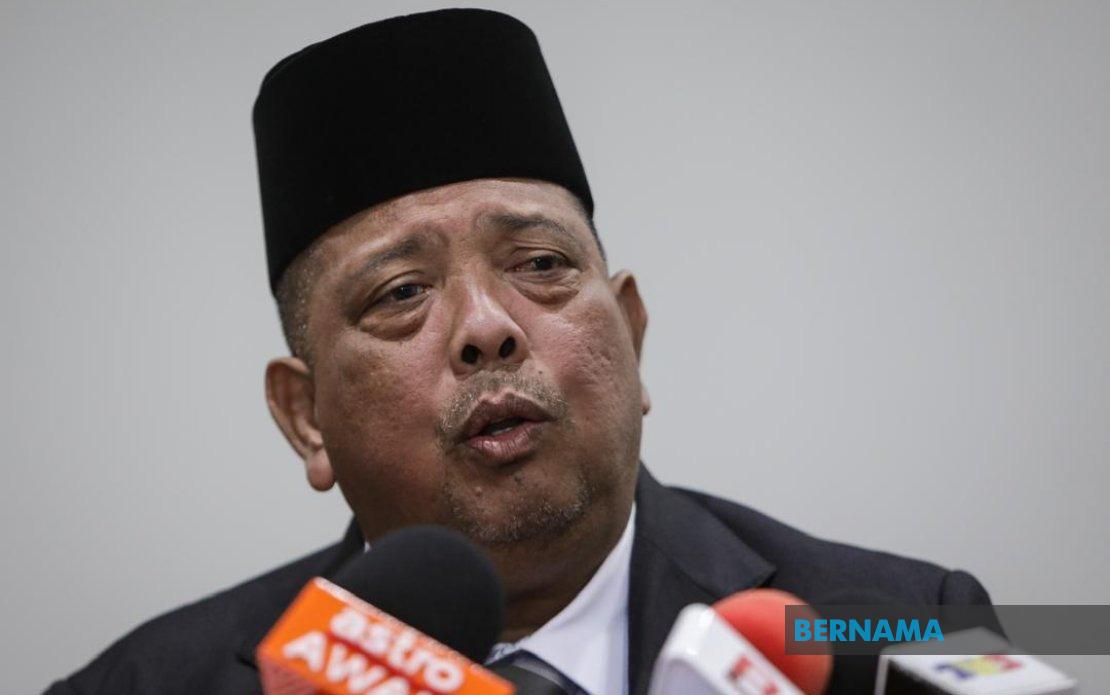
Perlis Menteri Besar Abu Bakar Hamzah has stepped down from his position on Parti Pribumi Bersatu Malaysia's (Bersatu) Supreme Leadership Council, a move designed to free him from competing national party obligations as he enters the final stretch of his tenure leading the northern state. The resignation, submitted the previous week, was formally announced during a welcoming ceremony for a delegation from Thailand's Satun province, which coincided with the resumption of cross-border ferry operations after years of interruption.
The decision reflects a strategic recalibration of priorities within Malaysia's coalition politics, where state leaders increasingly face tension between their roles as executives managing local affairs and their responsibilities as members of national party structures. Abu Bakar's withdrawal from the MPT, while maintaining his position as Perlis Bersatu state chief and Kangar division chief, suggests a calculated effort to concentrate resources and attention where they are most needed—in state-level governance and economic development. His move underscores the reality that effective state administration demands undivided focus, particularly during a period when much remains to be accomplished.
The timing of this resignation carries particular significance given that the Perlis state legislative assembly term concludes next year. Abu Bakar has less than twelve months to complete his agenda, which prominently includes attracting fresh investment to the state and meeting key performance indicators expected of a sitting Menteri Besar. With such a constrained timeframe, the distraction of national party leadership duties becomes untenable. The official acknowledgement of these constraints—both the workload and the abbreviated timeline—provides transparency about how state leaders must sometimes make hard choices about where their energy can be most productively deployed.
The symbolic weight of this decision extends beyond administrative efficiency. In June, the Raja of Perlis, Tuanku Syed Sirajuddin Jamalullail, had publicly decreed that Abu Bakar deserved space to lead without interference until the assembly term expired. This royal endorsement created a political environment favourable to focusing exclusively on state matters. The subsequent resignation from the national council thus represents a completion of that declaration's spirit, signalling to both Perlis constituents and national party leadership that local governance will take precedence over party machinery concerns.
The cross-border ferry service resumption, which formed the backdrop for this announcement, carries its own regional significance. The Kuala Perlis-Satun ferry connection had remained suspended throughout the COVID-19 pandemic, representing a tangible impediment to bilateral trade and people-to-people exchange. Restoring this link demonstrates the kind of infrastructure initiative that underpins Perlis's development aspirations, illustrating precisely the type of project demanding a Menteri Besar's sustained concentration. For a state seeking to position itself as a regional trading hub and cross-border economic player, such infrastructure connectivity is foundational.
Abu Bakar's explicit statement that he cannot sustain full commitment to the Supreme Leadership Council while managing Perlis's challenges reflects an honest assessment of capacity limits. This frankness contrasts with the sometimes opaque power struggles that characterise Malaysian state politics. Rather than remaining nominally attached to a national council while neglecting duties, he chose clean separation—a decision that preserves both his credibility as a state administrator and his integrity within the party structure. Such transparency about prioritisation strengthens rather than weakens his political position.
The revelation that Sena assemblyman and state executive councillor Datin Marzita Mansor had similarly resigned from the party's Supreme Leadership Council suggests a broader pattern, though Marzita's unavailability for comment at the time left this somewhat unconfirmed. If verified, her parallel move would indicate that multiple Perlis leaders recognised the incompatibility between national party leadership roles and effective state-level administration. Such coordinated action, whether explicitly coordinated or independently reasoned, signals a generational or factional shift in how Bersatu's state representatives view their primary obligations.
For Malaysian politics more broadly, Abu Bakar's resignation raises questions about the viability of dual leadership roles in an era of increasingly complex governance demands. States face mounting pressure to compete economically, manage infrastructure, and deliver public services with limited resources. Simultaneously, national party structures demand significant engagement from their senior members. This resignation, while formally about one individual's time management, implicitly critiques a system that expects state executives to effectively juggle both responsibilities simultaneously.
The decision also carries implications for Bersatu's organisational dynamics. Abu Bakar's departure from the Supreme Leadership Council represents a loss of direct input from a state leader, potentially shifting the balance of perspectives within the council. Yet his retention of the state chief position ensures Bersatu maintains its political presence and governing capacity in Perlis, preserving the party's institutional stakes in the state. The arrangement thus represents a functional compromise—ensuring both that national party deliberations proceed and that state governance receives adequate executive attention.
Looking forward, Abu Bakar's approach may establish precedent for how state leaders navigate competing demands. Other state chief executives facing similar time pressures might find his model instructive, particularly in states where administrative challenges are intense and political timelines compressed. His willingness to make public declarations about these constraints, rather than allowing them to fester as unspoken tensions, also contributes to more honest dialogue about how Malaysia's federal structure functions in practice, where theoretical responsibilities often exceed practical capacity for devoted execution.
The broader context matters too. Perlis, while not among Malaysia's largest states, plays an important regional role, particularly in managing cross-border dynamics with Thailand. A Menteri Besar fully focused on strengthening economic ties, improving infrastructure, and creating investor-friendly conditions serves not only local interests but also national economic objectives. Abu Bakar's calculated deprioritisation of national party mechanics reflects an understanding that his greatest value to both Bersatu and Malaysia lies in delivering strong state governance, not in attendance at high-level party councils. This reasoning, whether explicitly articulated or intuited, represents a pragmatic reassessment of where leadership impact can be maximised within constrained circumstances.

