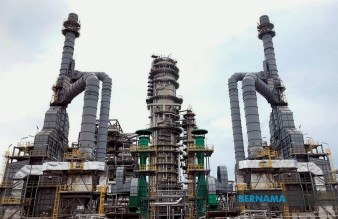
Malaysia's planned petroleum reserve initiative must not function as an isolated energy policy but rather as a single thread in a much broader tapestry of economic resilience spanning multiple vulnerable sectors, according to investment strategy specialists. The warning comes as Prime Minister Datuk Seri Anwar Ibrahim explores establishing a petroleum stockpile to shield the nation from international supply disruptions and geopolitical turmoil. However, Mohd Sedek Jantan, director of investment strategy and country economist at IPPFA Sdn Bhd, argues that this approach risks overlooking the genuine sources of future economic instability, which may originate from entirely different supply chains.
The crux of Mohd Sedek's argument rests on a fundamental principle about what builds genuine economic resilience. Storage mechanisms alone, he contends, offer only superficial protection unless they operate within a carefully designed, comprehensive framework addressing multiple critical dependencies simultaneously. Malaysia faces vulnerabilities that extend far beyond petroleum supplies—food imports, rare earth minerals, semiconductor components, and digital backbone systems all represent potential pressure points where external disruptions could ripple through the broader economy with devastating consequences.
Food security warrants consideration as a priority matching that given to energy reserves, particularly given Malaysia's significant reliance on imported agricultural products to feed its population. Any sustained interruption to global food supply chains would translate immediately into inflationary pressures that would compress household purchasing power and potentially destabilise social cohesion. The interconnectedness between supply chain security and domestic price stability means that food stocks deserve equivalent strategic attention as petroleum reserves, especially when considering Malaysia's geographical position and limited domestic production capacity.
The framework Mohd Sedek advocates requires policymakers to fundamentally reorient their thinking about economic vulnerability. Rather than treating each strategic sector independently, Malaysia should develop an integrated national risk management system that can flex and respond as emerging threats evolve. Today's most pressing concern may centre on petroleum availability, but tomorrow's crisis could manifest through constrained access to critical minerals essential for manufacturing, disrupted semiconductor flows that cripple tech-dependent industries, or compromised digital infrastructure that paralyses financial systems and communications networks. Building in this flexibility from the outset prevents costly redesigns later.
The proposed petroleum reserve should therefore be measured against different criteria than traditional stockpiling metrics. Success cannot be quantified simply by barrel counts stored in strategic facilities. Instead, success means the reserve contributes meaningfully to Malaysia's demonstrated capacity to weather geoeconomic shocks without allowing production disruptions or price volatility to cascade through vulnerable downstream sectors. This shift in measurement reflects a more sophisticated understanding of how modern economies function and where genuine fragility lies.
Mohd Sedek identifies three essential components that should guide the petroleum reserve study process. First, policymakers must establish with precision what the reserve actually accomplishes. A genuinely strategic reserve protects the economy during authentic supply crises, not through price manipulation or short-term market interventions. This clarity prevents mission creep and ensures resources serve their intended purpose rather than becoming targets for political or commercial exploitation.
Secondly, the framework must incorporate sufficient adaptability to accommodate unforeseen challenges. Strategic planning that locked Malaysia into petroleum-focused reserves while ignoring emerging threats in critical minerals, semiconductors or digital security would represent a missed opportunity for creating a truly versatile risk management architecture. The methodology developed for identifying and responding to petroleum vulnerabilities should be transferable and scalable across other strategic sectors, allowing policymakers to address new challenges using established institutional processes.
Thirdly, any implementation must demonstrate commercial viability and fiscal sustainability across extended timeframes. Reserve size, funding mechanisms, storage infrastructure, and governance structures should all rest on rigorous cost-benefit analysis that guarantees public resources generate proportional returns. This requirement proves especially crucial for developing nations where budget constraints force difficult prioritisation between competing social and economic needs.
Malaysia can draw valuable lessons from advanced economies that have integrated strategic reserves into broader economic resilience frameworks. Japan exemplifies this approach through systems combining strategic stockpiles with diversified supply chains, robust logistics networks, and deeply embedded public-private sector coordination. Such models demonstrate that reserves function most effectively when embedded within larger institutional structures rather than existing as standalone facilities detached from broader economic strategy.
The energy security dimensions certainly deserve elevation within Malaysia's long-term economic planning. Reliable petroleum and energy supplies remain fundamental to sustaining manufacturing sectors, transportation networks, and industrial production capabilities that form the backbone of competitive advantage. However, treating energy as isolated from other critical dependencies represents a dangerous oversimplification of modern economic vulnerability. The next major disruption may never touch petroleum supplies at all, arriving instead through food shortage, mineral scarcity, semiconductor constraints, or digital system compromise.
For Malaysian policymakers, the implications are clear: the petroleum reserve proposal should trigger broader strategic reflection about national economic vulnerabilities rather than narrow focus on oil stockpiles alone. This represents an opportunity to construct a comprehensive, flexible, and sustainable economic security architecture that strengthens Malaysia's position across multiple critical dimensions simultaneously. Only through this integrated approach can the nation build the genuine resilience necessary to navigate an increasingly unstable global economic environment.

