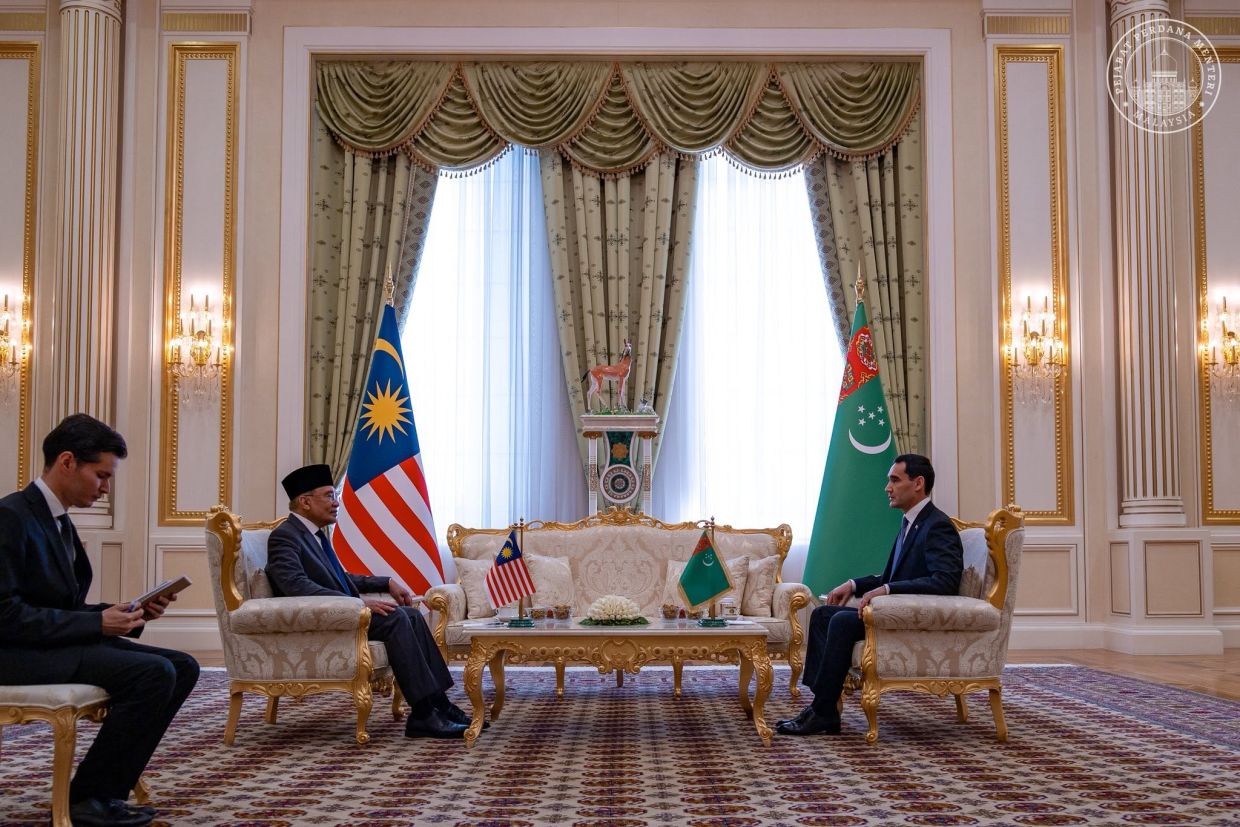
Prime Minister Datuk Seri Anwar Ibrahim and Turkmenistan President Serdar Berdimuhamedov today formalised a landmark strategic partnership between Malaysia's national oil company PETRONAS and Turkmenistan authorities, signalling deepened economic and energy cooperation between the two nations. The signing ceremony underscores Malaysia's expanding footprint in Central Asia's energy landscape and reflects the government's commitment to strengthening ties beyond Southeast Asia's traditional sphere.
The timing of this agreement carries particular significance, as it celebrates three full decades of Malaysian-Turkmenistan collaboration in the energy sector. This partnership represents far more than a commercial arrangement; it encapsulates a relationship rooted in mutual economic benefit and shared aspirations for sustainable development. The Prime Minister's Office emphasised that the partnership transcends conventional bilateral ties, fostering a framework where knowledge transfer, technological advancement, and human capital development serve as cornerstones of mutual prosperity.
Turkmenistan's position as a global energy powerhouse makes this partnership strategically vital for Malaysia. The Central Asian nation sits atop some of the world's most substantial natural gas reserves, resources that remain largely underdeveloped in the global marketplace. PETRONAS, with its technical expertise and proven track record in complex upstream operations across multiple continents, positions Malaysia as a valuable partner in unlocking these hydrocarbon treasures. The partnership explicitly contemplates expanded involvement in developing Turkmenistan's future energy resources, with particular emphasis on the nation's vast natural gas sector.
For Malaysia, this engagement demonstrates the government's deliberate strategy to position the nation as a competitive player in global energy markets. The PETRONAS partnership showcases Malaysian capabilities in strategic industries, signalling to international markets that the country's technological prowess, skilled workforce, and industrial expertise extend beyond regional boundaries. This enhanced global profile carries tangible benefits for Malaysia's broader economic agenda, particularly as energy transition complexities reshape global demand patterns and investment strategies.
The strategic alliance also reflects confidence in Malaysia's ability to contribute meaningfully to global energy security. As geopolitical tensions and supply chain vulnerabilities reshape energy markets worldwide, partnerships between established energy producers like Turkmenistan and capable operators like PETRONAS become increasingly valuable. Malaysia's involvement bridges Eastern energy resources with Western-oriented operational standards and corporate governance, positioning the country as a reliable intermediary in complex international energy arrangements.
Economically, the relationship has demonstrated tangible benefits for Malaysia. In 2025, Turkmenistan ranked as Malaysia's fourth-largest trading partner within Central Asia, with bilateral commerce reaching RM75.80 million. Malaysian exports to Turkmenistan totalled RM75.50 million, representing a robust 9.0 per cent increase compared to the prior year. These figures, while modest relative to Malaysia's global trade volumes, underscore the relationship's growing commercial importance and suggest expanding economic opportunities as the partnership deepens.
PETRONAS's historical commitment to Turkmenistan demonstrates the company's long-term strategic vision. Since 1996, PETRONAS has invested a cumulative RM52.73 billion in the country, making it one of Malaysia's most significant investment destinations in Central Asia. This substantial financial commitment reflects confidence in Turkmenistan's resource potential and the regulatory environment's ability to accommodate major international projects. Such historical investments establish PETRONAS as an experienced, established partner with deep operational knowledge and institutional understanding of the Turkmenistan operating context.
The partnership carries implications extending beyond energy sector dynamics. Malaysia's engagement in Central Asia through this strategic alliance contributes to the nation's broader foreign policy objectives, enhancing its presence in regions previously dominated by traditional global powers and regional heavyweights. By positioning itself as a capable energy partner, Malaysia strengthens its diplomatic reach and creates additional channels for political and economic dialogue with Central Asian nations.
From an investment perspective, this partnership opens pathways for Malaysian companies beyond PETRONAS. The strategic framework established between governments and national energy companies often creates downstream opportunities for Malaysian service providers, equipment suppliers, and consultancy firms. The knowledge economy benefits multiply as Malaysian professionals gain exposure to Central Asian market dynamics and technical challenges, enriching the nation's collective expertise in global energy operations.
The MADANI government's embrace of this partnership aligns with its articulated vision of inclusive economic development and strategic diversification. Rather than concentrating economic interests exclusively within traditional markets, the government recognises value in cultivating diverse partnerships across emerging regions. Turkmenistan's substantial natural resources and developing market characteristics present opportunities for sustainable, long-term economic engagement that contributes to Malaysia's overall prosperity objectives.
Looking forward, this partnership framework potentially establishes templates for Malaysian engagement with other Central Asian energy-rich nations. As regional powers increasingly compete for influence and commercial access in Central Asia, Malaysia's success with Turkmenistan could facilitate similar arrangements with Kazakhstan, Uzbekistan, and other hydrocarbon-producing states. The precedent of Malaysian technical expertise and operational reliability, demonstrated through this partnership, may open additional diplomatic and commercial pathways throughout the region.
The strategic partnership ultimately represents Malaysia's maturation as a global energy player, capable of competing for premium projects and partnerships far beyond its regional base. By deepening ties with Turkmenistan's vast natural gas sector, PETRONAS and the Malaysian government demonstrate confidence in the nation's technical capabilities while securing strategic access to resources that will remain globally significant throughout the energy transition period. This partnership exemplifies how Malaysia can leverage its strengths in energy expertise to build bridges with resource-rich nations and create mutually beneficial arrangements that enhance both nations' economic prospects.

