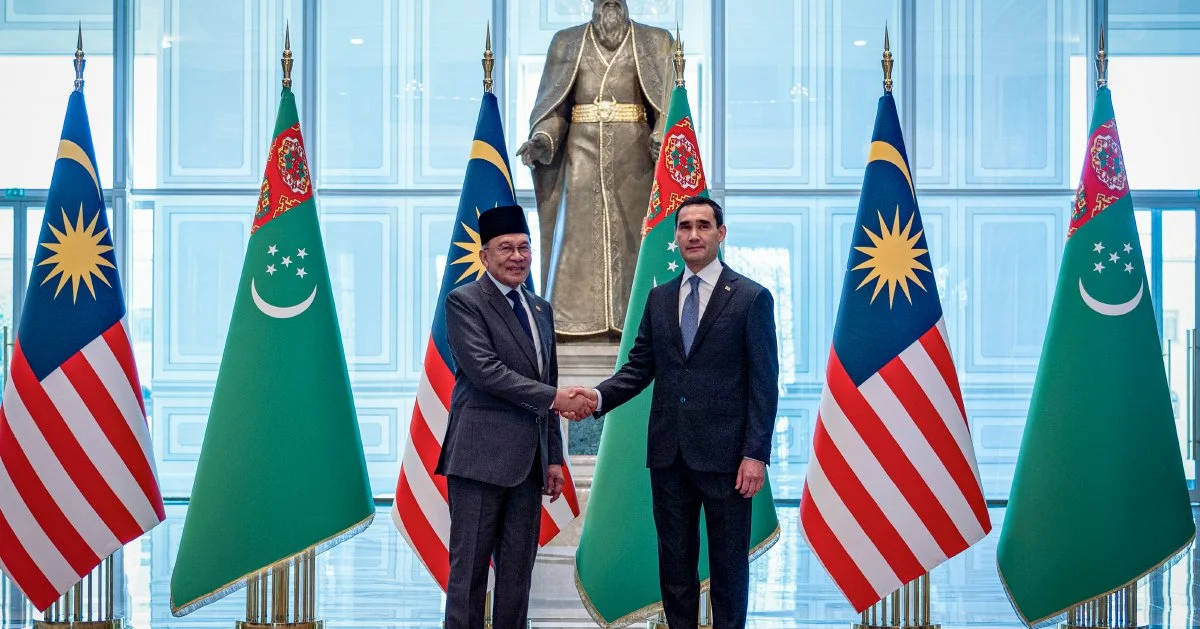
Malaysia's national oil and gas company Petronas is emerging as a catalyst for deeper engagement between Malaysia and Turkmenistan, with the energy partnership gaining momentum following Prime Minister Datuk Seri Anwar Ibrahim's official visit to the Central Asian nation. The strategic collaboration between Petronas and Turkmenistan's energy sector represents more than commercial interests—it signals a deliberate Malaysian pivot toward securing long-term energy security while strengthening diplomatic ties with a resource-rich nation that has historically remained outside mainstream Southeast Asian business circles.
Petronas's operational presence in Turkmenistan, established over many years, has provided the company with intimate knowledge of the country's hydrocarbon landscape and regulatory environment. This accumulated expertise positions the Malaysian firm uniquely to navigate opportunities in a market where international operators face significant geopolitical and operational complexities. The company's track record in the region demonstrates its ability to work within the constraints of Turkmenistan's state-controlled energy framework while maintaining commercial viability—a balancing act that few regional players have mastered.
The timing of PM Anwar's visit underscores Malaysia's strategic recalibration in engaging Central Asian nations. Rather than viewing Turkmenistan as a distant, peripheral market, Malaysian policymakers are recognizing the nation's critical importance as a supplier of natural gas and oil reserves. Turkmenistan sits atop vast energy resources that could diversify Malaysia's energy sourcing and reduce over-reliance on traditional Middle Eastern suppliers. For a country increasingly concerned about energy price volatility and supply security, establishing robust relationships with alternative energy producers offers tangible long-term benefits.
The partnership extends beyond traditional oil and gas extraction and export. Petronas's involvement opens pathways for Malaysian companies across multiple sectors—from engineering services and construction to financial services and technology transfer. When major national corporations like Petronas establish operations in emerging markets, they typically create downstream opportunities for smaller Malaysian enterprises seeking international exposure. This multiplier effect means that one strategic partnership can generate broader economic benefits across Malaysia's private sector.
Turkmenistan's perspective on this collaboration is equally significant. The Central Asian nation has historically pursued a policy of selective engagement with the outside world, carefully managing foreign investment to maintain state control over strategic assets. Petronas's willingness to work within these parameters, combined with Malaysia's status as a fellow Muslim-majority nation, makes the partnership particularly attractive. Unlike Western oil majors, Petronas brings fewer political baggage and ideological conflicts to the negotiating table, making it a more palatable partner for Turkmenistan's leadership.
From a regional Southeast Asian standpoint, Malaysia's deepening ties with Central Asia through energy cooperation could reshape trade dynamics across the broader Asian continent. If successful, the Petronas-Turkmenistan partnership could serve as a template for other ASEAN nations seeking to diversify their energy portfolios and establish alternative supply chains. Vietnam, Thailand, and Indonesia have all expressed similar concerns about energy security, and Malaysia's experience navigating Central Asian markets could provide valuable lessons for regional competitors and collaborators alike.
The geopolitical dimension warrants particular attention. Central Asia remains an arena where Russian influence, Chinese investment ambitions, and Western strategic interests intersect. Malaysia's non-aligned positioning and its identity as a moderate Islamic nation offer distinctive diplomatic advantages. By engaging Turkmenistan through commercial channels with Petronas as the lead instrument, Malaysia avoids entanglement in Cold War-style rivalries while advancing concrete economic interests. This approach reflects sophisticated statecraft—using commercial partnerships as vehicles for diplomatic influence without triggering the suspicions that overtly political engagement might provoke.
Petronas's role also addresses Malaysia's domestic energy concerns. The national company has responsibility for ensuring Malaysia's energy independence and long-term hydrocarbon security. As domestic reserves mature and production declines, international operations become increasingly critical to corporate sustainability and national energy strategy. Turkmenistan's abundant reserves offer Petronas the opportunity to maintain production volumes and cash flows, which directly benefit Malaysia's sovereign wealth and government revenue.
The corporate governance model that Petronas brings to Turkmenistan carries implicit benefits for both parties. As an internationally-listed entity subject to significant regulatory scrutiny, Petronas operates according to global standards of transparency and operational efficiency that exceed what purely state-owned competitors might enforce. This can elevate overall sector performance and create positive spillover effects throughout Turkmenistan's energy industry, potentially attracting additional international investment and expertise.
Looking forward, the strengthened Malaysia-Turkmenistan relationship through Petronas opens possibilities for expanded cooperation beyond energy. Both nations share Islamic heritage and can develop cultural and educational exchanges. Business networks established through energy cooperation often expand into other sectors—manufacturing, agriculture, and technology. Malaysian investors who develop confidence in Turkmenistan through Petronas's successful operations may pursue independent ventures, creating a more diversified bilateral relationship less dependent on any single project or company.
The strategic implications for Malaysia's broader foreign policy should not be understated. By elevating engagement with Central Asian nations through commercial leadership, Malaysia positions itself as a bridge between traditional markets and emerging opportunities. This geographical and commercial diversification reduces strategic vulnerability and enhances Malaysia's negotiating leverage with established partners. In an increasingly multipolar Asian landscape, such flexibility proves invaluable.
For Petronas specifically, Turkmenistan represents both immediate commercial opportunity and long-term portfolio stability. The investment made in establishing operations, infrastructure, and relationships during PM Anwar's diplomatic initiative will generate returns across multiple business cycles. Whether through direct hydrocarbon extraction, service provision, or upstream development opportunities, Petronas stands positioned to benefit from sustained Malaysian political commitment to strengthening Central Asian ties.
Ultimately, the deepening partnership between Malaysia and Turkmenistan through Petronas exemplifies how strategic energy cooperation serves as a foundation for comprehensive bilateral relationships. By leveraging commercial instruments to advance diplomatic objectives and energy security simultaneously, Malaysia demonstrates the pragmatic approach necessary for thriving in contemporary Asian geopolitics. The initiatives emerging from PM Anwar's visit will likely shape regional energy dynamics and Malaysia's international positioning for years ahead.

