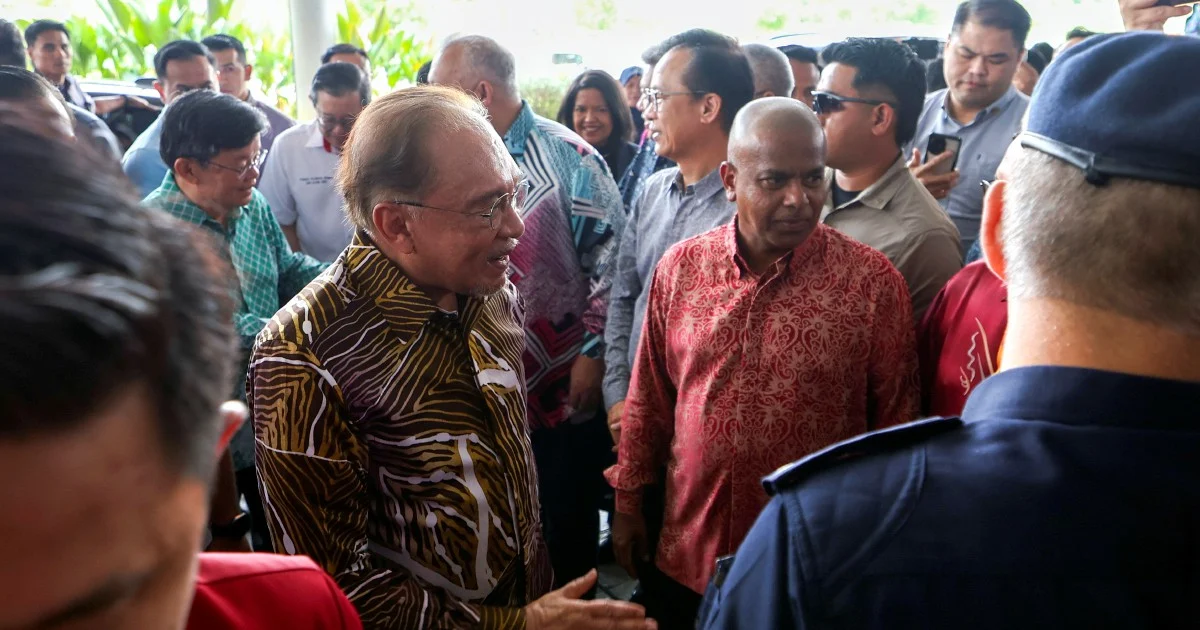
Prime Minister Datuk Seri Anwar Ibrahim has highlighted Petronas's recent achievement in acquiring two substantial gas fields in Turkmenistan, marking what he characterizes as a pivotal advancement for Malaysia's energy security outlook. Speaking in his Permatang Pauh constituency, Anwar underscored the strategic importance of the Petronas contract to the nation's long-term hydrocarbon requirements and economic resilience.
The award to Petronas represents a tangible expansion of Malaysia's footprint in Central Asian energy markets, a region increasingly significant as Asian economies seek to diversify their fuel sources and reduce dependence on traditional Middle Eastern suppliers. Turkmenistan possesses some of the world's most substantial natural gas reserves, positioning the nation as a critical player in global energy commerce. For Petronas, the contract provides substantial operational scope and revenue potential that extends well beyond Malaysia's immediate geographical boundaries.
Malaysia's relationship with Turkmenistan has grown more pronounced over recent years, reflecting Kuala Lumpur's broader strategy to strengthen ties with energy-rich states and secure alternative supply channels for domestic requirements. The gas fields awarded to Petronas are expected to yield considerable volumes for export, contributing meaningfully to Malaysia's foreign exchange earnings and enhancing the competitiveness of Malaysian hydrocarbon products in international markets.
The timing of this agreement carries particular weight given regional energy dynamics and global supply chain pressures. As Southeast Asian nations increasingly compete for access to reliable gas sources, Malaysia's capacity to invest in and operate major production facilities abroad demonstrates the technical expertise and financial capability that Petronas has cultivated over decades. This competitive advantage positions the national oil company favorably within regional and global energy conversations.
Petronas has maintained its position as the dominant commercial entity driving Malaysia's offshore energy operations and exploration activities. The company's successful navigation of international tender processes reflects its standing among global energy producers and its ability to mobilize substantial capital for large-scale infrastructure projects. Beyond immediate commercial gains, the Turkmenistan contract establishes a platform for potential expanded cooperation with Central Asian governments on additional energy ventures.
For Malaysia's broader economy, stable and diversified energy supplies remain foundational to sustained industrial development and manufacturing competitiveness. Petronas's international operations generate substantial returns that feed into the national treasury and fund domestic energy infrastructure investments. The company's presence in Turkmenistan creates pathways for Malaysian technical expertise and service providers to establish themselves in Central Asian markets, potentially unlocking wider commercial opportunities.
The geopolitical dimensions of the agreement merit consideration as well. Malaysia's active engagement in Central Asian energy markets reinforces its standing as a responsible and capable partner within the Islamic world while simultaneously advancing pragmatic economic interests. This balanced approach has allowed Malaysia to develop relationships with diverse nations regardless of political systems, positioning the country as a trusted intermediary and investor.
Doestic implications of the Petronas contract extend to Malaysia's energy independence objectives. While the Turkmenistan fields will primarily serve export markets, the revenues generated strengthen Petronas's financial foundation and its capacity to invest in Malaysia's own upstream development, offshore infrastructure upgrades, and renewable energy transition programs. This virtuous cycle of international revenue generation funding domestic energy security improvements has characterized Petronas's strategic model.
The success of this venture also carries implications for Malaysian skill development and human capital accumulation. Petronas's operations in Turkmenistan require substantial technical expertise in exploration, production, logistics, and management, creating career advancement pathways for Malaysian professionals within the organization while establishing regional knowledge hubs that benefit the broader industry.
Looking forward, the Turkmenistan fields represent a significant asset base that Petronas must develop and maintain efficiently over potentially decades-long production cycles. This requires sustained investment, technical innovation, and skilled workforce deployment. The operational challenges of developing fields in Central Asia, with its distinct geographical, regulatory, and logistical characteristics, will test Petronas's capabilities while potentially yielding lessons applicable across its global portfolio.
Stakeholders across Malaysia's energy sector, from technology providers to logistics operators, stand to benefit from Petronas's expanded international presence. The company's supply chain requirements create spillover opportunities for Malaysian businesses seeking international exposure and market diversification beyond conventional regional markets.
Anwar's public emphasis on this achievement reflects the government's recognition that energy security constitutes a cornerstone of national development strategy. As Malaysia navigates its economic transition and invests in new growth sectors, reliable access to hydrocarbon revenues remains instrumental in funding social programs, infrastructure development, and strategic initiatives. Petronas's international successes directly support these broader national objectives.

