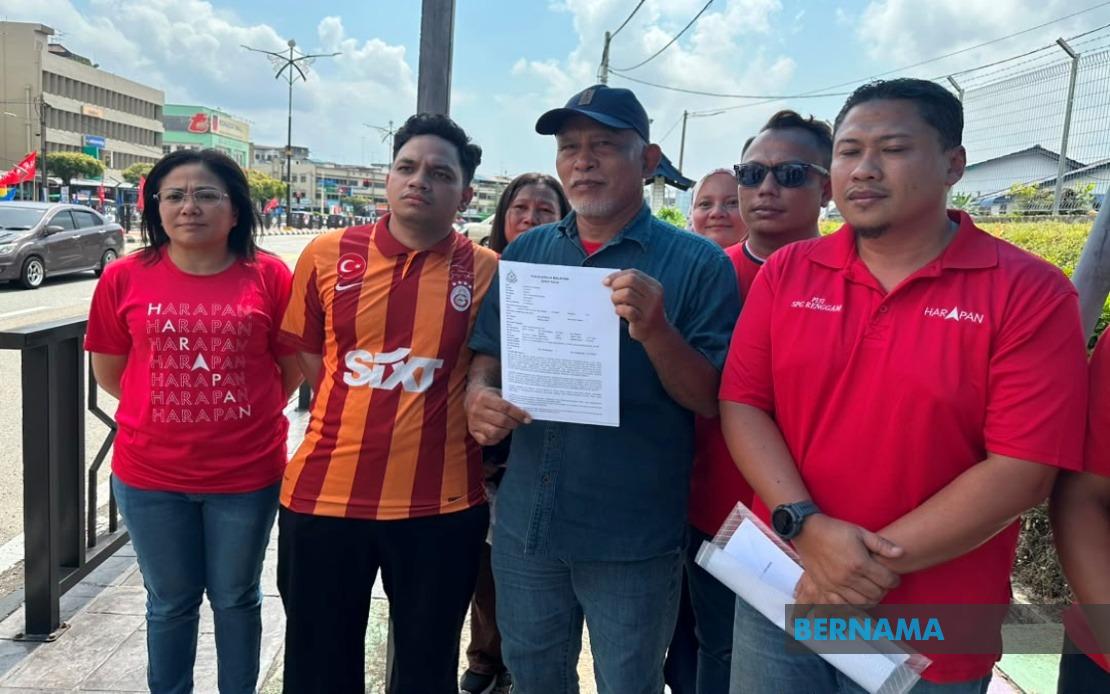
A representative supporting the Pakatan Harapan candidate contesting the Machap state seat has lodged a police report at Simpang Renggam police headquarters, accusing Johor Menteri Besar Datuk Onn Hafiz Ghazi of orchestrating campaign misconduct involving students from Technical and Vocational Education and Training (TVET) institutions during the ongoing state election period. The complaint centres on allegations that a coordinated initiative was undertaken to mobilise TVET students into attending politically-motivated events designed to build support for Barisan Nasional candidates ahead of Saturday's polling day.
Khiru Nasir Rohani, who also serves as deputy division chief of Simpang Renggam Amanah, presented the formal complaint to law enforcement after alleging that vocational education students from local institutions were directed to participate in a programme held in Kluang on July 4. According to the account provided, the gathering functioned as a platform for direct political campaigning benefiting state election candidates, raising questions about the appropriateness of using educational institutions and their student populations for partisan political activity during the campaign season.
The allegation carries potential legal ramifications under established Malaysian electoral statutes. Specifically, Khiru Nasir contended that the alleged conduct may represent a breach of the Election Offences Act 1954, particularly articles addressing undue influence and the misuse of official position or institutional resources for political advancement. Such statutes exist to maintain boundaries between state machinery, educational systems, and electoral campaigns, establishing safeguards intended to preserve the democratic process from manipulation through institutional leverage.
Beyond the police complaint filed this week, Khiru Nasir formally appealed to multiple enforcement and regulatory bodies to prioritise investigation into the allegations. His requests extended to the Malaysian Anti-Corruption Commission and the Election Commission, institutions tasked with maintaining probity and fairness in governance and electoral administration respectively. This multi-agency approach suggests an intention to ensure comprehensive scrutiny across different jurisdictions of accountability, reflecting concerns that the alleged actions warrant examination beyond criminal investigation alone.
The timing of these allegations proves significant within the broader electoral context. The Johor state election encompasses 56 seats contested by 172 candidates representing competing political coalitions, with voting scheduled to occur within days of the report being filed. Such campaign-period allegations generate considerable political momentum and public attention precisely because the election remains imminent, potentially influencing voter perception and candidate credibility in the final stretch before balloting.
The incident highlights persistent tensions in Malaysian electoral politics regarding the use of state resources and institutional machinery during campaign seasons. Educational institutions, particularly technical colleges drawing substantial government funding and oversight, occupy a sensitive position during elections. When students from such facilities are mobilised for political events, the distinction between legitimate civic engagement and inappropriate institutional instrumentalisation becomes contested terrain, subject to differing interpretations depending on political perspective and enforcement priorities.
From a governance standpoint, the allegations raise questions about oversight mechanisms within Johor's executive branch. If confirmed, systematic direction of TVET students toward particular candidates would suggest insufficient institutional separation between administrative functions and partisan campaign activity. Malaysia's electoral framework, while establishing legal prohibitions against such conduct, depends partly on self-restraint by officeholders and administrative accountability to prevent abuse before formal complaints become necessary.
The complaint also reflects broader concerns about educational access and student autonomy during election cycles. TVET students, often from working-class or middle-income backgrounds pursuing technical qualifications, may encounter pressure to participate in official functions without genuine voluntary choice. Educational institutions should theoretically remain neutral spaces where students pursue credentials without becoming subject to political mobilisation, a principle that these allegations suggest may have been compromised.
For Malaysian political observers and voters in Johor, the filing of this complaint introduces an additional consideration into their assessment of candidate and party behaviour during the final campaign days. Election commissions and law enforcement agencies will face practical challenges investigating allegations that emerged so close to polling day, potentially limiting the time available for thorough fact-finding. The report nonetheless signals that oversight bodies maintain capacity to receive complaints and that electoral rules remain subject to enforcement scrutiny, even if investigation timelines prove compressed.
The incident also carries implications for how state governments in Malaysia manage educational institutions during politically sensitive periods. Whether findings ultimately support or refute the allegations, the complaint creates precedent indicating that institutional misuse during campaigns faces potential legal challenge. This may encourage greater caution among future administrations regarding the deployment of government employees, facilities, and students in campaign-adjacent activities, contributing gradually to strengthening electoral integrity norms.
As the Johor election approaches its conclusion, the police report represents one of several allegations and disputes that typically characterise Malaysian state and national campaigns. The complainant's explicit emphasis on democratic integrity suggests this complaint stems from substantive concern rather than purely partisan positioning, though observers will rightfully maintain scepticism toward all campaign-period allegations until evidence becomes available. The outcome of any investigation will carry significance for understanding how electoral rules are enforced and which institutional boundaries receive prioritisation in Malaysian electoral administration.

