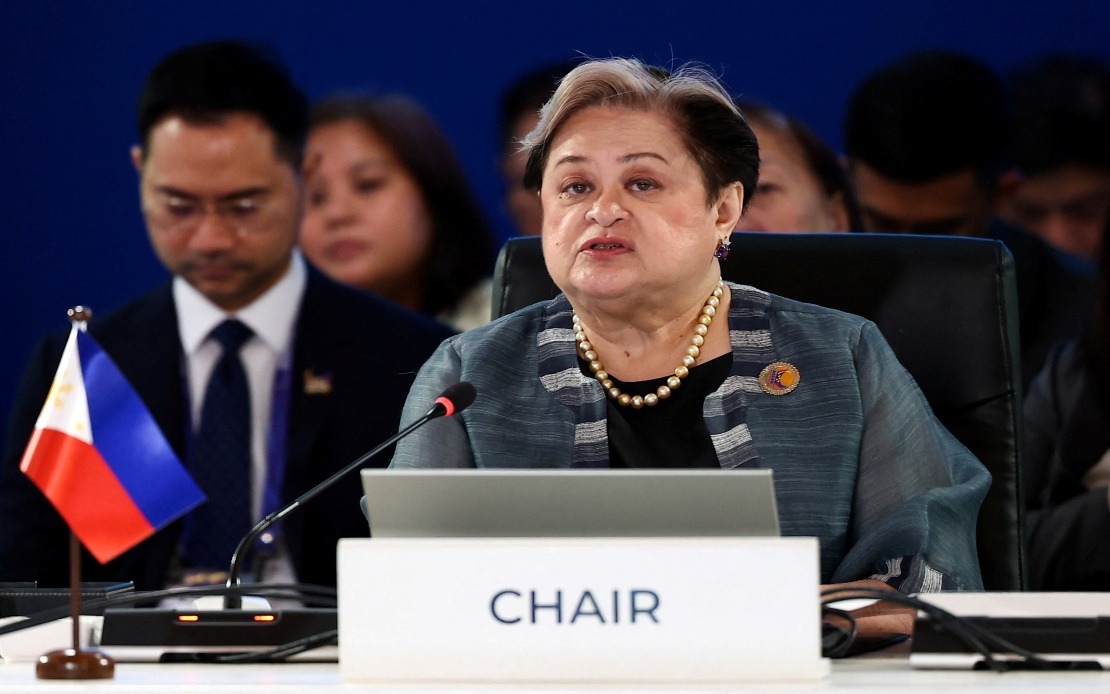
The Philippines' Foreign Affairs Secretary Ma. Theresa Lazaro has committed to directing a comprehensive humanitarian mission into Myanmar during the final quarter of 2026, marking a significant escalation in ASEAN's efforts to address the ongoing humanitarian crisis affecting the conflict-ravaged nation. The announcement underscores the regional bloc's determination to provide tangible assistance to affected populations while simultaneously advancing diplomatic progress on the broader political front, a dual approach that reflects mounting international concern over Myanmar's deteriorating situation.
Lazaro's pledge emerged after an intensive round of consultations held in Thailand from July 12 to 13, during which she engaged in separate discussions with her counterparts from across Southeast Asia and key Myanmar stakeholders. These meetings, convened under the Philippines' current ASEAN chairmanship, served as a critical forum for assessing the humanitarian landscape and gathering commitments from all parties involved. The consensus reached across these consultations proved decisive in green-lighting the mission, with the Department of Foreign Affairs confirming that all participating stakeholders have endorsed the proposal.
The proposed mission carries a specific operational mandate: to substantially broaden humanitarian access into regions of Myanmar experiencing acute need. While the Department of Foreign Affairs has refrained from announcing granular logistical details or identifying particular geographic focus areas, officials have emphasized that expanding aid delivery capabilities represents the initiative's core objective. This emphasis reflects the reality that large swathes of Myanmar remain inaccessible to international assistance providers due to ongoing armed conflict and political fragmentation.
Lazaro's diplomatic calendar during the Thailand visit demonstrated the comprehensive nature of ASEAN's engagement strategy. On July 12, she held bilateral talks with Myanmar Foreign Minister U Tin Maung Swe, concentrating on progress toward implementing the Five-Point Consensus, the regional framework adopted by ASEAN leaders in 2021 to guide Myanmar's path toward political stability. The discussions also explored concrete mechanisms through which ASEAN member states could facilitate Myanmar's reintegration into the regional community, a process that remains stalled by the continued fragmentation of Myanmar's political landscape.
That same afternoon, Lazaro chaired an informal gathering of ASEAN foreign ministers alongside U Tin Maung Swe, whose presentation covered the Myanmar regime's latest operational developments and its reported compliance efforts regarding the Five-Point Consensus action items. The foreign minister also detailed his government's 100-day peace initiative and outlined strategies for combating transnational organised crime networks operating across Myanmar's borders. For ASEAN members, particularly those sharing land borders with Myanmar, the transnational crime dimension carries immediate security implications, making Myanmar's capacity and willingness to address these issues a matter of acute regional concern.
During the collective ASEAN discussion, participating foreign ministers reinforced that the Five-Point Consensus framework remains indispensable to resolving Myanmar's political impasse. Lazaro went further in her remarks, reaffirming that Myanmar occupies a position of fundamental importance within ASEAN's regional architecture and institutional structure. Her emphasis on Myanmar's integral status carried symbolic weight, signalling that ASEAN continues to view Myanmar as belonging within the bloc despite the paralysis afflicting formal engagement mechanisms following the 2021 coup d'état.
This gathering represented a watershed moment in ASEAN-Myanmar relations, constituting the first in-person assembly of ASEAN foreign ministers with their Myanmar counterpart since 2021, the year of the military takeover that fractured the nation's political order. The renewal of direct ministerial-level contact after a five-year hiatus demonstrates ASEAN's pragmatic decision to maintain dialogue channels with Myanmar's current authorities while simultaneously pursuing engagement with other political actors. This balancing act remains delicate and controversial within the regional bloc, with some member states maintaining stricter stances toward the Myanmar regime.
On July 13, Lazaro pivoted her diplomatic engagement toward Myanmar's fractionalised political opposition and ethnic armed groups, meeting representatives of Myanmar ethnic armed organisations alongside officials from the National Solidarity and Peacemaking Negotiation Committee. These discussions centred on mechanisms for advancing an inclusive national political dialogue that would bring together the various parties contending for influence within Myanmar's political sphere. The emphasis on inclusivity reflects international understanding that any durable solution to Myanmar's crisis must accommodate the country's diverse ethnic groups and competing power centres rather than imposing outcomes favourable to a single faction.
All parties engaged during these sessions demonstrated openness to continued dialogue processes, according to the Department of Foreign Affairs account. Participants underscored the necessity of constructive engagement and careful preparation of all sides before formal negotiations could commence. This measured approach acknowledges the deep mistrust and fractionalisation characterising Myanmar's political landscape, where decades of civil conflict have created entrenched positions and competing visions for the nation's constitutional future.
For Malaysia and the broader Southeast Asian region, the unfolding Myanmar crisis carries profound implications. Beyond humanitarian concerns affecting millions of displaced persons, Myanmar's continued instability threatens regional security, fuels migration pressures, generates transnational criminal networks, and undermines ASEAN's institutional credibility. Malaysia, as a major recipient of Myanmar migrants and refugees, has particular stakes in achieving political resolution and reducing humanitarian drivers of displacement. The Lazaro-led mission thus represents not merely a Philippines initiative but a collective ASEAN acknowledgement that the status quo remains unsustainable.
The timeline extending to the final quarter of 2026 allows for substantial groundwork and diplomatic positioning ahead of the actual mission deployment. This extended preparation period reflects realistic assessment of the operational challenges involved in mounting coordinated humanitarian access across a nation experiencing multi-factional armed conflict. It also provides opportunity for political developments within Myanmar itself that might improve conditions for humanitarian operations or alter the underlying political dynamics requiring ASEAN attention.
The mission's success will depend critically on securing cooperation from multiple Myanmar authorities controlling territory and population centres, cooperation that remains contingent on broader political dynamics. ASEAN's strategy of simultaneous engagement with the regime, ethnic armed organisations, and pro-democracy actors represents an attempt to preserve dialogue options across Myanmar's fractured political landscape while avoiding the impression of preferential treatment toward any single faction. Whether this multilayered diplomatic approach ultimately yields the political breakthroughs necessary to stabilise Myanmar and reduce humanitarian catastrophe will substantially shape ASEAN's future credibility and effectiveness in managing regional crises.

