The Philippine Department of Justice has initiated a comprehensive investigation into possible criminal charges against government officials in connection with two related incidents that unfolded within hours of each other in mid-May: a shooting at the Senate building and the escape of Senator Ronald dela Rosa from protective custody. Justice Secretary Fredderick Vida revealed that prosecutors are actively examining the circumstances surrounding both events and exploring any potential links between them, signalling that the inquiry extends beyond simple facts to questions of possible coordination or complicity among state actors.
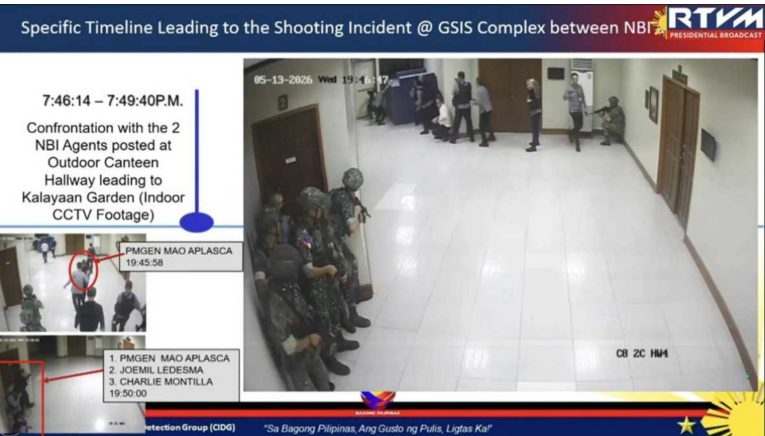
The shooting itself occurred on May 13 when sniper fire erupted from within the Senate building, specifically from the fifth floor, targeting an identifiable vehicle belonging to the National Bureau of Investigation that was parked at the Government Service Insurance System premises. This precision strike against an NBI vehicle suggests a level of planning and inside knowledge that has prompted investigators to examine whether government insiders facilitated or orchestrated the attack. The fact that the shooter maintained line-of-sight to a specific vehicle at an adjacent location raises troubling questions about how the NBI's movements and position became known to the assailant.
The second incident—Dela Rosa's escape from protective custody in the early morning hours of May 14, merely hours after the shooting—compounds the mystery and has led authorities to question whether the two events are connected. The timing and proximity of these occurrences suggest they may not be coincidental, and the DOJ's decision to investigate possible official involvement indicates suspicion that someone with authority and access facilitated or enabled the senator's departure from custody. Such a scenario would represent a serious breach of protocol and raise questions about chain-of-command failures or deliberate misconduct.
Vida explained that the investigation panel has gathered multiple forms of evidence to construct their working theory. Accounts from National Bureau of Investigation personnel provide firsthand testimony regarding the shooting and its aftermath. Media practitioners who were present at or near the Senate during the incident have offered corroborating observations. Most significantly, closed-circuit television footage appears to provide visual documentation of the sniper fire originating from the fifth floor, offering potential evidentiary gold in establishing key facts about the shooter's position and actions. This combination of witness testimony and physical evidence creates a foundation for the DOJ's ongoing work.
When pressed about whether specific individuals have already become targets of the investigation, Vida exercised careful restraint, declining to name names but offering a telling observation: many of the personalities emerging from preliminary findings are public officials. This distinction matters considerably, as it suggests the investigation is not focused on random individuals or criminal elements external to government but rather on state actors operating within the system. The involvement of multiple public officials raises the stakes considerably and introduces institutional dimensions to what might otherwise be treated as isolated criminal acts.
The Justice Secretary's measured public statements reflect the sensitivity of investigating government officials while simultaneously signalling that the DOJ intends to pursue the matter with rigour. Vida asserted that the department will approach the investigation professionally and objectively, free from political influence or considerations of power and status. His pledge that "no individual is above the law" carries particular weight in the Philippine context, where concerns about official impunity have long plagued the justice system. Yet his simultaneous insistence that "no person should be judged before the evidence has been fully examined" signals an intention to proceed cautiously and avoid rush to judgment, even as public pressure for answers mounts.
For Malaysian and broader Southeast Asian observers, this investigation offers a window into institutional challenges that transcend national boundaries. The possibility that government officials colluded in a shooting incident and facilitation of a senator's escape raises fundamental questions about democratic accountability, the integrity of security forces, and the rule of law. Similar concerns about official misconduct, security breaches, and the politicization of law enforcement have surfaced across the region, making the Philippine experience instructive for understanding how institutional corruption can undermine state authority and public trust.
The investigation's scope and methodology will determine whether it achieves meaningful accountability or becomes bogged down in the jurisdictional and political complexities that often hamper investigations into official misconduct. The DOJ's apparent determination to examine the evidence thoroughly before drawing conclusions suggests awareness of the need to build an unassailable case. Yet the decision to publicly acknowledge that multiple public officials are under investigation—without initially naming them—may reflect either institutional confidence in the evidence or an attempt to manage political sensitivities surrounding the officials involved.
The coming weeks and months will test whether the Philippine justice system can successfully investigate and potentially prosecute government officials implicated in serious crimes. The Senate shooting and Dela Rosa's escape represent not merely isolated incidents but potential symptoms of deeper institutional dysfunction. How the DOJ handles this investigation will carry implications for the credibility of Philippine institutions and the viability of democratic accountability in Southeast Asia's second-largest economy.