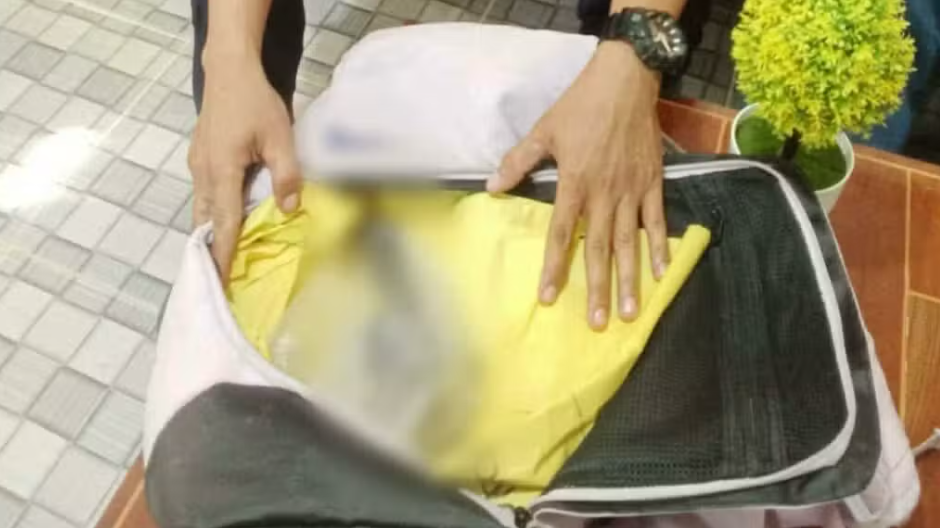
Authorities in Cebu, Philippines uncovered a loaded firearm in a teenage student's possession at school on Thursday, 20 August, marking a sobering reminder of security vulnerabilities in educational settings across the region. The discovery emerged when a teacher conducting a precautionary bag inspection at a school in Pinamungajan noticed a .357 Smith & Wesson Magnum revolver inside the 14-year-old's backpack at approximately 3.50pm. The swift response from school officials—who immediately contacted police—resulted in the weapon being secured without incident and the minor being transferred to the Municipal Social Welfare and Development Office pending parental contact.
Investigative findings revealed that the firearm had originated from within the student's own household, specifically from a cabinet at his grandparents' residence where he had been living while both parents worked outside the municipality. The teenager's decision to transport the weapon to school on the morning of the discovery remains under investigation, with authorities attempting to establish his motivations and whether any specific intentions had prompted the action. Police confirmed the revolver contained no ammunition at the time of recovery, though the absence of bullets provided little reassurance regarding the gravity of the incident.
This incident arrives against a backdrop of escalating security concerns within the Philippine education system, particularly following a deadly shooting at a senior high school in Zamboanga that claimed two lives and sparked provincial-wide alarm. The timing has intensified scrutiny on how firearm owners, especially those with grandchildren in their homes, manage access to weapons. Governor Pamela Baricuatro responded by issuing directives that significantly expanded police presence in schools throughout Cebu, mandating regular security inspections and improved coordination between law enforcement and educational institutions.
The provincial police response has materialised swiftly and comprehensively. Police Colonel Abubakar Udang Mangelen Jr, the Cebu Police Provincial Office Provincial Director, implemented a one-police-to-school scheme in collaboration with local government units and school leadership, effectively stationing uniformed officers in schools across the province. This deployment represents a substantial shift in school security protocols, reflecting broader anxieties about youth access to firearms and the potential for school-based violence—concerns that resonate beyond the Philippines into neighbouring Southeast Asian nations where educational safety remains contested.
The household dimension of this case underscores a persistent challenge in firearm management across the region: the gap between legal gun ownership and practical secure storage practices. Filipino law enforcement has explicitly cautioned firearm owners to maintain strict control over weapons, particularly in multigenerational households where children and adolescents may access storage areas. The requirement for proper, child-resistant storage mechanisms has become increasingly standard in jurisdictions addressing similar incidents, yet implementation remains inconsistent in many communities.
The minor's circumstances—with both parents absent from the municipality and care delegated to grandparents—highlight vulnerability patterns that law enforcement now recognises as risk factors. Social welfare authorities are working alongside family members to determine whether the student's action reflected impulsive juvenile behaviour, peer influence, or more concerning ideation. The involvement of the MSWD Office signals that intervention will extend beyond criminal processing to encompass psychological evaluation and family-based support measures.
For Malaysian observers and policymakers, the Cebu incident offers relevant comparative insight into firearm accessibility within family structures and the effectiveness of school-based inspections as deterrents. While the Philippines maintains more liberal civilian firearm ownership policies than Malaysia, both nations grapple with securing weapons against unauthorised juvenile access. The trigger for the random school bag inspection—described as a precautionary safety measure—demonstrates how routine administrative procedures, when properly implemented, can intercept dangerous items before incidents escalate.
The broader provincial response in Cebu reflects institutional learning from previous security failures. By embedding police officers directly within schools and establishing formal coordination mechanisms between law enforcement and educational administrators, authorities aim to create layered protective barriers. Such measures, however, raise secondary questions about the militarisation of school environments and the psychological impact on students of normalised police presence in educational spaces.
As investigations continue into the teenage student's motivations and circumstances, the incident will likely prompt additional legislative discussions regarding secure storage requirements for licensed firearm owners in the Philippines. Regional security analysts are monitoring whether this case catalyses stronger regulations around household firearm management, similar to reforms implemented in other Southeast Asian jurisdictions following school-based safety incidents. The outcome may influence how other nations in the region calibrate the balance between civilian gun ownership rights and child protection imperatives.

