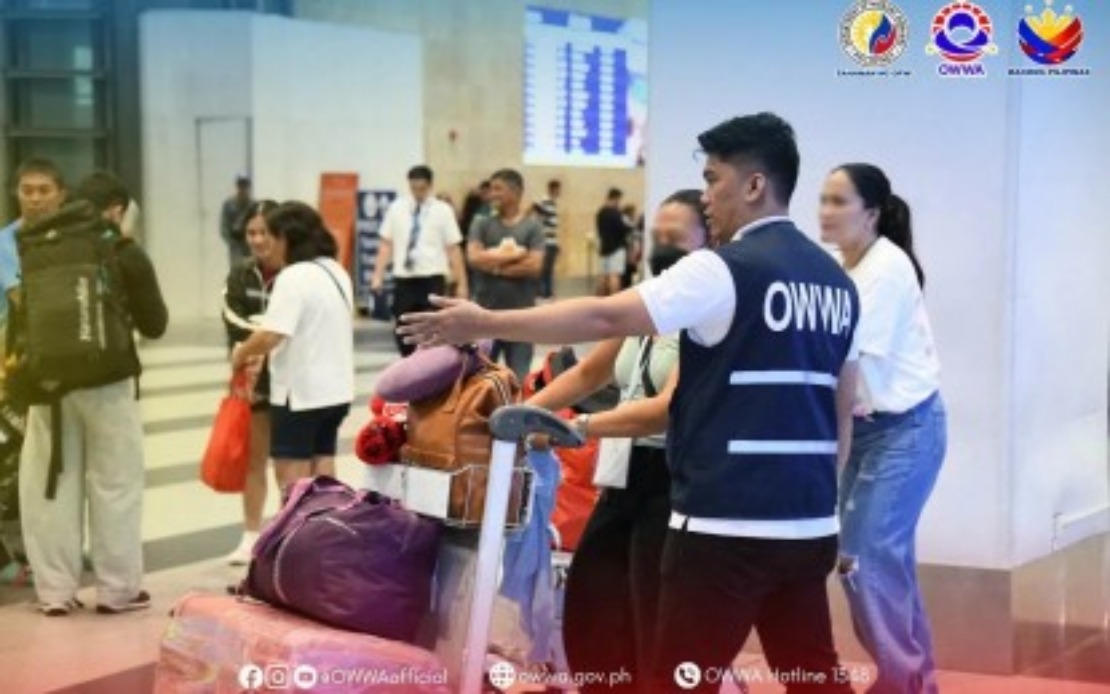
The Philippine government's commitment to bringing home overseas Filipino workers from West Asia shows no signs of waning, even as the initial surge in repatriation requests has subsided. According to the Department of Migrant Workers, more than 10,580 Filipinos and their dependents have been safely returned from the region since tensions between the United States, Israel, and Iran escalated. Speaking to the press on Monday, DMW Undersecretary Felicitas Bay stressed that the agency remains fully operational in processing repatriation requests and providing essential support to migrant workers who wish to leave the troubled region.
The scaling-down of repatriation numbers compared to the peak months of April and May reflects a gradual stabilization rather than the conclusion of operations. While fewer Filipinos are now actively seeking to return home, the DMW continues to field requests and process departures on a regular basis. A recent consignment of 50 repatriates from Kuwait arrived in the Philippines this week, representing the agency's ongoing commitment to assisting workers who remain concerned about their personal security or whose employment situations have become untenable. The declining demand does not signal an end to the crisis mentality that gripped many Filipino households at the height of regional tensions, but rather suggests that those most urgently seeking to leave have already made their exit.
What distinguishes the current phase of repatriation efforts is the shift in operational focus from emergency-scale processing to sustained, managed assistance. The DMW's presence across the Gulf Cooperation Council member states has become increasingly refined, with Migrant Workers Offices in each jurisdiction now functioning as permanent conduits for welfare concerns and repatriation requests. This infrastructure allows the agency to respond more deliberately to individual cases rather than processing large batches en masse. The approach reflects both the improving security situation in select West Asian locations and the recognition that some Filipinos have chosen to remain despite the geopolitical turbulence.
The humanitarian dimension of repatriation efforts extends beyond merely transporting workers back to Manila. The DMW emphasizes that financial assistance, counselling, and job placement support remain available to those who return home. For many overseas Filipino workers, particularly those in domestic work or lower-wage sectors, repatriation represents not merely a return to safety but a complex transition involving family reunification, financial adjustment, and employment uncertainty. The government's sustained commitment signals an acknowledgment that post-repatriation challenges often exceed the difficulties of the journey itself.
For Southeast Asian nations observing Philippine repatriation efforts, the experience offers important lessons about maintaining institutional capacity during protracted crises. Unlike the initial panic phase when resources were stretched thin and decisions made swiftly, the DMW has now established sustainable operational patterns that can be maintained indefinitely without compromising service quality. This measured approach may prove valuable should other countries in the region face similar circumstances requiring coordinated evacuation and repatriation activities.
The information environment surrounding repatriation efforts remains a concern for the DMW, which has repeatedly urged Filipino workers to rely exclusively on verified government sources. Misinformation and rumours spread rapidly through migrant worker networks via social media and messaging applications, sometimes exaggerating security threats or creating false impressions about government policies. The agency's emphasis on official communication channels reflects a sophisticated understanding that maintaining public confidence in government institutions depends partly on controlling narrative and countering unauthorised claims.
Security considerations continue to shape the lived experience of Filipinos remaining in West Asia. The DMW has advised all workers in conflict-affected areas to prioritize personal safety by remaining in secure locations and adhering strictly to local authority instructions. This guidance acknowledges that not all workers can or wish to depart immediately, whether due to contractual obligations, financial constraints, or employment prospects. For those choosing to stay, the DMW's coordinated monitoring systems provide at least a layer of institutional awareness and potential emergency response capacity.
The repatriation process also touches upon broader questions about labour migration policy and worker protection. The willingness of Filipino workers to remain in West Asia despite geopolitical risks underscores the economic pressures driving overseas employment. Many workers cannot afford to leave simply because they remain responsible for remitting funds to dependent family members in the Philippines. This structural reality shapes repatriation choices in ways that transcend individual security concerns and speaks to fundamental inequalities in income and employment opportunity across the region.
Looking forward, the DMW's continued operations serve as a safety valve for Filipino workers confronting workplace crises or personal circumstances that make remaining abroad untenable. The declining repatriation numbers do not indicate resolution of underlying tensions but rather a new equilibrium in which concerned workers have largely exited while those remaining have either adapted to circumstances or calculated that departure risks outweigh staying. The government's institutional readiness to process further departures reflects both humanitarian commitment and recognition that geopolitical situations in West Asia remain unpredictable.

