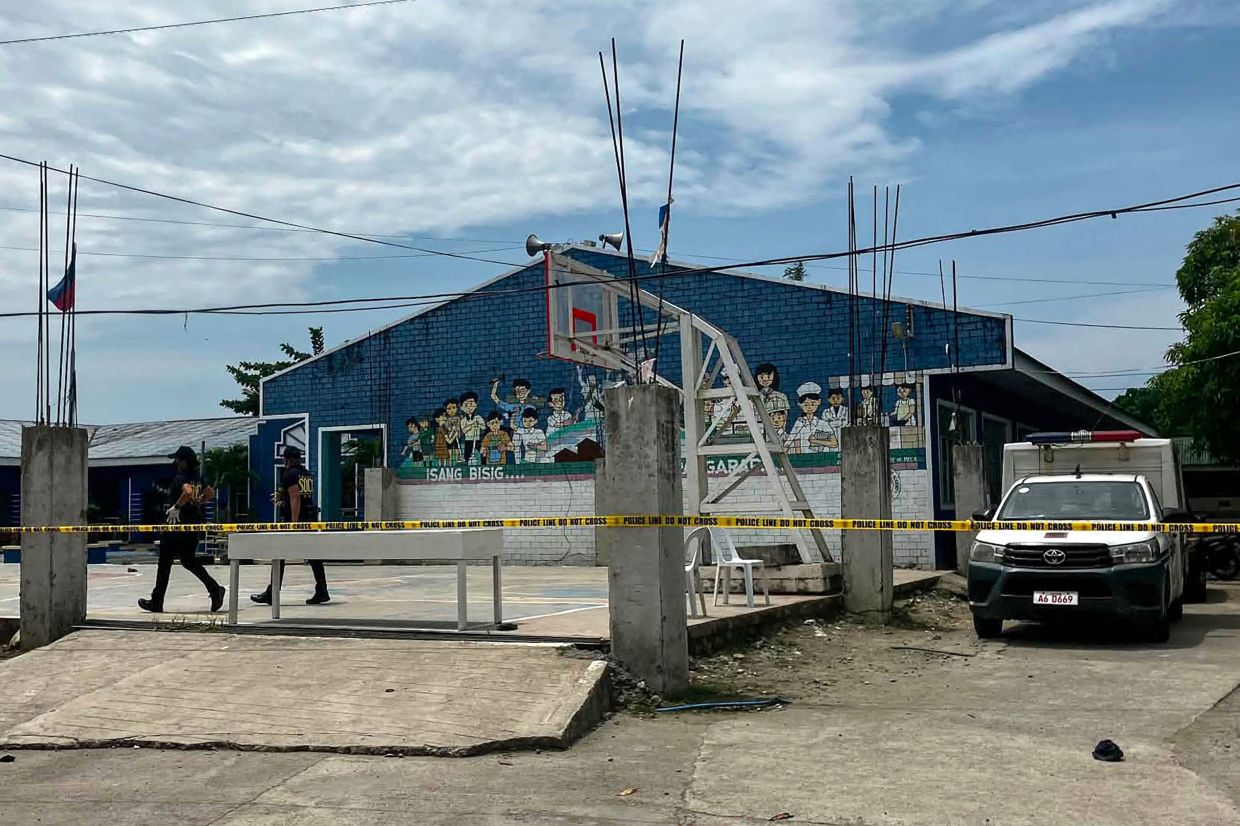
The Philippines confronted a rare but devastating tragedy on Monday when two students fired weapons inside San Jose National High School in Tacloban City, leaving three classmates dead and seven others wounded in what has sent shockwaves through the nation. The incident unfolded in the mid-morning at the government-run institution, which serves more than 1,500 pupils, with authorities quickly apprehending one suspect on campus while pursuing a second who had fled to a nearby residence. Regional police chief Brigadier General Jason Capoy confirmed that both perpetrators were 14 and 15 years old, describing them as close companions who had brought firearms onto school grounds despite minimal security measures.
The attack itself proved particularly ruthless in its execution and indiscriminate in its targeting. According to Capoy's account, the two assailants methodically moved through at least two separate classrooms, continuing their assault as students scattered in panic before pursuing some victims into additional spaces. One gunman wielded a 9-millimetre pistol while the other carried a calibre 38 revolver; police subsequently recovered no fewer than 40 spent shell casings from the scene. The vast majority of casualties and injured persons were female students, Capoy noted, a detail that underscores the seemingly arbitrary nature of the violence inflicted.
Initial questioning of the perpetrators has pointed toward experiences of bullying as a possible catalyst for the violence, though Capoy refrained from elaborating on the specific nature or extent of such mistreatment. The teenagers possessed no prior criminal records, suggesting this incident emerged without warning signs captured in official systems. The revelation that one juvenile obtained his weapon from an aunt who serves as a police officer has triggered a separate investigation into how the firearm escaped secure custody and reached a minor's hands. For the second suspect, investigators are still determining the source and manner of firearm acquisition.
Security failures at the campus emerged as a critical vulnerability enabling the attack to occur. The school's multiple entrance and exit points were monitored by only a single security guard on duty, leaving the facility substantially exposed to precisely the kind of breach that materialized. This systemic gap in protective infrastructure—common across many institutions in the region—raises questions about resource allocation and preparedness in Philippine schools, particularly in light of this incident's potential to reshape how educational facilities approach campus safety moving forward.
Social media videos captured the raw terror experienced by students sheltering indoors as gunfire echoed through corridors. Footage showed pupils huddled beneath desks in darkened classrooms, their voices trembling as they called out to parents in desperation while shots rang out beyond their sanctuary. Other recordings depicted mass evacuation scenes of frightened youths fleeing campus grounds, many clinging to one another for reassurance as they rushed to safety. These images circulated widely online, amplifying the psychological impact and national shock value of the violence.
The apprehension of the two suspects proceeded along different trajectories. Authorities detained one perpetrator directly at the school premises immediately following the incident; however, the second managed to escape the campus and concealed himself within a private residence in adjacent areas. Residents in that neighbourhood alerted law enforcement to the suspect's location, enabling police to locate and arrest him before any further escalation could occur. Both juveniles now face the question of legal culpability within the Philippines' distinct framework governing minor offenders.
The 2006 Philippine law establishing juvenile justice parameters creates a unique situation wherein the 14-year-old suspect may obtain complete exemption from criminal prosecution should authorities establish that the minor lacked awareness of the criminality or consequences of their actions—a determination that in this case appears unlikely given the deliberate nature of the assault. The 15-year-old may face criminal charges if prosecutors successfully demonstrate the requisite understanding of wrongdoing. Both adolescents are expected to be transferred to government welfare officers overseeing juvenile cases once the police investigation concludes, redirecting them toward the social welfare apparatus rather than the standard criminal justice system.
President Ferdinand Marcos Jr. immediately directed national law enforcement agencies to conduct a comprehensive examination of the incident's circumstances and to fortify security measures across schools, workplaces, and public gathering spaces throughout the country. Communications Undersecretary Claire Castro conveyed the president's distress at the tragedy, acknowledging the profound grief and terror experienced by bereaved families and the broader school community. This high-level response reflects both the gravity with which the government regards the incident and broader concerns about public safety and institutional preparedness against such violence.
While firearms-related crime remains endemic to the Philippines due to widespread availability of illegal and unlicensed weapons circulating through underground channels, incidents of mass violence specifically targeting school populations have historically remained comparatively infrequent. The nation does, however, possess recent precedent for brazen public gun violence. In 2022, a gunman attacked an elite university campus in the Manila metropolitan area with pistols, fatally shooting a former municipal mayor with whom he harboured a longstanding dispute, along with two additional victims, before law enforcement secured an arrest. That incident similarly highlighted the vulnerability of ostensibly secure facilities and the prevalence of firearms capable of inflicting rapid casualties.
The underlying causes of Monday's violence—whether rooted principally in reported bullying experiences, psychological disturbance, or other precipitating factors—will form the central focus of ongoing investigation. Understanding the motivational framework proves essential not merely for accountability purposes but for developing prevention strategies addressing root conditions that may otherwise produce similar tragedies. The ease with which adolescents accessed functional weapons likewise demands systematic reform of firearm storage protocols and enforcement mechanisms, particularly concerning weapons held by security personnel and law enforcement officers whose institutional positions create enhanced access.

