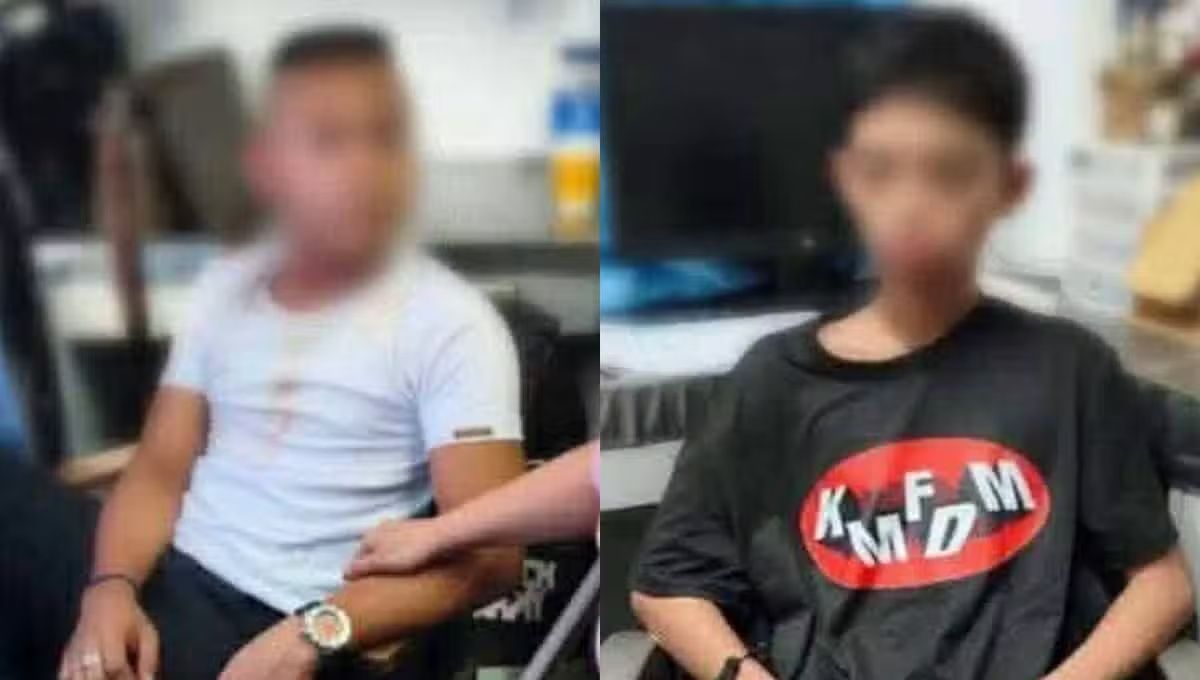
On the morning of June 22, two Grade 9 students walked into San Jose National High School in Tacloban City, Leyte, and opened fire on their schoolmates, killing three and injuring 20 in what ranks among the deadliest school shootings in recent Philippine history. The two suspects, aged 14 and 15, had allegedly endured years of bullying. While the older suspect was arrested and charged with multiple counts of murder and frustrated murder, the younger boy's case took a starkly different trajectory under Philippine law, exposing a legal fault line that now threatens to reshape juvenile justice legislation across the nation.
The law's treatment of the two youths reveals a critical threshold: the 15-year-old can face the full weight of the criminal justice system, but the 14-year-old falls under the protective scope of the Juvenile Justice and Welfare Act of 2006. Rather than facing criminal charges, he will be referred to a rehabilitation facility called the House of Hope, designed for children in conflict with the law. This distinction, intended to recognise developmental differences and prioritise rehabilitation, has become a source of profound anguish for victims' families who feel justice is incomplete.
Erbea Fabian, whose 15-year-old son Chris Lorenz was among those killed, expressed her frustration with an edge of despair. She acknowledged that while the older suspect bears responsibility, the younger perpetrator—who allegedly fired most of the fatal shots and directly killed her son—should face comparable accountability rather than walk a separate institutional path. Jenny Baldoria, mother of 16-year-old victim Joyancee, voiced similar sentiment, her pain raw and unfiltered. These testimonies carry particular weight because they emerge not from abstract legal debate but from the lived experience of irreversible loss, lending moral urgency to the broader policy discussion.
The Tacloban incident arrives amid a broader wave of campus violence across the Philippines. Days after the shooting, authorities disrupted a potential mass shooting at another Leyte school. Within the same week, three separate stabbing incidents erupted on campuses in different regions, suggesting systemic pressures on the education system that extend beyond this single tragedy. This clustering of violence has prompted institutional and political alarm, creating momentum for legislative action that might otherwise face protracted resistance.
President Ferdinand Marcos Jr has already signalled openness to lowering the minimum age of criminal responsibility, a position gaining traction within the security establishment. The Philippine National Police have proposed reducing the threshold to 12, citing cases where children as young as nine have engaged in criminal conduct. Interior Secretary Jonvic Remulla extended the argument further, noting how criminal syndicates deliberately exploit minors in drug operations precisely because the current legal framework shields them from prosecution. Senator Robin Padilla filed legislation in July 2025 to lower the threshold to 10, framing it as a matter urgent enough to warrant an extraordinary congressional session while the legislature observes its regular recess until July 27.
Investigators uncovered troubling details about the suspects' online behaviour that have accelerated calls for digital regulation. The 14-year-old had been posting violent videos online and was immersed in first-person shooting games, particularly GoreBox, a title created by German developer F2Games designed around brutal combat mechanics with extensive weaponry and explosives. Police believe this digital environment substantially influenced the youths' trajectory toward violence. The Philippine government responded by temporarily blocking access to the game while authorities investigate whether the interactive medium played a contributory role. This focus on gaming and online content has opened a secondary policy debate about restricting minors' access to violent digital media.
Regionally, the Philippines maintains one of Asia's highest minimum ages of criminal responsibility. Most neighbouring countries have established the threshold at 14; Indonesia operates at 12; Singapore sits at 10. This comparative context fuels arguments that the Philippines is out of step with regional norms. However, international human rights standards complicate this picture. The United Nations Committee on the Rights of the Child has cautioned against lowering thresholds already above 14 and has declared any minimum below 12 internationally unacceptable. Singapore's approach permits charging offenders between 10 and 16, though their cases typically proceed through specialised Youth Courts rather than conventional criminal tribunals.
Countering the momentum for lowered thresholds is Tricia Clare Oco, executive director of the Juvenile Justice and Welfare Council, who argues that the problem lies not with legal age requirements but with the drivers of youth violence themselves. Speaking to state-run PTV on June 24, Oco contended that reducing the age floor would not automatically prevent children from committing violent acts because it fails to address root causes: family fragmentation, pervasive bullying, toxic peer dynamics, and a media ecosystem that normalises harm. She pointed to jurisdictions in the United States where substantially stricter legal frameworks have proven ineffective in stemming school violence, suggesting that legislative punishment alone cannot solve fundamentally social problems.
Oco further clarified that existing law already provides substantial intervention mechanisms. Courts possess authority to mandate involuntary commitment to the House of Hope within 72 hours, coupled with mandatory structured rehabilitation programming and civil liability exposure for parents. The current framework, properly implemented, already enables significant accountability without necessarily criminalising the minor. This perspective introduces important nuance into what might otherwise be dismissed as naive lenience, positioning the debate not as a binary choice between punishment and permissiveness but as a question about which intervention model most effectively protects communities and rehabilitates youth.
The tragedy has triggered multiple official investigations. Beyond the Philippine National Police probe, the Senate and the Commission on Human Rights have announced their own inquiries. The Human Rights Commission framed its investigation through an explicitly rights-based lens, pledging to honour victims while applying principles of child sensitivity and human rights fidelity. This multi-institutional approach suggests that the policy outcome will reflect not only law enforcement and legislative perspectives but also human rights considerations and broader social context.
For Malaysian observers, the Tacloban shooting and its aftermath carry instructive implications. Both nations face the challenge of balancing legitimate public safety concerns against internationally recognised protections for juvenile populations. Malaysia's own juvenile justice framework operates under similar philosophical tensions, requiring periodic reassessment as social pressures mount and tragic incidents create political pressure for swift action. The Philippine case demonstrates how emotionally compelling victim narratives, comparative regional data, and digital-age vulnerabilities can converge to reshape legislation, while also highlighting the risks of reactive policymaking that fails to address underlying causes of youth violence. As the Philippines wrestles with these questions, the framework it ultimately adopts—whether leaning toward enforcement or rehabilitation—will likely influence regional discussions about how best to respond when minors commit serious crimes.

