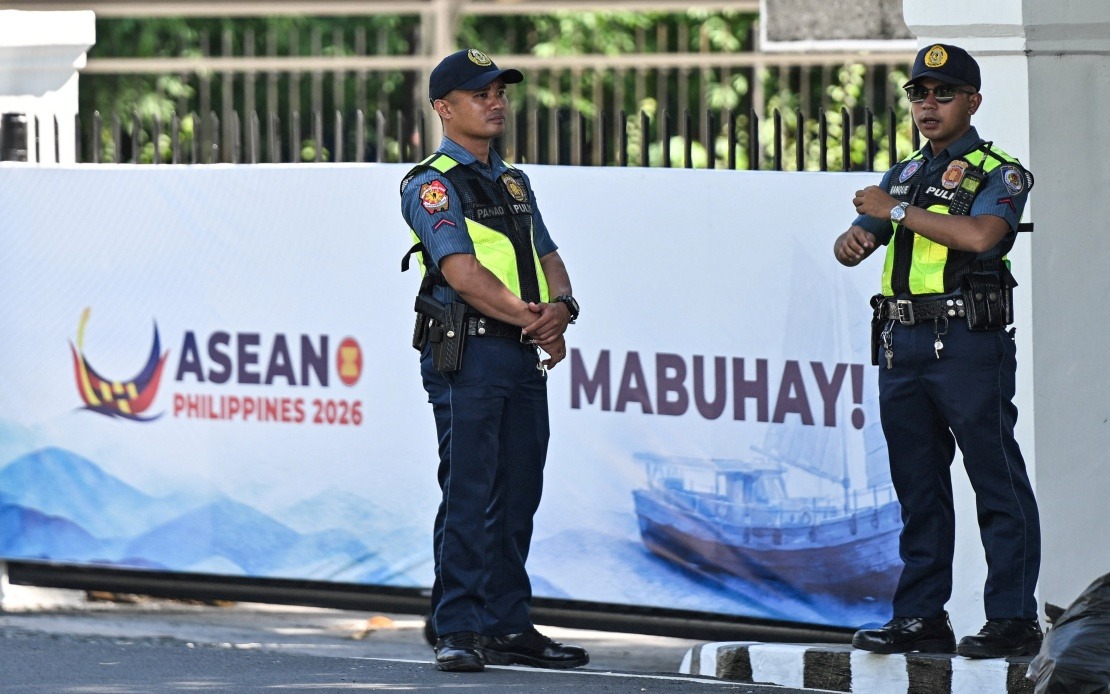
The Philippines assumed the diplomatic spotlight this week as it opened its doors to the 59th ASEAN Foreign Ministers' Meeting and related gatherings, positioning itself as the convener for one of Southeast Asia's most consequential diplomatic moments. Running through July 24, the Manila-hosted sessions represent a pivotal opportunity for regional foreign ministries to chart a collective course through an era of mounting global pressures and internal challenges. According to Foreign Affairs Assistant Secretary Dominic Xavier Imperial, who briefed the media on the event's significance, these meetings are designed to cement ASEAN's unified identity while grappling with development priorities that have accumulated over the bloc's first seven months of Philippine leadership.
The formal agenda reflects the complexity of contemporary Southeast Asian statecraft. Alongside the main foreign ministers' gathering, smaller but strategically important sessions already underway included the 16th joint interface between ASEAN foreign ministers and representatives from the ASEAN Intergovernmental Commission on Human Rights. This particular forum carries outsized symbolic weight within ASEAN's often-contentious human rights framework, demonstrating institutional commitment to advancing fundamental freedoms across the region—particularly for populations in precarious circumstances. Imperial underscored that these parallel sessions underscore ASEAN's professed dedication to the promotion and protection of rights, even as member states continue to struggle with implementation and accountability mechanisms that remain fragmented and occasionally ineffective.
A separate convening on the Southeast Asia Nuclear Weapon-Free Zone illuminated the bloc's longstanding commitment to regional denuclearisation. The SEANWFZ Commission meeting, which coincides with the broader ministerial gathering, undertook the substantive work of reviewing its 2023–2027 strategic framework while considering applications from candidate states seeking Protocol accession. This agenda item reflects decades of ASEAN diplomacy aimed at preserving Southeast Asia as a zone entirely free of nuclear weapons—a priority that has only grown more salient given escalating geopolitical tensions, particularly in the Indo-Pacific.
Tuesday's formal opening of the 59th AMM represents the substantive heart of the week's activities, bringing together the full panoply of ASEAN foreign ministers, diplomatic corps representatives, and permanent missions based in Manila. The session will undertake a comprehensive review of progress across ASEAN's three foundational pillars—the political-security, economic, and socio-cultural communities—whilst simultaneously assessing the bloc's external relationships and positioning on urgent international developments. This multifaceted agenda reflects ASEAN's self-conception as both an inward-looking community and an outward-facing diplomatic actor capable of influencing global affairs.
Two outcome documents will command particular attention during the formal proceedings. The 59th AMM Joint Communiqué traditionally serves as ASEAN's authoritative statement on regional consensus, encapsulating positions on international developments and articulating the bloc's core priorities to external audiences. Equally significant, the Guidelines on the Modalities for Engagement of ASEAN with High Contracting Parties to the Treaty of Amity and Cooperation in Southeast Asia represents a concrete deliverable from the Philippine chairmanship. These guidelines establish a structured diplomatic pathway for states that have not yet formalised official partnerships with ASEAN, functioning as a mechanism to expand cooperation while anchoring all engagement to the TAC framework—a foundational instrument that ASEAN has consistently promoted as the cornerstone of regional peace and confidence-building.
The week's architecture explicitly incorporates dialogue with major powers, underscoring ASEAN's balancing act between competing great-power interests. Wednesday's Post-Ministerial Conferences will see ASEAN foreign ministers convene separately with India, the United States, Canada, Russia, China, the Republic of Korea, Japan, Australia, New Zealand, the United Kingdom, and the European Union. This sequential engagement with diverse partners—representing both regional and global actors—affords ASEAN a unique diplomatic platform from which to articulate regional concerns whilst maintaining careful equidistance from competing spheres of influence. Imperial characterised these gatherings as valuable opportunities for dialogue partners to address issues simultaneously impacting the region and the broader international system.
Thursday's schedule further intensifies the diplomatic tempo with three major mechanisms converging in quick succession: the 27th ASEAN Plus Three meeting, the 33rd ASEAN Regional Forum, and the 16th East Asia Summit. The ASEAN Plus Three framework brings together the ten ASEAN members with China, Japan, and the Republic of Korea, whilst the ARF expands participation to include extraregional powers; the EAS occupies perhaps the most strategically significant position as a 16-member grouping encompassing Australia, India, Japan, New Zealand, Russia, the United States, and all ASEAN members. Collectively, these forums provide nested frameworks through which regional diplomacy operates at varying scales of inclusivity and strategic interest.
South China Sea tensions and Myanmar's ongoing instability loom large across the week's discussions, with both issues guaranteed prominence in ministerial exchanges. The Code of Conduct negotiations—a longstanding initiative aimed at establishing binding dispute-management mechanisms in the disputed waters—will maintain its permanent position on the agenda, though Imperial cautioned that exact negotiating positions remain in flux. Similarly, discussions on Myanmar will involve assessments of whether the Five-Point Consensus framework continues to yield tangible progress toward restoring democratic governance. Imperial indicated that ASEAN engagement extends beyond the State Administration Council to encompass other stakeholders within Myanmar, reflecting the bloc's attempt to maintain leverage across multiple actors within the country's fractured political landscape.
A particularly significant bilateral engagement has been confirmed between Philippine Foreign Affairs Secretary Ma. Theresa Lazaro and Chinese Foreign Minister Wang Yi. In characterising this meeting's importance, Imperial emphasised that discussions would address bilateral relations between Manila and Beijing while simultaneously considering the regional implications of broader global developments—a formulation that acknowledges the interconnectedness of bilateral tensions and regional stability. The Philippines' approach reflects its complex position as both an ASEAN member and a claimant state in South China Sea disputes, requiring diplomatic dexterity to advance national interests whilst maintaining ASEAN consensus.
The week concludes Friday with commemorative activities marking the 50th anniversary of the Treaty of Amity and Cooperation, the foundational document that Imperial has repeatedly cited as the framework anchoring all ASEAN engagement and regional confidence-building mechanisms. This ceremonial closure carries more than symbolic significance—it reaffirms ASEAN's commitment to the multilateral principles and dispute-resolution mechanisms that have, however imperfectly, enabled Southeast Asian states to coexist despite competing territorial claims, ideological differences, and fluctuating great-power alignments. For Malaysian observers and policymakers, the meeting's outcomes will likely carry implications for ASEAN's collective posture on issues ranging from South China Sea management to humanitarian responses in Myanmar, even as bilateral relationships with China and other dialogue partners continue shaping the region's diplomatic trajectory.

