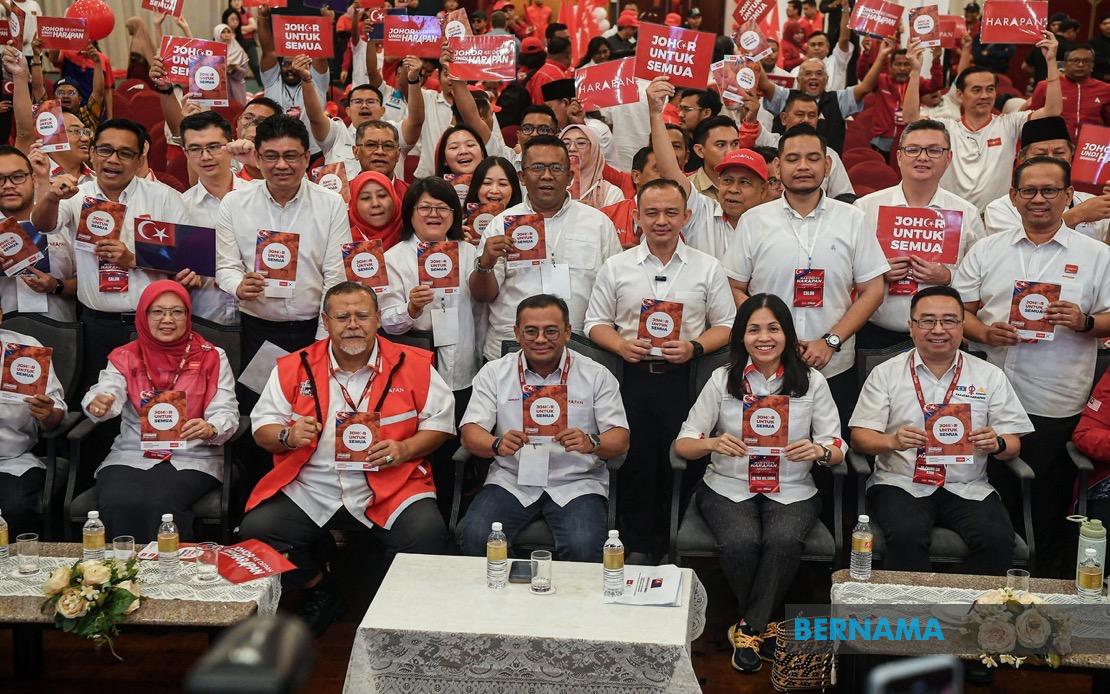
Pakatan Harapan's newly launched 'Johor Untuk Semua' (Johor For All) manifesto represents a substantive policy platform designed to address the real concerns of Johor residents rather than offering empty electoral slogans, according to Johor DAP chairman Teo Nie Ching. Speaking after the manifesto's unveiling in Johor Bahru on July 3 ahead of the 16th state election, Teo emphasised that the coalition's proposals have been carefully calibrated to match both community aspirations and the practical economic constraints facing Malaysia's second-largest state.
The Deputy Communications Minister projected considerable confidence in the manifesto's deliverability, though she acknowledged a crucial precondition: robust cooperation between a potential PH-led state administration and the federal government. This interdependency reflects the intricate dynamics of Malaysian federalism, where significant policy initiatives often require coordinated action across multiple governmental layers. Teo's frank recognition of this requirement demonstrates political maturity and realistic expectation-setting with voters, a departure from the often-optimistic but ultimately unfulfillable promises that characterise many electoral campaigns.
Teo characterised the manifesto as notably balanced, with policy offerings that cut across demographic lines and life stages. The platform explicitly targets youth populations through substantial development investments, supports mothers through targeted assistance programmes, and addresses the needs of children via education-focused initiatives. This demographic inclusivity suggests an attempt to build a broad coalition rather than narrowly appealing to specific voting blocs, a strategic approach that may prove particularly relevant in Johor's diverse electoral landscape.
Among the manifesto's headline commitments stands a pledge to reduce waiting times at the Johor-Singapore border crossings by half. This objective addresses a persistent pain point for residents living along the causeway, where congestion creates daily inconvenience for workers, traders, and families with cross-border ties. Teo flagged the Home Ministry as a critical partner for achieving this goal, recognising that border management involves security protocols and international coordination that extend beyond state-level control. The specificity of the 50 per cent reduction target—rather than vague promises of improvement—suggests the coalition has engaged in preliminary analysis of current processing times and bottleneck sources.
Education emerges as another cornerstone priority within the manifesto's framework. Given Johor's substantial student population and the state's historical prominence in Malaysia's schooling system, this emphasis carries particular weight. The manifesto's education commitments likely encompass funding for school infrastructure, teacher support, and potentially initiatives addressing skill gaps relevant to the state's economic transformation agenda.
The health dimension of the manifesto takes the form of a proposed Johor Health Scheme, mirroring a successful comparable programme already operating in neighbouring Selangor. Teo's confidence in this proposal derives substantially from Selangor's demonstrated track record in implementation and sustainability of similar health financing mechanisms. By pointing to a functioning precedent within Malaysia's own federal context, the coalition provides voters with tangible proof of concept rather than merely theoretical promises. The Selangor reference also carries implicit messaging about the transferability of PH governance models across state boundaries, a form of soft evidence that PH administrations can deliver consistent quality regardless of geography.
Housing affordability features prominently through a deposit assistance scheme for first-time homebuyers, addressing one of Johor's most pressing economic concerns. Property prices in key urban centres have escalated significantly in recent years, placing homeownership beyond reach for many young families and professionals. A deposit assistance programme directly tackles the most substantial barrier to market entry for this demographic, potentially influencing purchasing behaviour and electoral calculations among this crucial voting group.
The manifesto incorporates a RM500 million fund dedicated to youth empowerment and development, representing a substantial financial commitment. This allocation signals serious intent to address youth unemployment, underemployment, and skills mismatch—challenges that have preoccupied policymakers across Malaysia as automation and structural economic changes reshape labour markets. The fund's scope likely encompasses entrepreneurship support, vocational training, and possibly digital skills development initiatives.
Collectively, the ten key policy offerings in the manifesto span healthcare access, housing affordability, education quality, youth opportunity, and border efficiency—policy domains that collectively form the substance of how residents experience their daily lives. Rather than emphasising grandiose infrastructure projects or abstract constitutional commitments, this approach prioritises bread-and-butter governance issues that directly affect living standards and economic mobility.
The Johor state election scheduled for July 11, with early voting on July 7, arrives at a consequential moment for the coalition. A strong performance would validate PH's broader electoral trajectory and provide a testing ground for manifesto implementation, while a disappointing result would raise uncomfortable questions about whether the coalition's messaging resonates with voters beyond its core constituencies. Teo's clear articulation of both what the manifesto promises and what it realistically requires—federal cooperation, adequate resources, and sustained implementation commitment—establishes benchmarks by which the coalition's subsequent performance can be measured and scrutinised.

