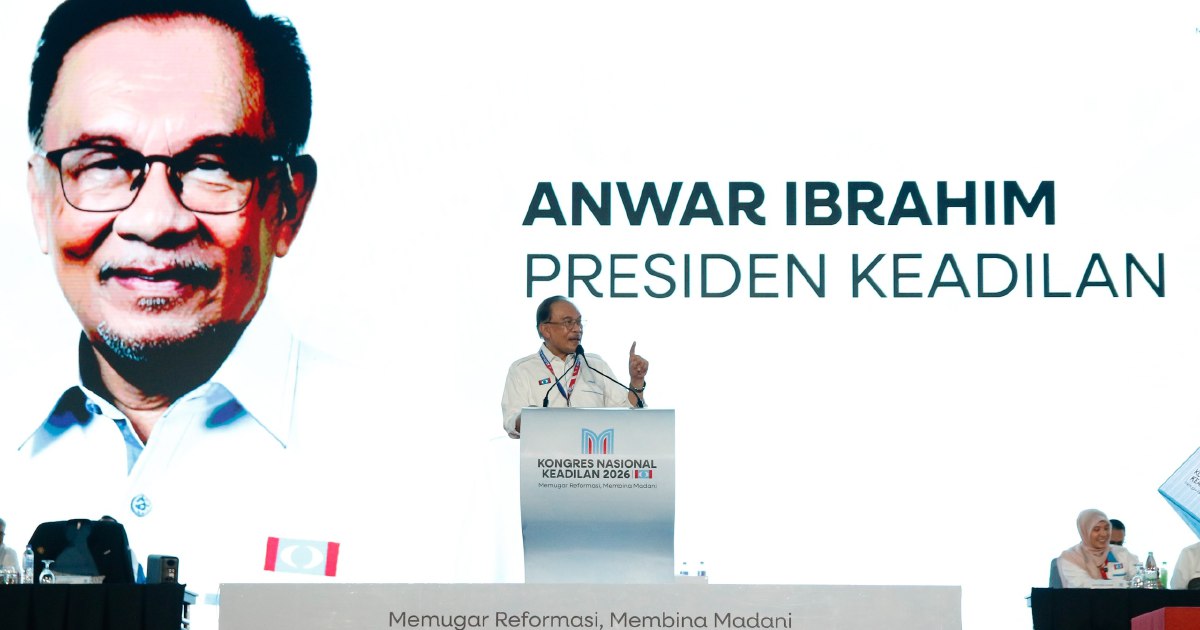
Prime Minister Datuk Seri Anwar Ibrahim has reaffirmed PKR's intention to maintain its working relationship with Barisan Nasional and Umno at the federal level, even as the party remains bound to its Pakatan Harapan partners DAP and Amanah. The statement, delivered in Ayer Keroh, underscores the delicate political balancing act that has defined Malaysia's coalition politics since the 2022 general election, when no single bloc secured an overwhelming majority in parliament.
The positioning reflects the complex realities of contemporary Malaysian governance, where single-party dominance has given way to multi-coalition arrangements that require pragmatic cooperation across traditional political divides. PKR's dual commitments represent a fundamental shift from the zero-sum political confrontations that characterised much of the previous decade, during which Barisan Nasional held uncontested federal power and Pakatan Harapan emerged as the primary opposition force.
Anwar's clarification addresses persistent tensions within the governing coalition structure. Pakatan Harapan, comprising PKR, DAP, and Amanah, has formed the parliamentary backbone of federal government since November 2022. Simultaneously, the government extended support arrangements to Barisan Nasional and Umno MPs, securing legislative support that was deemed necessary to maintain a stable majority in the Dewan Rakyat. This arrangement, formally known as the Madani framework, has allowed the government to pursue its agenda despite internal coalition stresses.
For Malaysian observers and Southeast Asian political analysts, PKR's strategy represents an attempt to reconcile ideological commitments with electoral pragmatism. The party emerged from the 1998 Reformasi movement with an explicit anti-Umno positioning, yet has found itself governing alongside the very organisation it once challenged. This evolution speaks to broader transformations in Malaysian politics, where institutional stability and policy implementation have increasingly competed with purely partisan considerations in shaping coalition calculations.
The implications for Pakatan Harapan's internal cohesion remain significant. DAP and Amanah have consistently maintained stricter boundaries regarding cooperation with Barisan Nasional components, viewing such arrangements with historical scepticism rooted in decades of opposition politics. Anwar's articulation of PKR's dual-track approach effectively positions the party as a bridge between the two political traditions, a role that carries both strategic advantages and inherent vulnerabilities to accusations of inconsistency from coalition partners and opponents alike.
State-level politics add further complexity to this federal arrangement. While PKR maintains opposition governments in several states and collaborates with Pakatan Harapan partners at the local level, the federal dynamic permits greater flexibility with Barisan Nasional. This geographical compartmentalisation of coalition politics allows parties to pursue different strategies in different arenas without complete structural collapse, though it simultaneously creates coordination challenges and potential messaging contradictions.
The sustainability of this arrangement depends substantially on the shared perception that governmental instability constitutes the greater threat compared to the ideological compromises required by multi-coalition governance. Economic pressures, currency fluctuations affecting ringgit stability, and regional geopolitical uncertainties have all incentivised political actors to prioritise continuity over confrontation. In this context, PKR's commitment to maintaining relationships across coalition boundaries reflects rational institutional behaviour rather than pure political opportunism.
International observers have noted Malaysia's relative democratic resilience in weathering multiple coalition reconfigurationscompared to some neighbours. The willingness of parties with profound historical antagonisms to govern together, despite reservations, suggests that institutional norms and electoral systems have developed sufficient checks against authoritarian backsliding. However, this stability comes at the cost of policy clarity and voter comprehension of coalition divisions and priorities.
For regional audiences and foreign investors monitoring Malaysian political trajectories, Anwar's statement provides reassurance regarding governmental continuity. The explicit confirmation that PKR will maintain federal partnerships with Barisan Nasional and Umno signals confidence that coalition architecture, however unconventional, will persist through forthcoming parliamentary sessions and budgetary deliberations. This stability matters considerably for foreign direct investment decisions and Malaysia's standing within regional economic frameworks including ASEAN.
Looking forward, the longevity of this arrangement hinges on whether policy outputs satisfy constituent parties' core interests and whether electoral considerations remain secondary to governance stability. Should economic conditions deteriorate significantly or should federal elections approach, these coalition dynamics may face unprecedented pressures. For now, however, Anwar's remarks consolidate the working consensus that multiple coalition frameworks operating simultaneously constitute Malaysia's new political normal, requiring pragmatism and strategic compartmentalisation from all parties involved.

