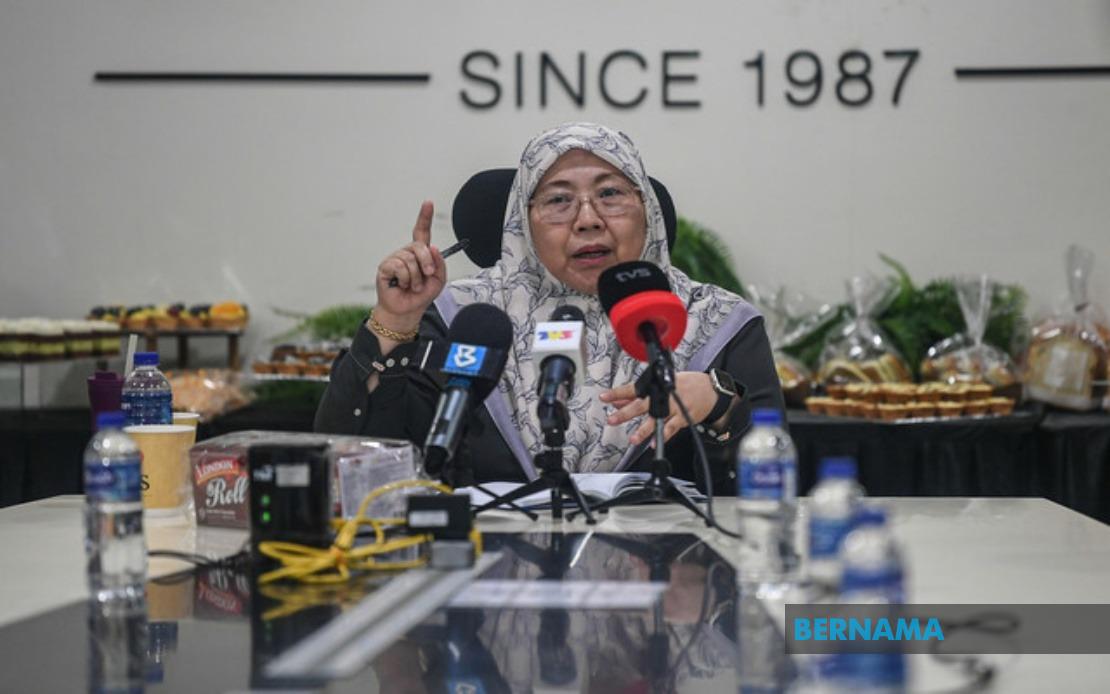
The recent exodus of PKR members and leaders to the Malaysian Indian Congress has raised eyebrows within the party hierarchy, with PKR secretary-general Datuk Dr Fuziah Salleh characterising the departures as a puzzling development during a working visit to Skudai. Her comments come as the coalition braces for the upcoming Johor state election, where internal party dynamics have taken on heightened significance amid broader political realignments across the state.
According to Fuziah, internal party analysis points to a straightforward explanation for the defections: members who switched allegiances harboured grievances about their failure to secure positions within PKR's organisational structure. This revelation suggests that factional tensions and competition for party office remain a persistent challenge within the coalition, particularly in states where power-sharing arrangements create competition among rival camps. The party leadership's relatively candid acknowledgement of the issue reflects both transparency and an attempt to downplay the significance of the departures by framing them as personal ambitions rather than ideological or strategic concerns.
Former Johor PKR State Leadership Council vice-chairman M. Murugan spearheaded the departure announcement on June 28, leading approximately 200 supporters into the MIC fold, specifically into the Iskandar Puteri division. The scale of this movement—involving a former state council vice-chairman alongside such a substantial membership base—underscores the seriousness of internal friction within PKR's Johor operations. Fuziah's somewhat dismissive response, wishing the departing members well in their quest for positions elsewhere, served to minimise the narrative of organisational dysfunction while tacitly acknowledging the legitimacy of their grievance.
The timing of these defections coincides with intensifying political manoeuvring ahead of the scheduled July 11 polling day. The Johor state election features 172 candidates competing for 56 seats, with early voting designated for July 7, creating a compressed campaign period during which every defection carries magnified electoral consequences. For a coalition like Pakatan Harapan that relies on coordinated mobilisation across multiple component parties, losing experienced organisers and their networks represents a tangible operational loss, particularly in a state where voting margins have historically proven decisive.
Fuziah's broader strategic assessment centred on the positioning of rival coalitions and their apparent tactical miscalculations. She interpreted PAS president Tan Sri Abdul Hadi Awang's recent call for voters to reject Pakatan Harapan as evidence of renewed overtures between Barisan Nasional and PAS, suggesting that the Islamist party might be repositioning itself as a negotiating partner for the traditional ruling coalition rather than maintaining its Perikatan Nasional alliance. This interpretation reflects the fluid nature of Malaysian coalition politics, where yesterday's sworn opponents frequently become tomorrow's negotiating partners based on shifting arithmetic and factional interests.
The PKR secretary-general's analysis suggested that Johor voters faced a complex decision landscape requiring careful consideration of the various signals being transmitted by competing blocs. She implicitly encouraged electoral decision-making based on substantive governance concerns rather than reactive responses to coalition positioning. This framing positioned Pakatan Harapan as the stable alternative amid what she characterised as opportunistic manoeuvring by rival camps, though the party's own defection problems somewhat undermined this narrative of cohesion and stability.
Regarding Perikatan Nasional's electoral strategy, which observers have characterised as an attempt to poach Barisan Nasional supporters through anti-establishment messaging, Fuziah offered a counterintuitive assessment. Rather than viewing PN's approach as a threat, she argued that such tactics might ultimately prove counterproductive, generating internal contradictions within the coalition that would undermine its credibility and coherence. Her observation that PAS's explicit opposition to Pakatan Harapan appeared to strike at PN's own coalition interests suggested a coalition under strain, potentially self-destructing through incompatible strategic objectives.
Fuziah's contention that this fractious political environment ultimately benefited Pakatan Harapan rested on the assumption that voters would regard coalition stability and internal harmony as preferable to alliances fractured by mutual suspicion and conflicting agendas. This argument, however, faced its own credibility challenges given the very PKR defections that had prompted her press conference in the first place. The contradiction between celebrating potential PN implosion while managing her own party's membership haemorrhage highlighted the precarious position of Pakatan Harapan's leadership heading into a critical state election.
The broader context for these political manoeuvres involves Johor's historical significance as the only state never governed by Pakatan Harapan, making the July election a benchmark test of the coalition's capacity to expand its electoral footprint beyond its current strongholds. The state has traditionally anchored Barisan Nasional's parliamentary majority, giving control of its 56 state assembly seats outsized importance in national political calculations. Any slippage in coalition discipline or grassroots mobilisation capability could compound electoral difficulties across the board.
For Malaysian political observers, the PKR defections underscore persistent structural challenges within the coalition regarding internal democracy, position allocation, and the management of ambitious mid-level organisers seeking upward mobility. Unlike the dramatic coalition ruptures or ideological schisms that occasionally dominate headlines, these quiet departures driven by frustrated ambition represent the grinding friction that gradually erodes organisational capacity. The pattern suggests that Pakatan Harapan must develop more sophisticated approaches to talent management and aspirational politician retention if it intends to sustain competitive performance across multiple election cycles.

