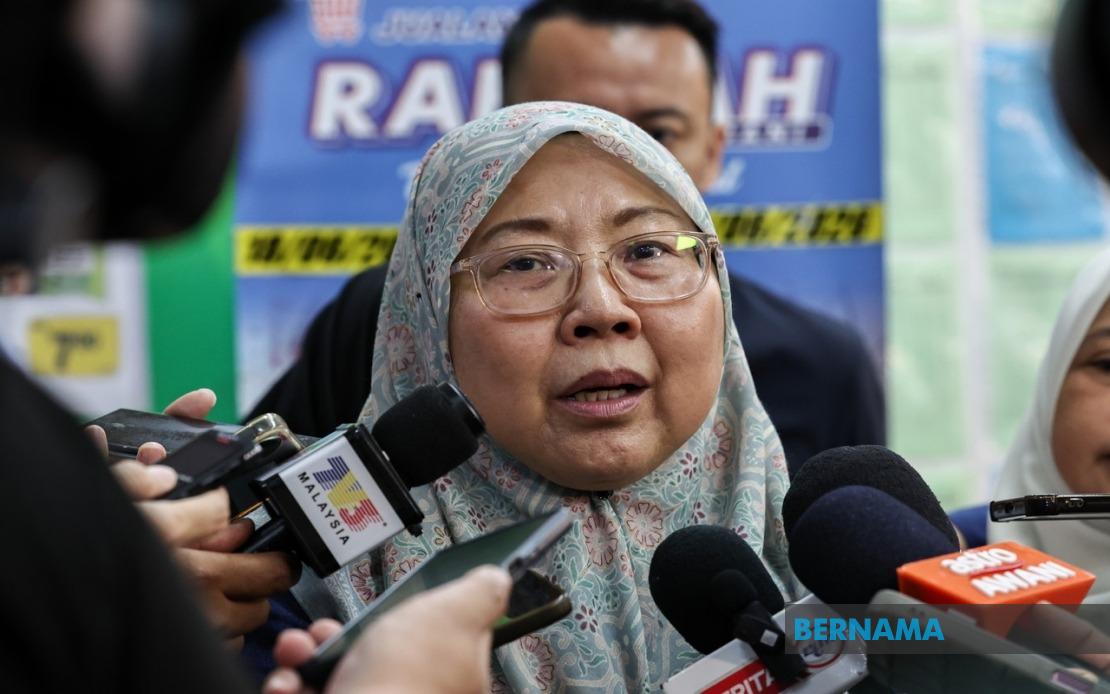
PKR's candidate roster for the imminent state elections in Johor and Negeri Sembilan has reached 99 per cent completion, according to party secretary-general Datuk Dr Fuziah Salleh, who announced the milestone at a public event in Johor Bahru on Wednesday. The party intends to contest 20 seats in Johor and 16 seats in Negeri Sembilan, with formal identification of contenders expected within days. This statement represents a critical juncture in the opposition coalition's preparation for two simultaneous electoral contests that will substantially reshape the political landscape across these strategically important states.
The composition of PKR's lineup will deliberately blend institutional experience with youthful vigour and gender representation, Fuziah explained to waiting journalists. However, she demurred on providing specifics regarding the proportion of first-time candidates, preferring to reserve that detail for the official launch ceremony. This measured approach reflects internal party calculations about how such demographic breakdowns might be received by grassroots members and the broader electorate, particularly in constituencies where voters maintain strong attachments to established political figures.
The candidate announcement comes amid simmering tensions within the opposition coalition over seat allocation, most notably the dispute involving Puteri Wangsa in Johor. PKR claims ownership of the constituency, asserting that the seat had merely been loaned to MUDA during the 2022 state election and therefore should revert to the party. Johor Amanah, the third major component in the Pakatan Harapan alliance, has contested this interpretation, with vice chairman Dr Zuhan Zain publicly rejecting the transfer. Fuziah indicated that resolution of this thorny issue would be escalated to senior leadership of the coalition parties rather than resolved through routine party channels, a signal that the disagreement carries sufficient weight to demand intervention from figures with cross-coalition authority.
The tension over seat allocation underscores deeper coordination challenges within the opposition coalition as it gears up for critical electoral contests. While PKR, Amanah, and DAP have historically maintained an uneasy alliance, periodic disputes over resource distribution and seat allocation have repeatedly tested their commitment to unified opposition politics. For Malaysian voters concerned about the viability of non-BN alternatives, such public squabbles raise uncomfortable questions about whether coalition partners can effectively govern together should they succeed electorally. The Puteri Wangsa controversy, while ostensibly about a single constituency, represents a broader struggle over the balance of power within Pakatan Harapan.
Separately, Fuziah addressed internal disciplinary matters affecting the party's standing. Subang Member of Parliament Wong Chen has challenged PKR to proceed with removing him from the party following a formal investigation into his conduct. Rather than accepting the confrontation, PKR has referred the matter to its Disciplinary Board for considered deliberation, essentially kicking the decision upstairs while maintaining procedural propriety. This measured response contrasts sharply with the provocative stance adopted by Wong Chen, whose public challenge appears designed to force the party's hand and perhaps generate sympathy among supporters who view his position favourably.
The electoral calendar for Johor operates on a compressed timeline that will test both PKR and competing coalitions. The Election Commission has scheduled nomination day for June 27, with polling to occur on July 11. This represents a notably swift progression from the dissolution of the Johor State Legislative Assembly on June 1, allowing barely four weeks for candidate campaigns and voter mobilisation. The abbreviated campaign period advantages parties with strong ground machinery and established brand recognition, potentially benefiting the incumbent Barisan Nasional despite electoral headwinds.
The Johor state assembly's political configuration heading into dissolution reflected BN's commanding position in the state, a legacy of sustained electoral dominance spanning decades. BN controlled 40 of the 56 seats before dissolution, while Pakatan Harapan held 12 seats, Perikatan Nasional managed three, and MUDA secured a single seat. These numbers illustrate the formidable challenge confronting the opposition in Johor, where BN's structural advantages remain substantial despite recent electoral setbacks elsewhere in Malaysia. For PKR specifically, capturing 20 seats would represent meaningful progress but falls far short of the outright majority needed to form government.
Negeri Sembilan presents a somewhat different political arithmetic, with PH entering the electoral contest from a substantially stronger position than in Johor. The state assembly's 36 seats were distributed before dissolution as follows: PH controlled 17 seats, BN held 14, and PN commanded five. This configuration renders Negeri Sembilan genuinely competitive, with control of the state government potentially hinging on the campaign's final weeks and shifting voter sentiment. The August 1 polling date, occurring several weeks after Johor's election, permits PKR and its allies to refine strategies based on Johor results and adjust messaging accordingly.
The nomination date for Negeri Sembilan falls on July 18, with early voting scheduled for July 28. This timeline provides adequate space for campaigning across what is geographically Malaysia's smallest state, though its political significance far exceeds its size. Negeri Sembilan occupies a strategically important position within the Pakatan Harapan coalition structure, and control of the state government would carry symbolic weight beyond mere seat counts. For PKR specifically, holding or gaining ground in Negeri Sembilan represents an opportunity to demonstrate electoral competitiveness outside Selangor, the party's traditional stronghold.
The sequencing of these two elections reflects broader political dynamics reshaping Malaysian federalism. Simultaneous contests in multiple states create both opportunities and risks for opposition coalitions, requiring resource allocation across multiple fronts while maintaining message consistency. PKR's decision to field candidates across both Johor and Negeri Sembilan reflects confidence in organisational capacity but also creates potential distractions if resources become stretched. For Malaysian voters observing these contests, the electoral outcomes will substantially influence perceptions about which political forces are capable of providing credible alternatives to long-entrenched ruling coalitions.
Looking ahead, PKR's candidate announcement will provide crucial signals about party strategy and leadership intentions in these states. The balance between established figures and fresh contenders, the gender composition of candidate lists, and representation across demographic and geographic constituencies will all merit careful scrutiny from political observers. These choices simultaneously reflect internal party calculations about electoral viability and broader commitments regarding democratic renewal and inclusive representation. As the opposition coalition enters the final countdown to these elections, the true test of PKR's preparations will emerge only when campaigning intensifies and voters render their judgments at the ballot box.

