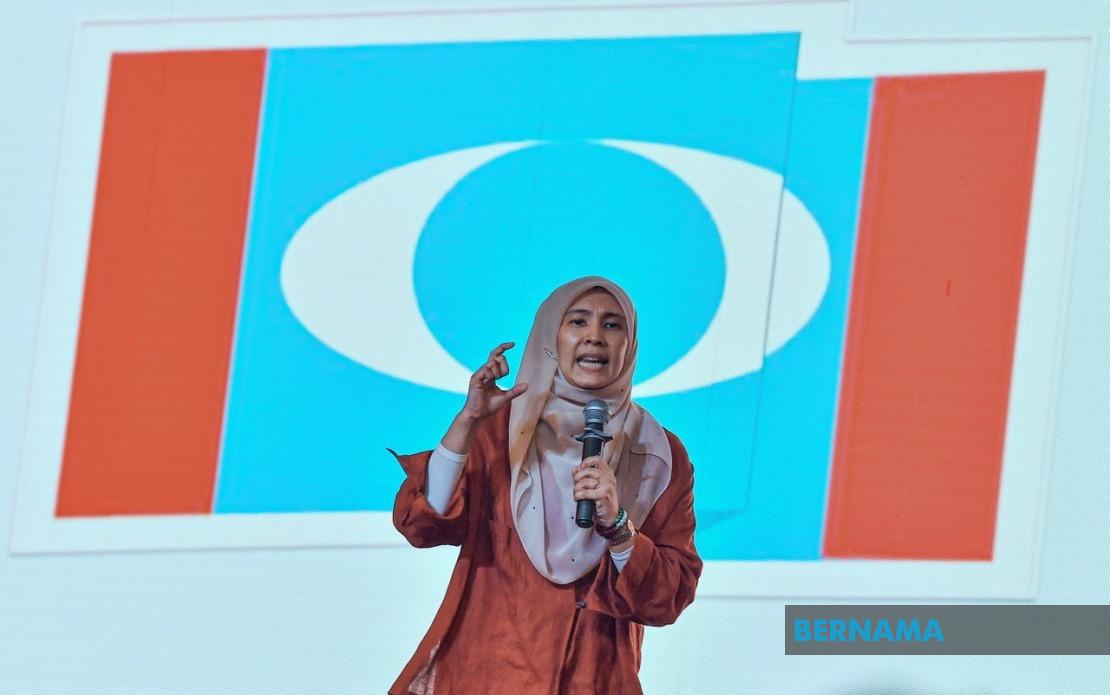
Malaysia's largest ruling coalition party has restructured its senior leadership following an internal reorganisation approved at its central council meeting in Kuala Lumpur on August 6. The PKR Central Leadership Council granted Deputy President Nurul Izzah Anwar a temporary leave of absence from her position, effective after the party's 2026 National Congress scheduled for mid-August in Melaka. The decision came after Nurul Izzah formally requested to step down from the role, prompting the council to grant her the requested relief rather than accepting an outright resignation.
Datuk Seri Fahmi Fadzil, the party's Information Chief and Minister of Communications, announced the leadership council's decision through a formal statement. The announcement reflected the party's careful handling of the transition, with officials emphasising that Nurul Izzah will continue to fulfil her remaining official duties before the change takes effect. She is scheduled to officiate the Women's and Youth Wing congresses on August 14, just ahead of the National Congress, ensuring continuity in her ceremonial responsibilities during this transition period.
The interim succession to Nurul Izzah's position has been assigned to Datuk Seri Saifuddin Nasution Ismail, who currently serves as PKR Vice-President. His elevation to assume Deputy President responsibilities on a temporary basis maintains the party's established hierarchy while addressing the vacancy created by Nurul Izzah's leave. This arrangement allows the party to maintain operational continuity without triggering a full-scale leadership election before the National Congress. The interim designation suggests that a more permanent resolution may be decided during the Melaka congress or at a future date determined by the party leadership.
Simultaneously, the council approved the consolidation of electoral responsibilities within the party structure. Datuk Seri Amirudin Shari, another party Vice-President, will assume full responsibility for PKR's Election Director role. This shift represents a strategic redistribution of powers that strengthens the party's capacity to coordinate electoral campaigns and organisational matters. The move reflects PKR's preparation for what is expected to be an active political period as Malaysia approaches the 2026 national elections and manages ongoing state-level political dynamics.
The leadership council also formally acknowledged the outcomes of recent state elections held in Johor and Negeri Sembilan, accepting the electoral results with appropriate grace. While the statement did not elaborate on whether these results met the party's expectations, the formal acknowledgement demonstrates PKR's institutional acceptance of democratic processes even when outcomes may have been disappointing. The council's measured response indicates the party's focus on consolidating its current position rather than dwelling on electoral setbacks.
Particular recognition was extended to Datuk Seri Aminuddin Harun, who recently completed two terms as Menteri Besar of Negeri Sembilan. The party formally expressed its gratitude for his service and leadership throughout his tenure, signalling respect for outgoing state-level leaders who have served the party's interests. This acknowledgement is significant in Malaysian politics, where state-level positions often serve as crucial breeding grounds for national political figures and represent important power bases for political parties vying for dominance in multiethnic coalitions.
The council's agenda also included routine administrative matters that underscore the party's ongoing expansion efforts. PKR approved the admission of 3,533 new members who had registered through the party's online registration system between mid-July and early August. This substantial intake of new members suggests strong grassroots enthusiasm or successful recruitment drives, and indicates PKR's confidence in its organisational momentum heading toward the crucial 2026 electoral cycle. The online registration system reflects the party's modernisation efforts in membership management and reflects broader trends in Malaysian political organisation.
These leadership adjustments occur within a broader context of PKR's evolution as the primary Malay-majority party within Malaysia's ruling coalition. The party has navigated complex internal dynamics while managing its role as junior partner to the Malaysian Chinese Association within the Barisan Nasional framework, whilst also maintaining influence within the Pakatan Harapan opposition coalition structure. Nurul Izzah's decision to take leave from her Deputy President position removes a potentially high-profile figure from immediate decision-making roles, though her continued presence in party structures suggests this may be a temporary arrangement rather than a permanent departure.
The timing of these changes, coming just before the 2026 National Congress, indicates that the party leadership has orchestrated these transitions to achieve greater consensus within the wider membership body. By securing council approval and presenting these changes as negotiated accommodations rather than contentious decisions, PKR demonstrates sophisticated internal political management. The explicit mention that Nurul Izzah's leave duration will be announced at a later date provides flexibility for the party to adjust arrangements based on evolving circumstances or developments within the broader political landscape.
These leadership transitions carry implications for Malaysian politics more broadly, given PKR's significant influence within government coalition dynamics. The party's ability to manage internal reorganisation smoothly, without apparent public rancour or factional disputes, signals organisational stability during a period when multiple coalition partners are jostling for position ahead of the 2026 general elections. How these interim arrangements evolve, and whether they lead to more permanent structural changes within PKR's leadership, will likely become clearer during the Melaka National Congress and in subsequent months as the political calendar accelerates.

