The Melaka chapter of Parti Keadilan Rakyat has committed to unveiling its candidates for the upcoming state election well ahead of polling day, a strategic shift designed to give newer political entries room to build support and credibility among voters. According to Adam Adli Abdul Halim, the acting chairman of Melaka PKR's leadership council and Deputy Minister of Higher Education, the party recognises that compressed timelines have previously hampered candidate preparation and campaign effectiveness. By frontloading the announcement, PKR hopes to overcome these historical obstacles and deploy a reinforced team ready to contest competitively.
The accelerated timeline reflects PKR's ambition to field a substantial cohort of fresh faces rather than recycling established politicians. This generational refresh carries particular significance in Malaysia's evolving political landscape, where voter fatigue with traditional figures has driven electoral volatility. Younger candidates and those new to state-level competition require extended periods to establish name recognition, articulate policy positions, and cultivate localised support networks—advantages that compressed election cycles typically deny them. By announcing candidates months in advance rather than weeks, PKR calculates it can transform electoral newcomers into credible challengers capable of resonating with constituents.
Crucially, the party's strategic repositioning encompasses a deliberate commitment to gender and age diversity. Adam Adli emphasised that balancing representation between women and younger politicians shaped the decision to announce candidates early. This reflects a broader recognition within PKR that Malaysian voters, particularly in urban and semi-urban areas, increasingly reward parties that visibly champion political pluralism. Women's participation in electoral contests has become a litmus test of democratic commitment, while youth representation appeals to emerging voter cohorts concerned with climate, digital economy, and social justice issues. Early announcement signals seriousness about these commitments and allows female and younger candidates sufficient runway to overcome any organisational disadvantages.
The candidate selection apparatus itself involves multiple layers of scrutiny, beginning at branch-level assessments before ascending through state-level evaluation and concluding with central party headquarters approval by the PKR president. This graduated filtration process aims to ensure candidates possess adequate grassroots support while maintaining quality standards and ideological coherence. However, multi-stage selection also introduces complexity and potential bottlenecks—challenges that prompted PKR's decision to initiate proceedings well before the election writ drops. Early commencement allows sufficient time for deliberation without sacrificing thoroughness.
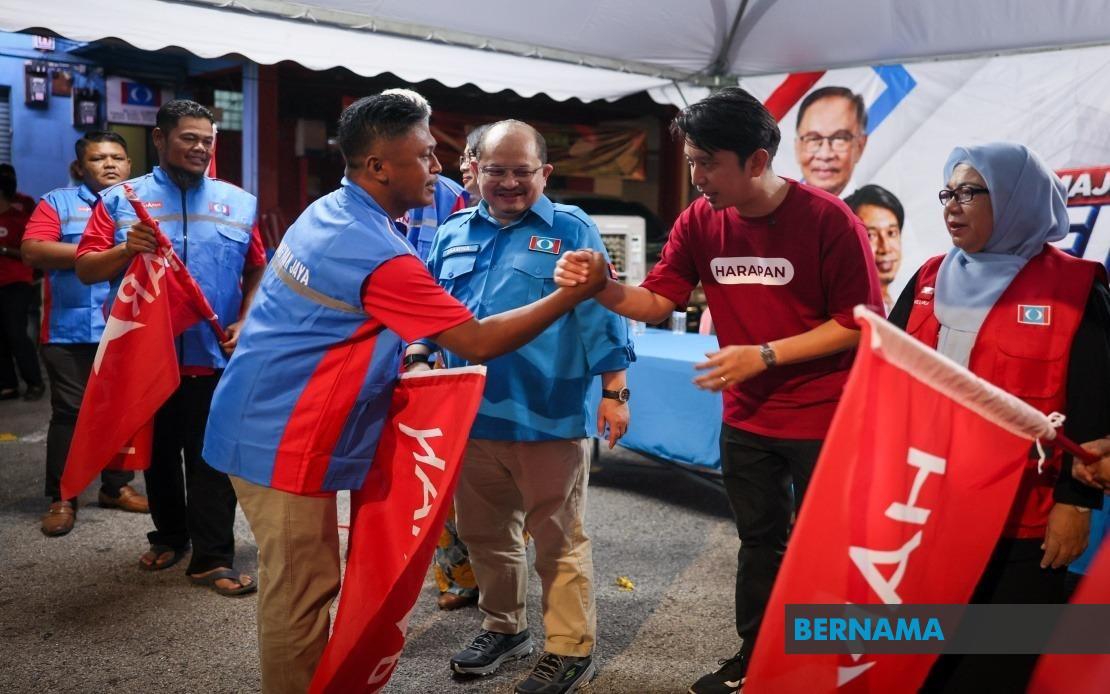
Equally significant is PKR's parallel emphasis on fortifying its election machinery through a coordinated series of launches across five constituencies: Tangga Batu, Hang Tuah Jaya, Alor Gajah, Masjid Tanah and Jasin. This geographic distribution underscores recognition that candidate quality alone cannot guarantee electoral success without corresponding organisational infrastructure. Robust machinery—comprising trained volunteers, effective communication networks, voter registration drives, and coordinated canvassing—constitutes the foundation upon which campaigns are built. By constructing these systems concurrently with candidate selection, PKR ensures that whenever nominees are announced, they inherit functioning support networks capable of translating individual popularity into electoral gains.
Adam Adli's commentary on machinery development revealed an important strategic principle: the party prioritises organisational readiness over specific candidate identities. This stance allows PKR to maintain campaign momentum regardless of last-minute candidate changes or internal disputes. A robust machine capable of supporting any nominated contender provides insurance against the disruptions that sometimes accompany candidate selections. This approach also permits flexibility—should negotiations with coalition partners require swapping candidates or adjusting seat allocations, existing machinery can be redirected without fundamental compromise. For Malaysian political parties, where leadership transitions and coalition negotiations frequently generate uncertainty, such organisational resilience proves invaluable.
The broader context involves ongoing cooperation discussions between Pakatan Harapan and Barisan Nasional, the two major political coalitions vying for Melaka control. Adam Adli confirmed that preliminary informal discussions have occurred but formal negotiations aimed at structuring cooperation remain pending. These coordination talks carry major ramifications for the election's competitive structure. Should PH and BN reach agreement on seat allocations and avoid three-cornered contests, the state election would likely feature reduced fragmentation and clearer voter choice. Conversely, should negotiations falter, PH has signalled willingness to contest independently, potentially recreating multi-candidate scenarios that benefit neither major coalition while potentially elevating smaller parties.
The involvement of PH election director Datuk Seri Amirudin Shari in contacting Melaka Chief Minister Datuk Seri Ab Rauf Yusof to schedule formal negotiations indicates serious engagement despite current informality. Such high-level contact protocols suggest both coalitions recognise mutual benefits from orderly competition rather than bitter three-cornered warfare. Malaysian voters in recent elections have demonstrated preference for clarity and reduced contest fragmentation, factors that may encourage pragmatic negotiation between PH and BN despite ideological differences. However, substantive gaps over seat allocations, policy priorities, and power-sharing arrangements could derail talks, leaving PKR to proceed with independent candidacies.
Adam Adli additionally framed cooperation discussions as opportunities to elevate electoral tone and reduce negative campaigning. Malaysian politics has become increasingly personalised and occasionally vituperative, with social media amplifying harsh rhetoric and unsubstantiated allegations. Both PH and BN have acknowledged that healthier electoral contests serve systemic interests by preserving democratic legitimacy and public trust in institutions. Early dialogue creates space for establishing ground rules constraining campaign negativity, protecting institutional integrity, and demonstrating political maturity. This dimension reveals that electoral cooperation encompasses not merely mechanical seat allocations but broader commitments to democratic norms.
For Melaka voters and Malaysian politics more broadly, PKR's accelerated candidate timeline represents a test case in modernising electoral practices. Should the party successfully field prepared, diverse candidates through early announcement, success could establish templates that other parties emulate. Conversely, should logistical challenges or internal disputes disrupt the process, scepticism about candidate preparation advantages would intensify. The experiment also intersects with broader governance questions about how Malaysian parties can simultaneously pursue reform, build inclusive representation, and maintain organisational coherence. PKR's Melaka effort suggests these objectives, while demanding, remain simultaneously pursuable through strategic sequencing and institutional discipline.

