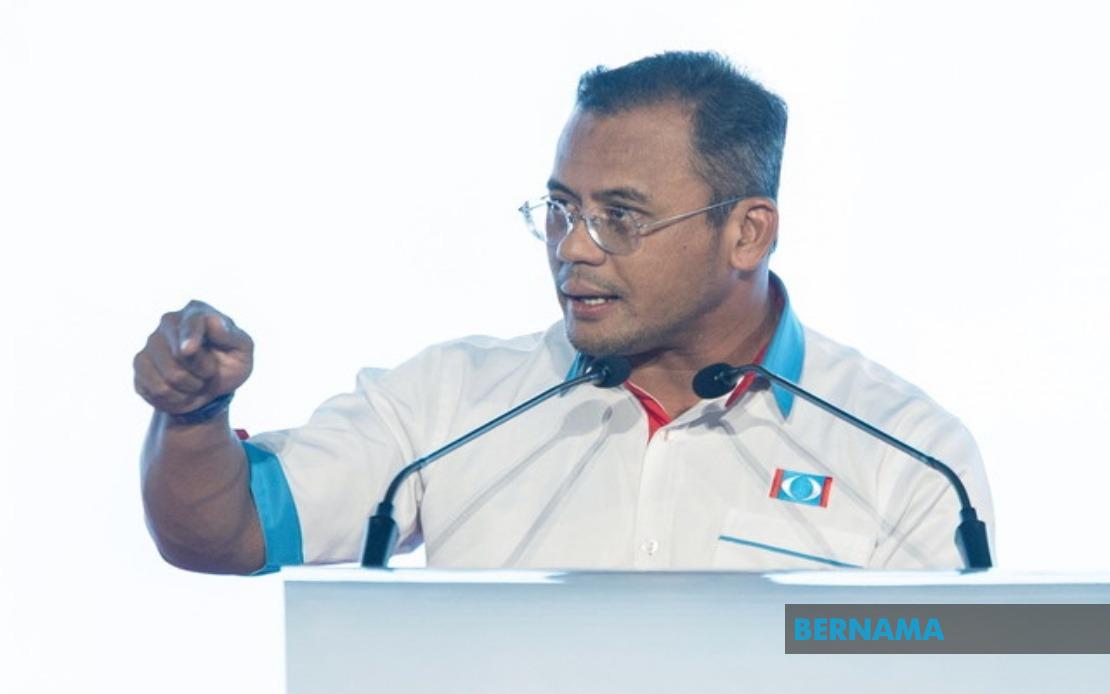
PKR's top leadership has doubled down on the party's commitment to inclusive, multi-racial politics, framing this stance as fundamental to the party's identity and long-term viability. Speaking at the PKR National Congress in Melaka, vice president Datuk Seri Amirudin Shari articulated a careful political balance: defending fair treatment across all communities while simultaneously acknowledging the constitutional status of Islam and the position of the Malays. This dual message reflects PKR's ongoing navigation of Malaysia's complex political landscape, where appeals to inclusivity can collide with sensitivities around constitutional provisions and communal identities.
Amirudin, who serves as Selangor Menteri Besar, positioned PKR's reform agenda as having matured significantly since party president Datuk Seri Anwar Ibrahim launched his struggle in 1998. According to Amirudin, that movement successfully elevated multiple issues into mainstream political discourse, including democratic enrichment, fundamental rights protection, equitable economic distribution, and transparent governance. By framing these achievements as concrete outputs of PKR's political philosophy, the leadership aims to demonstrate that the party's inclusive approach has tangible benefits beyond mere rhetoric. The emphasis on 1998 carries symbolic weight in Malaysian politics, representing a watershed moment when questions about judicial independence, political freedoms, and governance accountability entered public consciousness in unprecedented ways.
The party's vice president Datuk Seri R. Ramanan, who also holds the portfolio of Minister of Human Resources, articulated a sharper critique of opponents' tactics. Ramanan explicitly condemned political actors who weaponise racial and religious identity to mobilise voters and fracture national unity. This condemnation matters because it signals PKR's willingness to name divisive strategies directly, even as the party itself operates within Malaysia's constitutional framework regarding Islam and Malay-Bumiputera protections. Ramanan's framing suggests that one can simultaneously respect constitutional provisions while rejecting the instrumentalisation of those provisions for narrow political gain—a distinction that appeals to voters concerned about both constitutional integrity and social cohesion.
Ramanan also pivoted to internal party discipline, cautioning that leadership conflicts cascade downward through organisational structures, ultimately weakening the party machinery. This appeal for unity appears designed to address known tensions within PKR between various factions and ambitious politicians. By warning that internal discord primarily harms ordinary members and branch-level operatives rather than senior leadership, Ramanan attempts to shame senior figures into putting aside personal ambitions. The framing—that internal conflict benefits political opponents—transforms factional disputes from personal matters into party-wide concerns, potentially increasing peer pressure on rivals to reconcile or at least maintain public civility.
Another vice president, Datuk Chang Lih Kang, introduced electoral evidence to support the party's thesis that inclusive politics can win votes across communal lines. Chang pointed to the Chennah state seat in Negeri Sembilan, where Malay voters reportedly increased their support for DAP secretary-general Anthony Loke despite identity-based attack campaigns. This example carries significance because it directly challenges the assumption that Malaysia's ethnic communities vote primarily along ethnic or religious lines. If Malay voters genuinely shifted support toward a non-Malay DAP politician—and did so while facing identity politics pressure—this suggests there exists political space for cross-communal coalitions based on governance performance and policy delivery rather than identity appeals.
The emphasis on Chennah's electoral dynamics also speaks to the specific regional context of Negeri Sembilan, a state where PKR holds considerable influence. By highlighting a positive result from a neighbouring political ecosystem, PKR leadership implicitly argues that their model of inclusive politics is not merely aspirational but empirically validated by voters. However, the party faces a crucial challenge: translating sporadic electoral victories built on inclusive appeals into sustained, dominant coalitions. This requires maintaining discipline around messaging and preventing factional actors from reverting to identity-based strategies when facing electoral pressure, a task that Ramanan's admonitions about internal unity seem designed to address.
The context of these remarks matters considerably for understanding PKR's strategic positioning within Malaysia's broader political ecosystem. The party operates within a coalition government where it must balance its reformist, inclusive identity with partners who may prioritise different constituencies or adopt different political strategies. PKR's public reaffirmation of its commitment to fair treatment across all communities serves multiple audiences simultaneously: attracting urban, educated, multi-ethnic voters concerned about governance and democratic quality; reassuring Malay and Muslim voters that the party respects constitutional provisions; and signalling to coalition partners that PKR will not drift toward separatist or majoritarian positions.
The timing of these statements at a national congress also suggests internal audience management. By having multiple vice presidents articulate similar themes—fair treatment for all communities, rejection of identity politics, emphasis on good governance—the party leadership ensures consistency in messaging while distributing rhetorical burden across the hierarchy. This approach minimises the risk that a single leader's comments could be misinterpreted or selectively quoted, a critical concern in Malaysian politics where statements about race and religion face intense scrutiny and can provoke significant backlash.
For Malaysian and Southeast Asian observers, PKR's positioning reveals the persistent tension between aspirational inclusive politics and the structural realities of communal-based political competition. The party's consistent messaging suggests a calculated bet that enough voters across Malaysia's diverse population prioritise governance quality, economic fairness, and anti-corruption measures over identity-based mobilisation. However, this bet remains contested, and PKR's ability to maintain internal unity around inclusive principles will determine whether the party can translate rhetorical commitment into electoral dominance and lasting institutional change.

