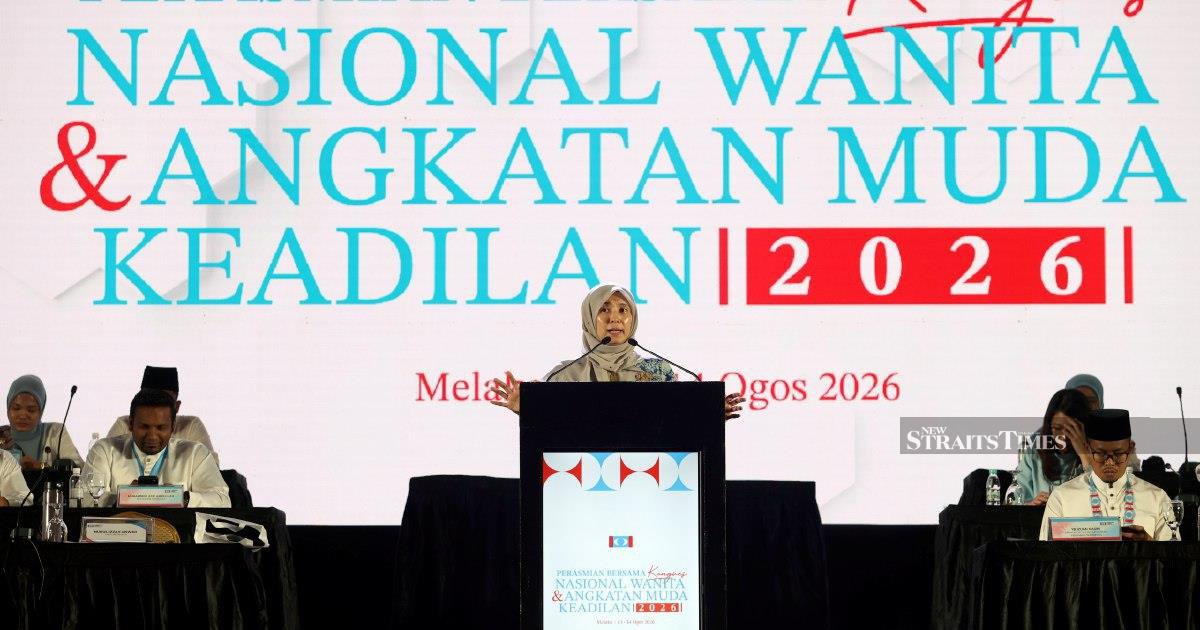
During remarks made in Ayer Keroh, Nurul Izzah Anwar, the deputy president of Parti Keadilan Rakyat, has underscored the critical need for her party to articulate precisely where its non-negotiable ethical positions lie. Her intervention signals growing attention within PKR to the fundamental question of what the coalition's core values should be, and how those principles ought to constrain decision-making even when political circumstances pressure leadership toward accommodation.
The significance of Nurul Izzah's statement extends beyond internal party management. In Malaysian politics, where coalitional arrangements have become the dominant mode of governance since 2018, parties often face acute tension between maintaining alliance partnerships and preserving ideological integrity. PKR, which functions as the de facto backbone of the current ruling coalition, finds itself navigating complex power-sharing dynamics. Defining non-negotiable boundaries represents an attempt to anchor the party's identity amid these shifting political landscapes.
Nurul Izzah's specific framing—that compromise must never become a vehicle for legitimising corruption, abuse of office, or other violations—speaks directly to Malaysia's historical governance challenges. The country has experienced repeated cycles in which political actors invoke coalition necessities or pragmatic statecraft to overlook or downplay serious wrongdoing. By flagging this particular risk, the PKR deputy appears to be cautioning her own party against rationalising ethically questionable decisions through appeals to political expediency.
The timing of this intervention is instructive. PKR operates within coalitional contexts that sometimes require supporting partners whose track records or current conduct might conflict with the party's stated reform agenda. Establishing explicit red lines could serve as an internal mechanism for party discipline, allowing leadership to reject proposals or alignments that cross established thresholds. Without such clarity, individual party members and factions may adopt divergent interpretations of what the party will tolerate, creating inconsistency or enabling selective application of standards.
For Malaysian observers, Nurul Izzah's remarks carry additional weight given her family's prominent role in the party and the nation's political history. The Anwar family has long positioned itself around themes of institutional accountability and reform. Her statement therefore functions partly as a reaffirmation of PKR's stated commitments, and partly as a signal to both internal audiences and the broader Malaysian public about how seriously the party intends to pursue those commitments.
The call for defining red lines also reflects deeper structural challenges facing coalitional governments in Southeast Asia. When multiple parties govern together, each brings distinct constituencies, policy priorities, and ethical frameworks. Negotiating coherent standards becomes technically complicated and politically fraught. Yet the absence of explicit boundaries can erode public trust if voters perceive that ethical standards have been progressively relaxed to accommodate coalition partners. Malaysia's experience with the 1MDB scandal and related governance failures has made citizens particularly attuned to signs that political alliances might override institutional accountability.
Within PKR specifically, establishing clear ethical parameters could help address internal tensions between different factions. The party encompasses figures with varying degrees of commitment to reform, and members occupying government positions face constant pressure from interest groups seeking exemptions from rules or standards. An explicit framework of non-negotiable values would theoretically constrain such pressures and provide cover for officials who choose principle over short-term political advantage.
Nurul Izzah's emphasis on preventing corruption and abuse of power from being excused through political compromise also invokes Malaysia's ongoing institutional development. The Malaysian Anti-Corruption Commission, the courts, and parliamentary processes have gradually strengthened mechanisms for investigating and prosecuting misconduct. However, these institutions function within a political environment where leaders ultimately decide which investigations to prioritise and which cases to pursue. If senior politicians openly state that misconduct becomes acceptable when justified as political compromise, public faith in institutional independence deteriorates further.
The practical challenge, of course, involves determining what falls within acceptable compromise and what crosses into wrongdoing. Nurul Izzah's framing does not address this ambiguity directly. Different party members, external observers, and rival political actors may disagree sharply about where lines should fall. Some decisions that one faction views as necessary compromise another might characterise as corrupt. Without mechanisms for adjudicating these disagreements transparently, establishing red lines remains aspirational rather than operationally binding.
For coalition politics across Southeast Asia, Nurul Izzah's intervention offers a modest template for how larger parties might attempt to maintain ethical coherence without abandoning collaborative governance. The approach acknowledges that political compromise is inevitable and sometimes necessary, but insists that certain boundaries remain inviolate. Whether PKR can successfully operationalise this principle—and whether doing so would enhance or complicate its governing arrangements—remains an open question that will unfold through concrete decisions and outcomes rather than through rhetoric alone.

