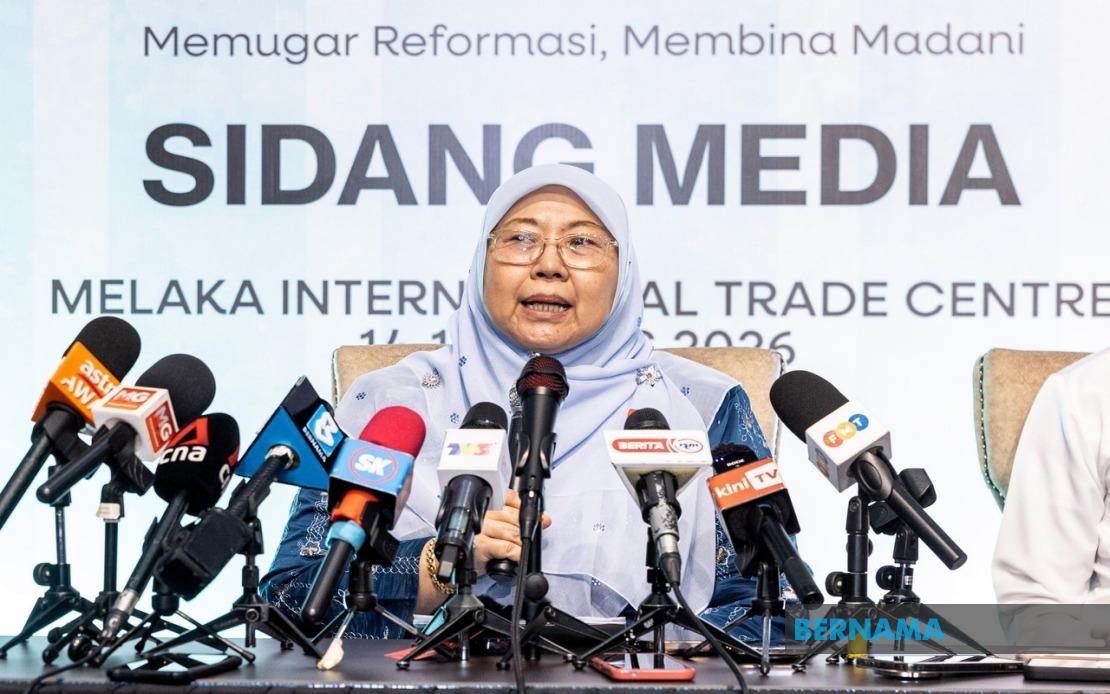
Parti Keadilan Rakyat has adopted a flexible approach toward deputy president Nurul Izzah Anwar's absence from party duties as she pursues further education, with no specific timeframe imposed on her leave and an assurance that she may resume her position whenever circumstances permit. Party secretary-general Senator Datuk Dr Fuziah Salleh made this announcement during proceedings at the Melaka International Trade Centre in Ayer Keroh on August 14, emphasising that the party leadership had unanimously endorsed a supportive stance toward her educational aspirations without demanding a predetermined return date.
The timing of Nurul Izzah's departure reflects a carefully orchestrated arrangement within PKR's internal calendar. She is scheduled to remain actively engaged with party functions through the conclusion of the party's National Congress, a three-day event that carries significant importance within PKR's political cycle. During this period, Nurul Izzah will continue to discharge her responsibilities fully, including presiding over sessions of the Angkatan Muda Keadilan wing, overseeing gatherings of Wanita PKR, participating in substantive policy debates, and delivering the formal closing remarks that customarily conclude such major assemblies.
The deputy president's decision to pursue advanced studies represents a notable moment in the party's leadership landscape, particularly given the contemporary pressures facing Malaysian political organisations. Educational pursuits among senior political figures have become increasingly common globally, reflecting broader trends toward credential accumulation and intellectual development among political actors. For Malaysian readers familiar with PKR's internal dynamics, this development carries implications for the party's succession planning and the evolution of its second-tier leadership during what many observers view as a transitional period.
Fuziah's comments underscore PKR's commitment to retaining organisational flexibility in matters concerning its senior officials. Rather than imposing institutional constraints, the party has chosen to position itself as accommodating to personal and professional development needs among its leadership cohort. This approach contrasts with rigid leave policies sometimes observed in other political entities, suggesting either considerable confidence in the party's institutional stability or a deliberate effort to project an image of modernised, progressive management practices attractive to younger party members.
The National Congress itself carries substantial weight within PKR's governance structure, serving as a forum where party delegates deliberate on strategic direction and institutional reform. Fuziah indicated that the PKR president would utilise the opening address to articulate the party's foundational narrative, outline its future trajectory, and present the comprehensive reform agenda that has occupied party leadership in recent months. Such keynote speeches typically function as defining statements that shape public and internal party perceptions for the subsequent year, making the timing of Nurul Izzah's ceremonial participation symbolically significant.
Delegates attending the Congress maintain authority to introduce motions for consideration and debate, a democratic function that Fuziah highlighted as essential to the party's deliberative processes. These motions frequently address party strengthening initiatives, resource allocation, policy priorities, and organisational restructuring. The openness with which PKR frames this delegate-driven agenda suggests an attempt to position itself as internally democratic, particularly important for a party that has historically emphasised democratic principles and reform rhetoric as central to its political identity.
For Malaysian political observers, the handling of Nurul Izzah's leave offers insights into contemporary PKR governance. The party's unwillingness to impose deadline pressure suggests either robust succession structures that can accommodate temporary absences among senior leaders, or alternatively, confidence that the deputy president's departure will not destabilise critical functions. Either interpretation carries implications for understanding PKR's institutional maturity and resilience during a period when the broader Malaysian political landscape remains fluid.
The Wanita PKR wing, which forms part of the Congress proceedings alongside the youth-oriented AMK wing, represents a significant constituency within the party's grassroots structure. Women's wings in Malaysian political parties often mobilise substantial membership numbers and command considerable influence in electoral campaigns and grassroots organising. Nurul Izzah's participation in ceremonies addressing this wing carries symbolic weight beyond purely ceremonial function, reinforcing connections between senior leadership and the organisational base.
Nurul Izzah's decision to pursue further studies also reflects patterns observed among contemporary political figures across Southeast Asia, where educational credentials increasingly enhance political legitimacy and international standing. Advanced degrees from prestigious institutions provide both substantive knowledge applicable to governance contexts and symbolic capital within competitive political environments. For a party like PKR that positions itself as reform-oriented and progressive, supporting such endeavours aligns with the party brand and potentially enhances its intellectual standing within policy debates.
The implications of this arrangement extend beyond PKR's internal dynamics into broader Malaysian political considerations. Deputy leadership positions carry particular significance in party structures where succession questions remain contested or unclear. The availability of a flexible leave arrangement for such positions suggests either clarity regarding succession succession pathways or alternatively, deliberate institutional design choices intended to facilitate leadership renewal without triggering destabilising internal competitions.
Fuziah's emphasis on the party's readiness to welcome Nurul Izzah upon her return frames the leave as a temporary, reversible arrangement rather than a departure. This rhetorical positioning maintains Nurul Izzah's institutional presence even during physical absence, preserving her formal standing within party hierarchies. The strategic framing of departure as temporary and conditionally welcomed represents careful management of both the individual leader's interests and broader party cohesion concerns that frequently arise when senior figures step back from active duties.
As Malaysian political parties navigate increasingly complex operating environments characterised by demographic shifts, evolving voter expectations, and competitive pressures from alternative political formations, leadership development decisions carry ramifications extending beyond individual career trajectories. PKR's approach to Nurul Izzah's leave announcement positions the party as sufficiently institutionally mature to accommodate leadership absences while maintaining organisational continuity and strategic direction. Whether this institutional flexibility ultimately strengthens or complicates PKR's political positioning will become clearer as the party moves forward through the Congress proceedings and into the period following Nurul Izzah's formal departure from active duties.

