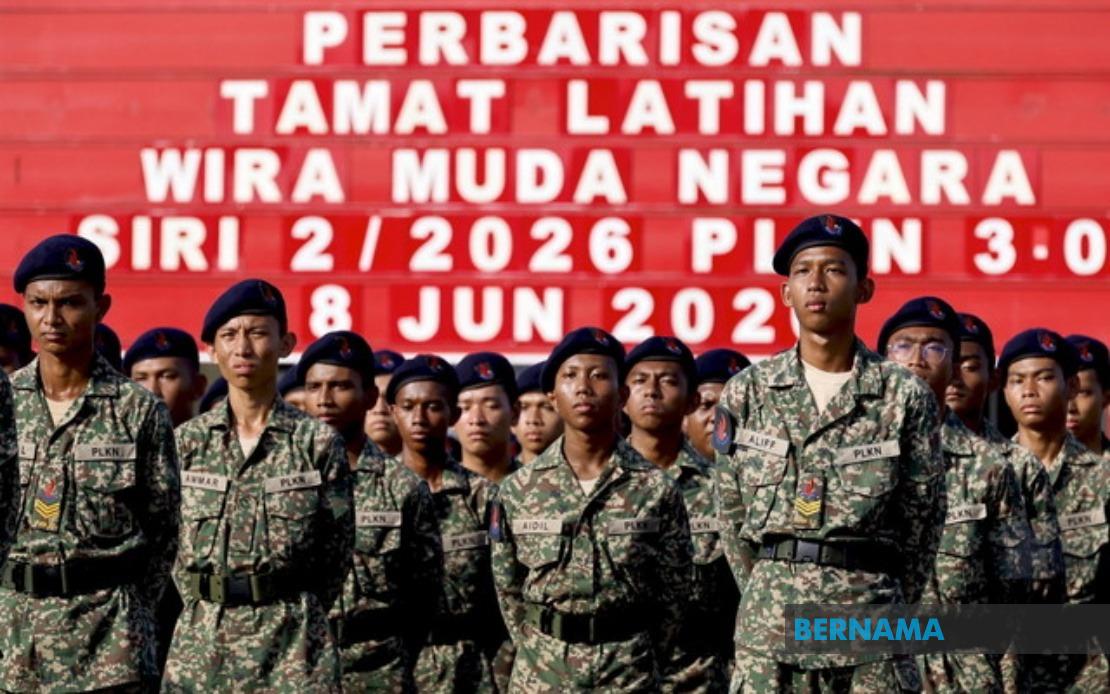
Deputy Defence Minister Adly Zahari confirmed in Parliament that the National Service Training Programme (PLKN) 3.0 has successfully achieved its comprehensive performance objectives, with independent impact assessments documenting measurable gains across six critical dimensions of youth development. The announcement represents a vindication of the restructured programme's approach to building human capital among young Malaysian citizens through rigorous, evidence-based training methodologies.
The programme's success criteria centred on achieving at least 80 per cent competency levels among participants across six interconnected domains: patriotism, national unity, discipline combined with personal transformation, mental resilience and operational preparedness, foundational military knowledge, and commitment to volunteerism. These metrics were not arbitrary targets but rather components of a cohesive framework designed to address contemporary concerns about youth engagement and national cohesion in an increasingly complex security environment.
The rigorous evaluation methodology lent credibility to the findings. Rather than relying on subjective assessments, the Defence Ministry collaborated with Universiti Malaysia Sabah and the National Defence University of Malaysia to conduct structured before-and-after surveys measuring participant responses across all six competency areas. This academic partnership ensured that claims about programme effectiveness could withstand scrutiny from education and defence policy analysts throughout the region.
The quantitative results demonstrated particularly striking improvement in military knowledge acquisition, the area showing the greatest transformation. Pre-training baseline measurements indicated only 56 per cent of participants possessed adequate foundational understanding of military concepts and operations, yet this climbed to 84 per cent following completion of the training curriculum. This 28-percentage-point leap suggests the programme's instructional content effectively imparted technical competencies that had previously been absent among civilian youth participants.
Other developmental areas exhibited similarly robust improvements. Patriotism scores rose from an already respectable 82 per cent to 88.98 per cent, indicating that the programme successfully strengthened national identification among trainees. Unity indicators gained nine percentage points overall, while discipline and personal transformation metrics surged from 77.36 per cent to 92.6 per cent—demonstrating that intensive structured training can materially reshape behavioural patterns and self-regulation among young adults. Mental resilience and preparedness climbed from 71 per cent to 83 per cent, a meaningful gain for a quality often resistant to rapid development.
Volunteerism recorded a more modest but still significant increase from 75 per cent to 83 per cent, suggesting that exposure to service-oriented training instils a lasting commitment to community contribution among programme alumni. Together, these metrics paint a picture of a programme systematically advancing multiple dimensions of civic maturity and national consciousness simultaneously rather than focusing narrowly on any single objective.
Adly clarified that PLKN 3.0 operates within explicitly defined parameters and does not function as an employment guarantee scheme. However, recognising that youth must perceive tangible value in participation, the government has negotiated agreements with five public sector appointing authorities to grant additional merit points to qualified PLKN 3.0 alumni during recruitment processes. This arrangement leverages the credentialing value of programme completion without creating false expectations of guaranteed positions, addressing a legitimate concern that youth from lower-income backgrounds might view service training sceptically if divorced from economic advancement pathways.
Access equity has emerged as a central design consideration. The programme explicitly incorporates Technical and Vocational Education and Training elements into its curriculum, creating pathways for youth from diverse educational backgrounds to participate meaningfully alongside their academic peers. This inclusive architecture recognises that effective national service must draw from the entire youth population rather than concentrating on particular socioeconomic or educational cohorts, ensuring that disadvantaged populations including B40 households and rural communities gain exposure to development opportunities.
Participation figures reveal steady programme expansion. As of the mid-year assessment, 3,404 trainees had completed or were completing PLKN 3.0 training, comprising 1,202 from the inaugural year and 2,202 through the second series of the current year. The Defence Ministry projects reaching 4,200 participants by year-end utilising existing camp infrastructure across three locations. Far more significantly, nine additional training facilities currently under preparation are expected to accommodate 9,200 trainees annually once operational, representing more than doubling of current capacity and reflecting the government's commitment to substantially scaling the programme.
The expansion strategy acknowledges demographic realities. Malaysia's youth population continues to represent a significant proportion of total demographics, creating both opportunities and challenges for national cohesion. Scaling PLKN 3.0 capacity signals determination to involve substantially larger numbers of young citizens in structured civic engagement rather than leaving social integration and national consciousness development to chance or market forces.
Adly noted that health constraints and continuing educational commitments constituted the primary reasons selected individuals failed to report for training. This finding suggests that the programme's recruitment processes successfully identify interested candidates, but that practical accessibility barriers prevent participation among otherwise qualified youth. Future programme iterations might address these obstacles through flexible scheduling, healthcare accommodations, or bridging mechanisms connecting vocational and academic pursuits with service obligations, particularly for students pursuing university education or technical certifications.
The results carry significance beyond Malaysia's borders. Throughout Southeast Asia, governments grapple with questions about how to foster national consciousness, military preparedness, and civic commitment among increasingly urbanised, digitally connected youth populations resistant to traditional authority structures. PLKN 3.0's evidence-based approach and documented success across measurable outcomes offer a regional case study in youth engagement methodology. The programme demonstrates that carefully designed training architecture, rigorous evaluation protocols, and integration with economic opportunity pathways can produce substantive gains in multiple developmental domains simultaneously—a model with potential applicability across the region.

