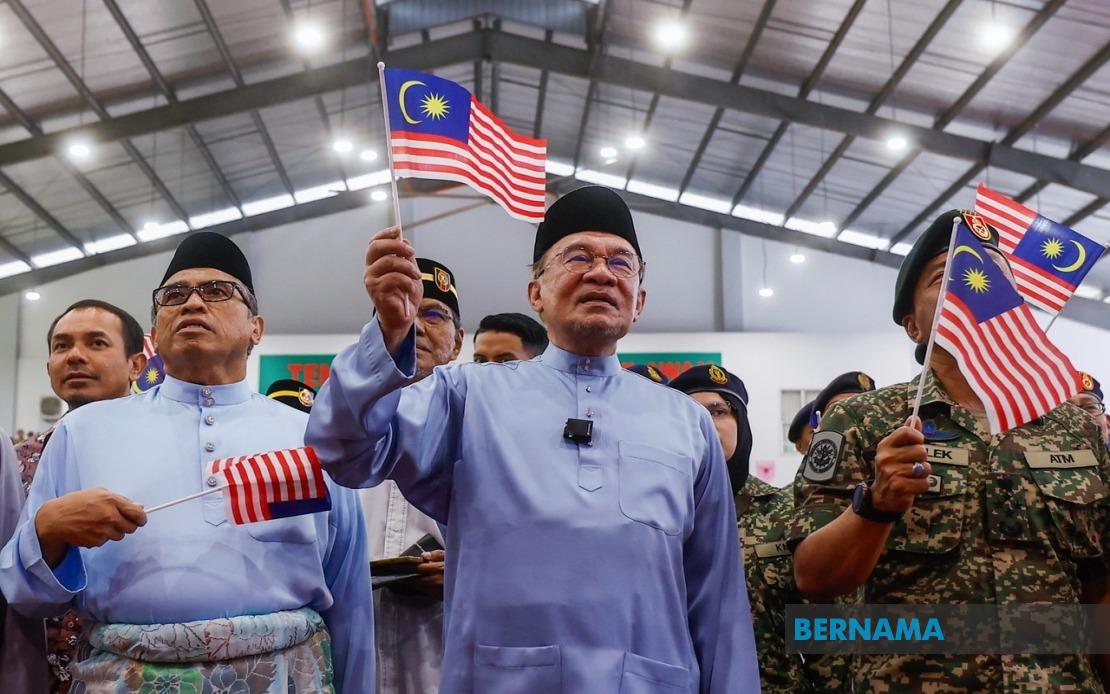
Prime Minister Datuk Seri Anwar Ibrahim has made a direct appeal to all political contestants in the forthcoming Negeri Sembilan state election to abandon slander and misinformation as campaign tactics, warning that such practices undermine the integrity of democratic contests. Speaking in Port Dickson on July 24, Anwar emphasised that the 16th Negeri Sembilan state election, scheduled for August 1, should be decided on substantive policy differences rather than fabricated allegations and distorted narratives designed to damage opponents.
The Prime Minister revealed that he himself has recently fallen victim to what he characterised as deliberate distortion of his statements and actions. According to Anwar, a false claim circulated during the campaign period alleged that he had convened military personnel and veterans specifically to disseminate propaganda on his behalf. He expressed dismay that such tactics had become commonplace in Malaysian political discourse, noting that information was being selectively edited and misrepresented before being attributed to him as official statements.
Anwar's intervention reflects growing concern within government circles about the tenor of campaign messaging in the state election. While acknowledging his own imperfections and past mistakes, the Prime Minister stressed that political competition should operate within ethical boundaries. He stated that whilst he remains open to legitimate criticism and has previously apologised for genuine errors in judgement, he could not accept false accusations masquerading as factual reporting. His remarks underscored a distinction between robust political debate and deliberate fabrication designed solely to inflame public sentiment.
The timing of Anwar's statement carries particular significance given the involvement of several senior government figures at the event. Chief Secretary to the Government Tan Sri Shamsul Azri Abu Bakar, Deputy Defence Minister Adly Zahari, Chief of Defence Forces General Tan Sri Malek Razak Sulaiman, and Army chief General Tan Sri Azhan Md Othman were all present, suggesting the government views the maintenance of campaign standards as a matter touching on national stability and military-civilian relations.
Anwar drew parallels between the current situation and his own lengthy history of political persecution and false allegations. Throughout his career, he has faced numerous unfounded accusations that he has characterised as attempts to damage his reputation and political standing. By invoking these experiences, Anwar sought to position his appeal against slander not as partisan pleading but as a reflection on lessons learned through decades of Malaysian political turbulence. He expressed hope that other political leaders would absorb these lessons and commit to higher ethical standards without requiring personal experience of such treatment.
The Prime Minister also used the occasion to reinforce government expectations regarding the civil service's role during the election period. He called on public sector employees to continue providing steadfast support to the government's broader agenda of maintaining national peace and stability whilst simultaneously facilitating the implementation of its reform initiatives and policy innovations. This messaging underscores the government's desire to maintain public sector neutrality and institutional continuity throughout the electoral contest.
Pakatan Harapan has configured its campaign strategy across all 36 state seats in Negeri Sembilan, with the coalition fielding a total of 36 candidates distributed among its component parties: PKR will contest 16 seats, DAP will field 11 candidates, and Amanah will stand in nine constituencies. This distribution reflects ongoing negotiations within the coalition regarding seat allocation and the relative influence of each partner. The composition of PH's slate indicates an effort to maintain balance among coalition members whilst presenting a unified front to voters.
The electoral calendar for Negeri Sembilan has been structured to allow for early voting procedures, with voting scheduled for July 28 for those entitled to vote early, followed by the main polling day on August 1. This two-stage voting process, increasingly common in Malaysian elections, accommodates voters who may be unable to participate on the principal polling date due to work obligations, travel, or other commitments. The extended voting period potentially affects campaign dynamics and turnout patterns.
Anwar's intervention in the campaign discourse highlights a broader challenge facing Malaysian democracy: the proliferation of misinformation and the difficulty of maintaining campaign standards when digital platforms enable rapid dissemination of unverified claims. The Prime Minister's criticism of fabricated narratives speaks to frustrations shared across the political spectrum regarding the impact of distorted information on voter decision-making. However, his position as sitting Prime Minister campaigning for a coalition partner also illustrates the complexity of distinguishing between legitimate criticism and slanderous speech in politically charged environments.
The Negeri Sembilan election carries implications extending beyond the state itself. As one of Malaysia's smaller states, elections there often serve as barometers for broader shifts in voter sentiment and coalition dynamics. The outcome will provide early indicators regarding the stability of the PH government's support base and potential challenges to its parliamentary majority heading toward the next general election. Anwar's emphasis on campaign conduct suggests government awareness that the manner in which elections are contested affects public confidence in democratic institutions long after voting concludes.
Beyond the immediate electoral context, the Prime Minister's remarks address fundamental questions about political culture and democratic norms in Malaysia. His call for restraint and honesty in campaign communication reflects recognition that electoral credibility depends not merely on procedural regularity but on the quality and integrity of discourse among competing parties. Whether such appeals successfully influence campaign behaviour across all contestants remains uncertain, but Anwar's public intervention signals that the government considers this issue sufficiently important to warrant leadership attention.

