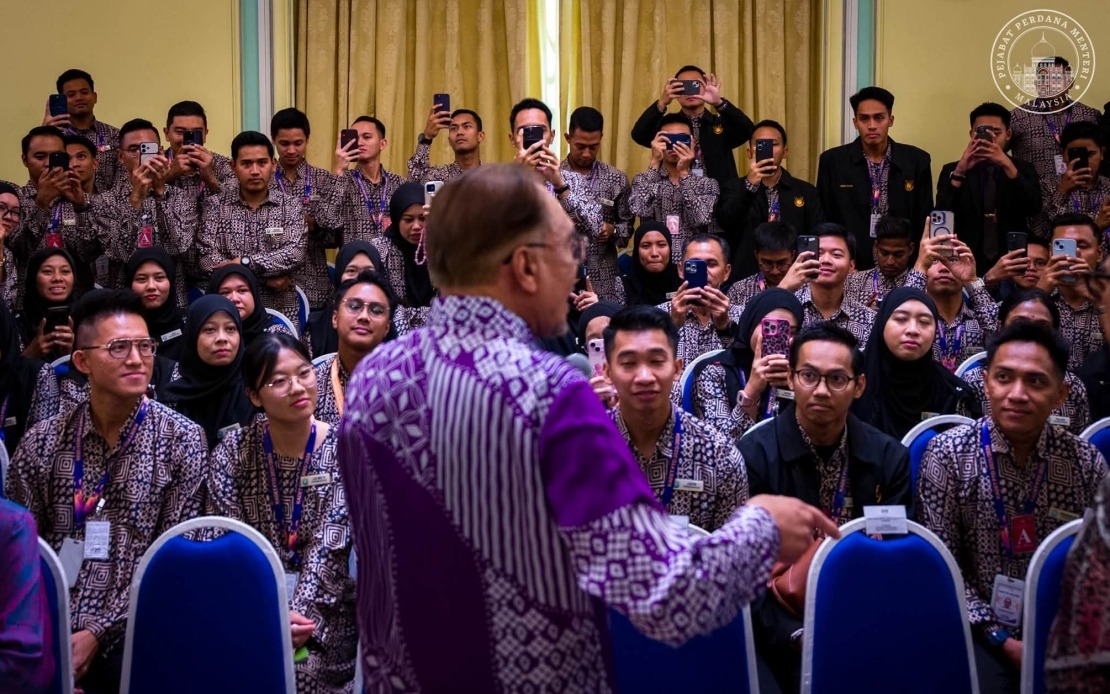
Prime Minister Datuk Seri Anwar Ibrahim has delivered a pointed message to Malaysia's administrative elite, emphasising that civil servants must navigate a delicate balance between embracing organisational change and maintaining unwavering ethical standards. Speaking during a session with Administrative and Diplomatic Service (PTD) officer cadets enrolled in the Postgraduate Diploma in Public Management programme at his Putrajaya office, Anwar outlined the multifaceted demands placed on those entering public sector leadership roles.
The premier's remarks underscored a fundamental tension within civil service modernisation efforts across Southeast Asia and beyond. As governments grapple with digital transformation, efficiency demands, and shifting citizen expectations, the pressure to innovate can sometimes collide with traditional governance principles. Anwar's intervention suggests recognition that Malaysia's administrative apparatus must evolve without sacrificing the institutional integrity that sustains public trust. This message carries particular weight given ongoing concerns about bureaucratic responsiveness and service delivery standards that have periodically dominated domestic political discourse.
Anwar stressed that public service fundamentally demands more than technical competence or management credentials. The conception of civil service he articulated extends beyond operational efficiency to encompass a deeper commitment to putting national and public interests ahead of institutional or personal considerations. This framing positions integrity not as a constraint on effective governance but rather as its essential foundation, suggesting that administrative excellence and ethical conduct are inseparable rather than competing priorities.
The choice to address PTD cadets specifically carries symbolic significance. The PTD represents Malaysia's traditional administrative backbone, and officers from this service historically occupy senior positions throughout government. By engaging directly with this emerging cohort of leaders, Anwar sought to embed his expectations into the institutional culture during a formative career stage. The timing and venue—his Putrajaya office—reinforced the importance he attaches to the message and his personal investment in shaping the next generation of public administrators.
For Malaysian readers, the emphasis on institutional renewal resonates with broader governance challenges the country faces. The civil service manages everything from tax collection to land administration to public health delivery, making its performance directly consequential for citizens' daily lives. When efficiency falters or integrity lapses occur, the impact extends throughout society. Anwar's intervention addresses this directly by insisting that reform cannot proceed through corners cut or principles compromised.
The commitment to placing people's interests above institutional convenience represents a significant statement about power and accountability. In practice, this means civil servants must prioritise public benefit over bureaucratic convenience, a principle that gains importance as government agencies increasingly wield discretionary authority over citizens' access to services and opportunities. Anwar's formulation implicitly challenges administrative cultures where process protection or organisational preservation might supersede public welfare considerations.
The backdrop to these remarks includes Malaysia's broader modernisation agenda and the need to compete effectively within an increasingly sophisticated regional and global economy. Capable civil services drive national competitiveness by attracting talent, deploying resources efficiently, and maintaining the predictability that both domestic and international investors require. Anwar's emphasis on courage to embrace change acknowledges this competitive dimension while his stress on integrity addresses the institutional stability necessary for economic confidence.
The reference to building foundations for a progressive, just and prosperous Malaysia articulates a vision of public service connected to larger national aspirations. This positions civil servants not merely as administrators executing policy but as custodians of collective ambitions. The invocation of justice alongside progress and prosperity suggests awareness that economic development divorced from equitable distribution and fair treatment generates instability. Civil servants, as the interface between government and citizens, bear responsibility for ensuring that policy implementation reflects these integrated values.
Regionally, Anwar's framing aligns with broader conversations about civil service reform occurring throughout Southeast Asia. Neighbouring governments similarly grapple with questions about how to modernise administrative structures and processes while preserving institutional integrity and public trust. Malaysia's experience with various governance challenges positions its leadership discussions as instructive for peers managing comparable transitions.
The practical implications of Anwar's message extend across multiple sectors. In revenue collection, integrity demands fair assessment and transparent processes. In land administration, it requires impartial adjudication of competing claims. In health and education, it mandates equitable resource allocation and merit-based advancement. Each domain benefits from administrators willing to challenge ineffective practices while refusing to compromise ethical standards, a combination Anwar identified as essential.
For civil servants themselves, the message establishes clear expectations while potentially acknowledging the genuine tensions inherent in their roles. Balancing change with stability, innovation with continuity, and institutional needs with public interests rarely yields clear-cut answers. Anwar's emphasis on these combined demands implicitly validates the complexity of administrative work while insisting that complexity cannot excuse ethical compromise.
The broader institutional sustainability question lurks beneath Anwar's remarks. Civil services that lose public trust through integrity failures or perceived inefficiency gradually lose their capacity to function effectively, regardless of technical resources available. Conversely, services that maintain principled operations while adapting to contemporary challenges build reputational capital that enhances their influence and effectiveness. Anwar's intervention positions integrity and change not as opposing forces but as mutually reinforcing elements of sustainable public administration.

