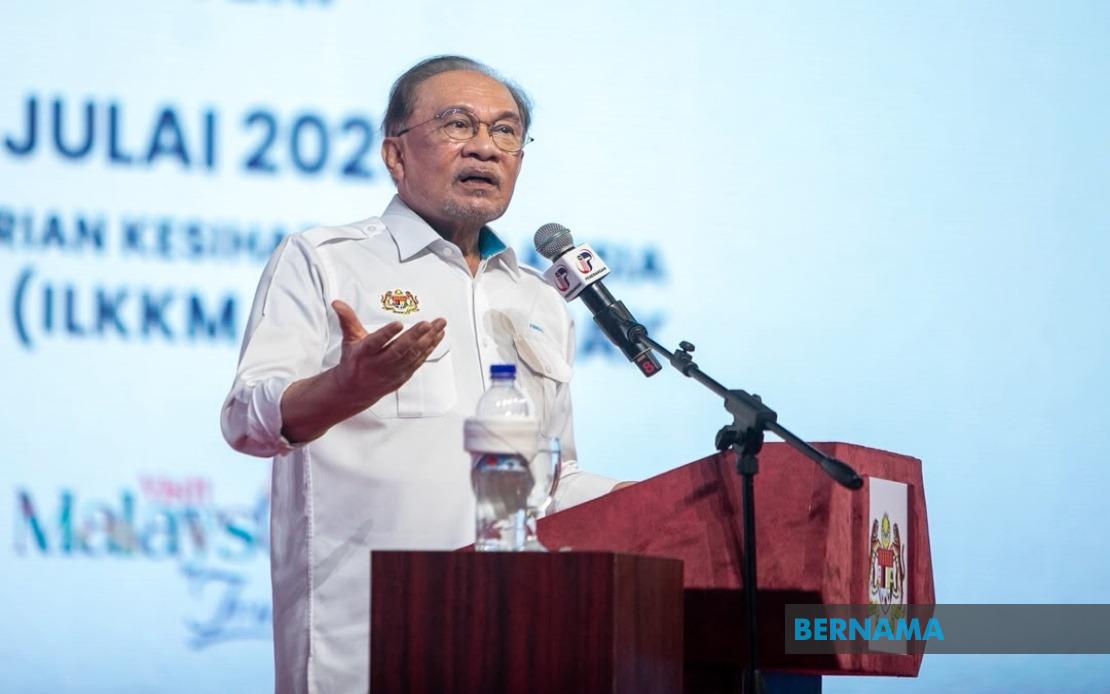
Prime Minister Datuk Seri Anwar Ibrahim has delivered an impassioned call for Malaysia's younger generation to recognise and cherish the historical struggles that culminated in the nation's independence, emphasising that contemporary youth must understand the true cost of the freedoms they enjoy today. Speaking during the official launch of the 2026 National Month and Fly the Jalur Gemilang Campaign (MPBKKJG 2026) in Ipoh on July 19, Anwar framed the occasion not merely as a patriotic gesture but as an educational moment to reconnect citizens with their collective past.
The Prime Minister's remarks reflect a broader concern within Malaysia's political leadership about what they perceive as a generational disconnect from the nation's founding narrative. Anwar characterised the independence movement as a demanding endeavour that required tremendous personal sacrifice from freedom fighters, noting that the achievement was forged through bloodshed, hard labour, and emotional strain. By invoking this imagery, he sought to instil in younger Malaysians an appreciation for conditions of relative peace and stability that many now take for granted.
Central to Anwar's message was the proposition that understanding independence transcends ceremonial flag-waving or patriotic rhetoric. Rather, he suggested that genuine comprehension of what independence means requires citizens to engage seriously with historical documentation and the actual experiences of those who fought for it. This intellectual dimension to nationalism stands in contrast to more superficial expressions of national pride that dominate many public campaigns. The Prime Minister's framing suggests that Malaysia's development depends not just on economic progress but on a shared historical consciousness that binds generations together.
The campaign itself, by combining National Month observances with the Jalur Gemilang flag initiative, attempts to create visible, tangible expressions of national unity. Anwar positioned the flag not merely as a decorative symbol but as a physical manifestation of collective identity and shared values. By flying the flag, citizens participate in a national conversation about belonging and common purpose. This approach recognises that for many Malaysians, particularly younger urbanites, emotional connection to the nation may need to be cultivated through repeated, visible symbols and narratives.
The timing of these remarks carries particular significance for Malaysia's political trajectory. As the nation confronts challenges ranging from economic competitiveness to social cohesion, political leaders appear intent on reinforcing foundational narratives of national purpose. By connecting historical struggle to contemporary responsibility, Anwar implicitly argues that understanding the past provides guidance for navigating the future. The independence fighters' sacrifices, in this logic, become not historical curiosities but living lessons applicable to present-day challenges.
The gathering in Ipoh included several senior government figures, including Communications Minister Datuk Seri Fahmi Fadzil, National Unity Minister Datuk Aaron Ago Dagang, and Perak Menteri Besar Datuk Seri Saarani Mohamad. The presence of the National Unity Minister alongside traditional patriotic campaigns underscores the government's view that historical education and national unity efforts are interconnected strategies. In Malaysia's multi-ethnic context, invoking shared independence struggles becomes a mechanism for building common ground across diverse communities, even as specific groups may have experienced that struggle differently.
For Malaysian youth, many of whom have no living memory of pre-independence or early post-independence Malaysia, the challenge of meaningful historical engagement is genuine. Schools incorporate independence narratives into curricula, yet this formal education often competes with social media, entertainment, and international cultural influences for young people's attention. Government campaigns like MPBKKJG 2026 represent attempts to make historical narratives more culturally resonant and emotionally compelling than they might appear in textbook form.
The Prime Minister's emphasis on blood, sweat, and tears also carries an undertone about sacrifice and responsibility in contemporary Malaysia. By repeatedly invoking what previous generations endured, Anwar seems to be suggesting that the current generation has obligations corresponding to the sacrifices made on their behalf. This rhetorical strategy positions patriotism not as passive appreciation but as active responsibility to honour ancestors by building an exemplary nation.
Regionally, Malaysia's approach to historical commemoration and youth engagement reflects broader Southeast Asian challenges around national identity formation. Across the region, newly independent or recently developing nations grapple with how to maintain historical consciousness while modernising rapidly. Malaysia's attempt to link flag campaigns with serious historical reflection offers one model for balancing these imperatives, though success depends on whether such campaigns translate into sustained educational engagement beyond the campaign period itself.
The effectiveness of such initiatives ultimately depends on institutional follow-through. Campaign launches generate media attention and create moments of collective reflection, yet sustaining deeper historical engagement requires ongoing investment in education, heritage preservation, and community dialogue. For Anwar's vision of a generation that genuinely understands independence to materialise, the campaign must serve as an entry point to more substantial historical and civic learning, rather than functioning as a standalone patriotic exercise.

