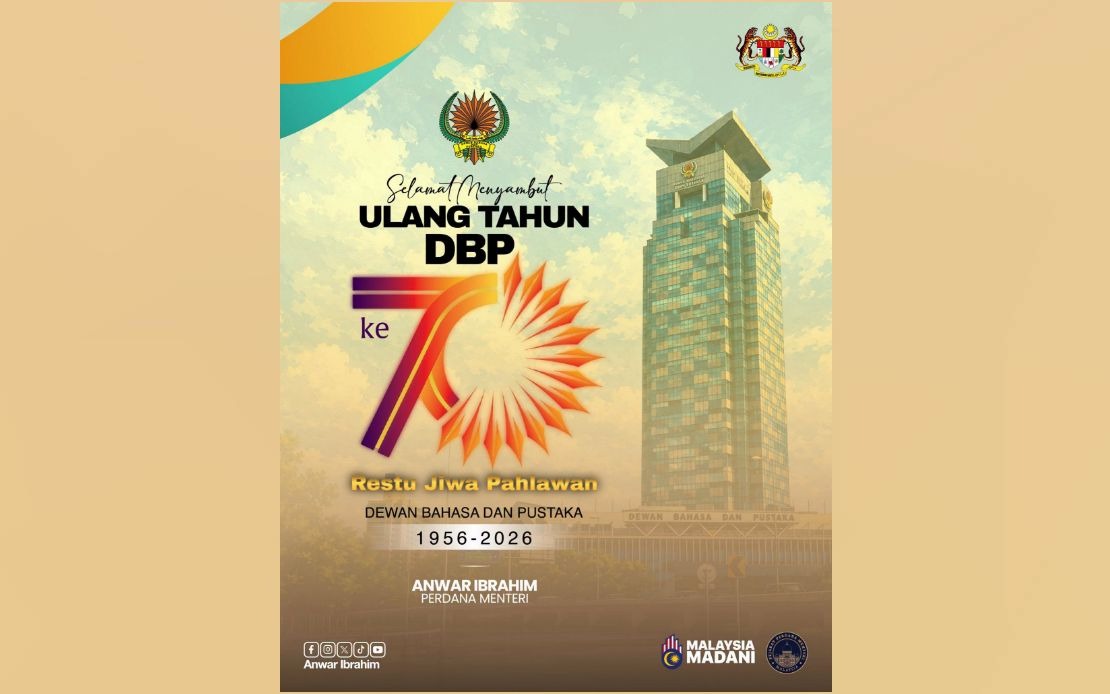
Prime Minister Datuk Seri Anwar Ibrahim has marked a significant milestone by honouring the Dewan Bahasa dan Pustaka (DBP) on reaching its 70th anniversary, recognising the institution's enduring commitment to safeguarding Malaysia's linguistic and cultural heritage. The message of celebration, shared through social media, underscores the government's continued investment in language preservation at a time when global cultural homogenisation poses challenges to regional linguistic diversity.
In his remarks, Anwar Ibrahim highlighted the institutional accomplishments that have accumulated over seven decades, framing the DBP's journey as one rooted in the dedication and commitment of successive generations of language advocates and cultural custodians. The Prime Minister's acknowledgment reflects broader governmental recognition that language institutions play a central role in maintaining national identity, particularly in a multicultural nation where linguistic diversity extends far beyond Malay to include English, Mandarin, Tamil, and indigenous languages. This emphasis on institutional legacy carries particular relevance for Malaysia, where debates about language policy and cultural identity remain politically and socially significant.
The sentiment expressed by Anwar Ibrahim invokes the concept of "Restu Jiwa Pahlawan," a phrase that translates to the blessing or spirit of warriors, which serves as this year's thematic framework for the anniversary celebrations. This strategic choice of theme demonstrates how the DBP anniversary connects language advocacy with notions of national resilience and collective sacrifice. The warrior spirit metaphor suggests that language preservation requires active struggle and unwavering commitment rather than passive cultural consumption, positioning linguistic stewardship as an essential national endeavour worthy of comparison with military valour or political struggle.
The Dewan Bahasa dan Pustaka occupies a unique institutional position within Malaysia's cultural infrastructure, functioning simultaneously as a custodian of the national language, a research institution, and a publisher of Malaysian literature. Founded in the context of post-independence nation-building, the DBP has historically served as an instrument through which the Malaysian state has codified language standards, promoted literary production in Malay, and defended the constitutional status of Malay as the official language. The institution's longevity itself testifies to the enduring centrality of language politics in Malaysian governance and identity formation.
Recognising this milestone anniversary carries symbolic importance beyond ceremonial acknowledgment. For Malaysian policymakers and cultural officials, the DBP represents a successful model of institutional longevity in an era when many government agencies face questions about relevance and efficiency. The institution has adapted across technological transitions, from print-era literary patronage to contemporary digital language platforms, demonstrating organisational flexibility while maintaining core cultural missions. This durability offers lessons for other cultural institutions navigating similar pressures toward modernisation and relevance.
The anniversary celebrations occur within a broader regional context where Southeast Asian nations grapple with language preservation amid globalisation pressures. Malaysia's experience with institutional language advocacy through bodies like the DBP contrasts with different approaches adopted by neighbouring countries, offering comparative insights into how states can systematically promote national languages while accommodating multilingualism. The DBP model demonstrates that aggressive institutional support for a national language need not preclude practical engagement with other languages in educational and professional spheres.
For contemporary Malaysian society, the DBP's work extends into increasingly complex terrain as digital communication reshapes how people engage with language. Social media, instant messaging, and online content creation have fragmented traditional language domains and altered generational attitudes toward formal linguistic standards. The DBP's relevance in this context depends on its capacity to influence digital language practices, promote Malaysian literature through contemporary platforms, and shape attitudes among younger populations who may have different relationships to linguistic formality and national language standards than their predecessors.
The Prime Minister's reference to elevating the nation's language, literature, and culture through sustained effort reflects governmental aspirations that extend beyond administrative language use into broader cultural influence. Malaysia's soft power aspirations internationally increasingly depend on cultural exports—whether literature, film, or music—that effectively communicate Malaysian identity to global audiences. The DBP's role in curating and promoting Malaysian literary production thus connects to larger strategic objectives of cultural diplomacy and international influence, making language institution funding a reasonable investment in national soft power development.
Looking forward, the 70th anniversary moment invites reflection on the DBP's priorities and trajectories. As Malaysia continues navigating economic development, educational reform, and technological change, the institution faces evolving questions about how to maintain linguistic standards while accommodating natural language evolution, how to promote Malaysian literature in competitive global markets, and how to engage younger generations in language advocacy. The warrior spirit metaphor invoked for this anniversary cycle suggests institutional leadership sees these challenges as worthy of sustained commitment and cultural struggle, rather than management problems to be efficiently administered away.

