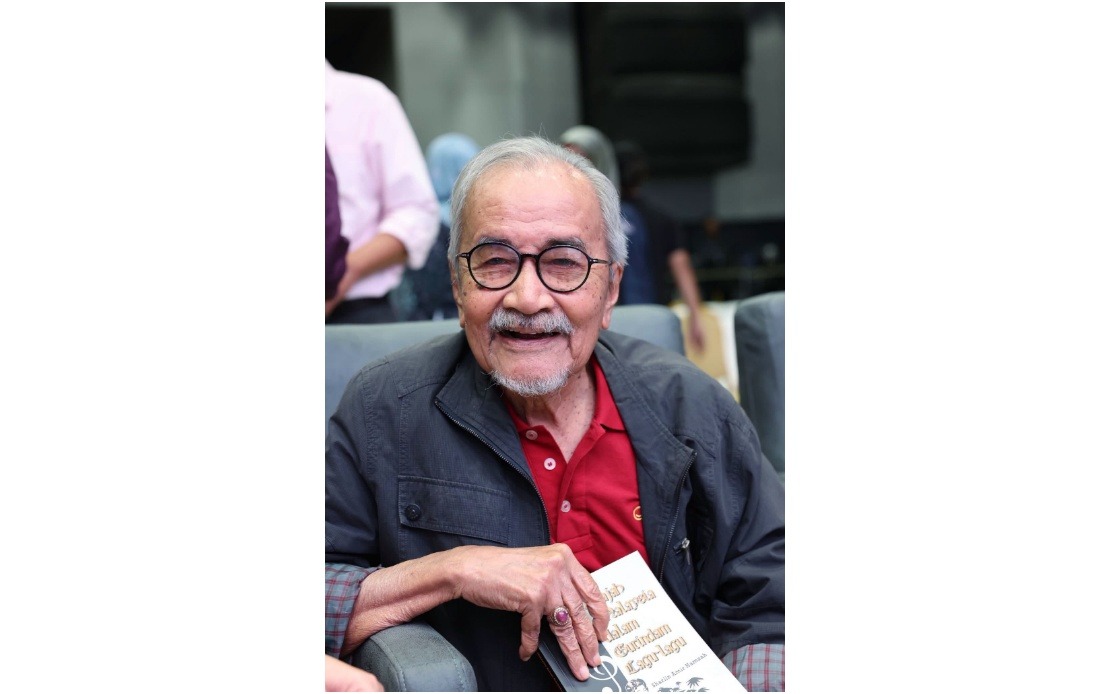
Prime Minister Datuk Seri Anwar Ibrahim has publicly celebrated the 87th birthday of Datuk Rahim Razali, one of Malaysia's most accomplished cultural figures, through a Facebook post that underscores the government's commitment to honouring the nation's artistic heritage. The greeting comes as Malaysia continues to grapple with how best to preserve and promote its creative traditions in an increasingly digital age, making such public recognition of veteran artists particularly significant.
Anwar's tribute positioned Rahim as a cornerstone of the Malaysian arts establishment, crediting him with creating works that transcend entertainment to become vehicles for exploring profound themes about human dignity, cultural identity, and national consciousness. This characterisation reflects a broader governmental perspective that frames the arts not merely as commercial endeavour but as essential components of nation-building and social cohesion. The Prime Minister's endorsement carries particular weight given his leadership role and his administration's stated priorities regarding cultural development.
Born on July 3, 1939, in Batu Gajah, Perak, Rahim Razali represents a generation of Malaysian creatives who established the country's film and television industries during their formative decades. His career trajectory demonstrates the multifaceted nature of early Malaysian cultural production, when individual artists often wore multiple hats across different creative disciplines. The breadth of his experience—spanning acting, directing, scriptwriting, sports journalism, and broadcasting—illustrates how Malaysian entertainment professionals operated in a more integrated media landscape before the era of hyperspecialisation.
The Prime Minister's remarks specifically highlighted Rahim's capacity to inspire successive waves of artists and cultural enthusiasts, suggesting that his influence extends beyond his own body of work to shape the aspirations and methodologies of younger creators. This intergenerational dimension of cultural influence has become increasingly important to Malaysian policymakers, who recognise that sustaining a vibrant creative sector requires not just individual talents but also mechanisms for knowledge transfer and mentorship. Rahim's half-century presence in the industry positions him as a living bridge between different eras of Malaysian cinema and television.
Acknowledging Rahim's most celebrated work, "Matinya Seorang Patriot"—a title that translates to "The Death of a Patriot"—the Prime Minister invoked a film that exemplifies the socially conscious cinema Rahim helped pioneer. This particular film represents a significant moment in Malaysian cinema when filmmakers began exploring nationalist themes and complex moral questions through the medium of dramatic narrative. Anwar's reference to this title signals recognition not just of Rahim's technical achievements but of his willingness to engage with substantive national concerns through his craft.
Rahim Razali's accumulation of prestigious awards from the Malaysian Film Festival, including accolades for both directorial excellence and acting prowess, establishes him as someone whose achievements have been validated by industry peers and critical institutions. These honours serve as objective markers of professional accomplishment within Malaysia's formal cultural establishment, distinguishing him from merely prominent figures and identifying him as someone whose work met rigorous standards of artistic merit. The Malaysian Film Festival remains the primary mechanism through which the film industry recognises outstanding achievement, making these awards particularly meaningful within the Malaysian context.
Over more than sixty years of continuous creative engagement, Rahim Razali has witnessed and participated in the transformation of Malaysian media from its colonial-era roots through independence, nation-building phases, and into the contemporary digital era. This longitudinal perspective gives his career historical significance beyond individual projects, as he represents the institutional memory of Malaysian cinema during periods of rapid technological and social change. His sustained presence in the industry offers younger filmmakers and creatives a model of enduring commitment to artistic practice.
The Prime Minister's prayer for Rahim's continued good health and strength to contribute further to Malaysian arts and culture suggests recognition that cultural production depends not only on institutional support but on the availability of active practitioners who can continue creating, mentoring, and setting examples. This personal dimension to Anwar's message acknowledges that behind every celebrated cultural achievement stands an individual person whose physical wellbeing and mental vitality remain essential to their ability to contribute meaningfully to society.
For Malaysian audiences and the creative community specifically, such public recognition from the nation's highest executive authority carries symbolic importance. It signals that the government views the preservation and advancement of the arts as central to national identity and development rather than as peripheral to more pressing economic or political concerns. In Southeast Asia's competitive creative marketplace, where countries increasingly position their cultural products as both economic assets and soft power tools, Malaysia's affirmation of its veteran artists helps maintain continuity with the traditions that distinguish the country's cultural output.
Rahim Razali's career also illustrates the evolution of Malaysian storytelling itself, tracing how narrative preoccupations have shifted across decades while certain core concerns about identity, morality, and community have remained constant. His body of work provides a documentary archive of Malaysian social consciousness across the latter part of the twentieth century and into the twenty-first, making him valuable not merely as an entertainer but as a cultural historian whose films constitute a record of how Malaysians have understood themselves during different historical moments.

