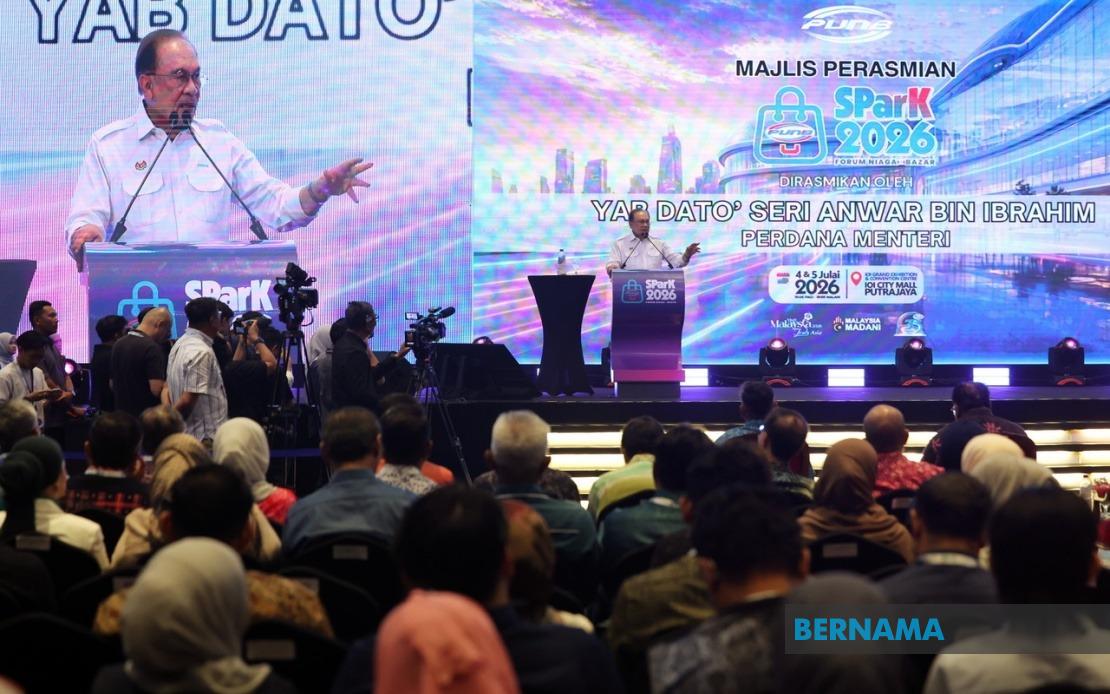
Prime Minister Datuk Seri Anwar Ibrahim has launched a sharp rebuke against the entrenched practice of using political patronage and informal endorsements to approve business financing, declaring that such methods must cease immediately. Speaking at the SPaRK 2026 conference organised by Perbadanan Ushawan Nasional Bhd (PUNB) in Putrajaya on July 4, Anwar, who also holds the Finance Minister portfolio, warned that this longstanding system perpetuates a cycle of failed ventures and misallocated public resources that extends back decades.
The Prime Minister's intervention addresses a structural problem within Malaysia's entrepreneurship support ecosystem. The practice of relying on support letters—informal endorsements from politicians or well-connected individuals—has become so normalised that it functions as an alternative to rigorous financial assessment. Anwar characterised this as covering up the failings of government agencies rather than solving them, suggesting that the real issue lies in institutional weakness rather than individual failure. The colour-coded reference to "yellow, green, blue letters" underscores how these informal approval mechanisms have calcified into a recognisable bureaucratic shorthand that everyone understands but few openly acknowledge.
The financial implications of this system are substantial. When loans are distributed based on proximity to power rather than business viability, default rates inevitably climb. Anwar highlighted a troubling pattern whereby some recipients have squandered government funds on personal consumption rather than productive investment, using the capital to relocate to prestigious offices or purchase luxury vehicles before their ventures collapsed. Such misuse represents a direct drain on government coffers and undermines public confidence in entrepreneurship programmes.
Anwar distinguished between business failures arising from genuine market dynamics and those resulting from poor governance or fraud. The government, he indicated, can accept that some enterprises will fail due to economic conditions, industry disruption, or consumer preference shifts—these are normal market outcomes. What is unacceptable, however, is the systemic diversion of public funds through politically-motivated approvals. This distinction is crucial because it reframes the debate from one about entrepreneurial failure to one about institutional integrity and the proper stewardship of taxpayer money.
The Prime Minister's emphasis on transparency and genuine commitment signals a potential shift in how Malaysian government agencies will evaluate financing applications going forward. Rather than asking "who recommended this applicant?", the focus must pivot to asking "does this applicant have a credible business plan, adequate industry knowledge, and the financial discipline to execute it?" This represents a move toward merit-based assessment, though implementing such change will require retraining personnel at government-linked companies and altering long-established approval workflows.
For Malaysian entrepreneurs, Anwar's stance presents both opportunity and challenge. The opportunity lies in levelling the playing field—those lacking political connections will no longer face automatic disadvantage. The challenge is that approval standards will become more stringent, requiring applicants to invest greater effort in business planning, financial projections, and market analysis. Government agencies will likely demand more comprehensive documentation and subject proposals to more rigorous scrutiny, potentially extending approval timelines in the short term.
The broader context matters here. Malaysia's small and medium enterprise (SME) sector remains critical to economic diversification and job creation, yet entrepreneurship financing has often served as a vehicle for political patronage rather than genuine economic development. When money flows to those with connections rather than those with viable ideas, the nation's overall entrepreneurial performance suffers. Talented but politically unconnected innovators may abandon business plans, while less capable but well-connected applicants receive funding they cannot productively deploy.
Anwar's intervention also reflects international pressure and modern governance standards. As Malaysia seeks to maintain its standing among upper-middle-income countries and improve its business environment rankings, openly acknowledging and combating cronyism in government lending becomes essential. Foreign investors and development partners increasingly scrutinise how public institutions allocate resources; demonstrating commitment to merit-based systems enhances Malaysia's credibility and attractiveness as an investment destination.
The SPaRK 2026 platform provides an appropriate venue for this message because PUNB itself operates at the frontline of government entrepreneurship support. By using this forum, Anwar sends a signal to the agency and others within the government lending ecosystem that tolerance for cronyism is ending. Agency heads and loan officers who have quietly approved applications based on political pressure can expect greater accountability and scrutiny going forward.
Implementing this reform will test the government's commitment. Established patronage networks resist change, and individuals accustomed to leveraging connections for personal gain will not surrender that advantage without resistance. Political figures who have traditionally used government financing as a tool to reward supporters will face pressure to abandon the practice. Success will depend on whether enforcement mechanisms are genuinely applied and whether approval denials based on merit—rather than connection—are supported by senior leadership even when those denied are politically significant figures.
The policy shift also has regional implications. Other Southeast Asian nations grappling with similar cronyism in government lending can observe whether Malaysia successfully implements this reform. If successful, it could become a model for institutional modernisation across the region. Conversely, if the practice persists despite the Prime Minister's strong rhetoric, it will underscore how difficult transforming entrenched bureaucratic cultures can be, even with political will from the top.
For the entrepreneurship ecosystem specifically, the message is clear: future support from government agencies will require genuine business merit rather than political favour. This ought to strengthen overall economic outcomes by ensuring capital flows to the most promising ventures rather than the most politically connected applicants. Whether this vision translates into reality will determine whether Anwar's intervention represents genuine institutional reform or merely symbolic political theatre.

