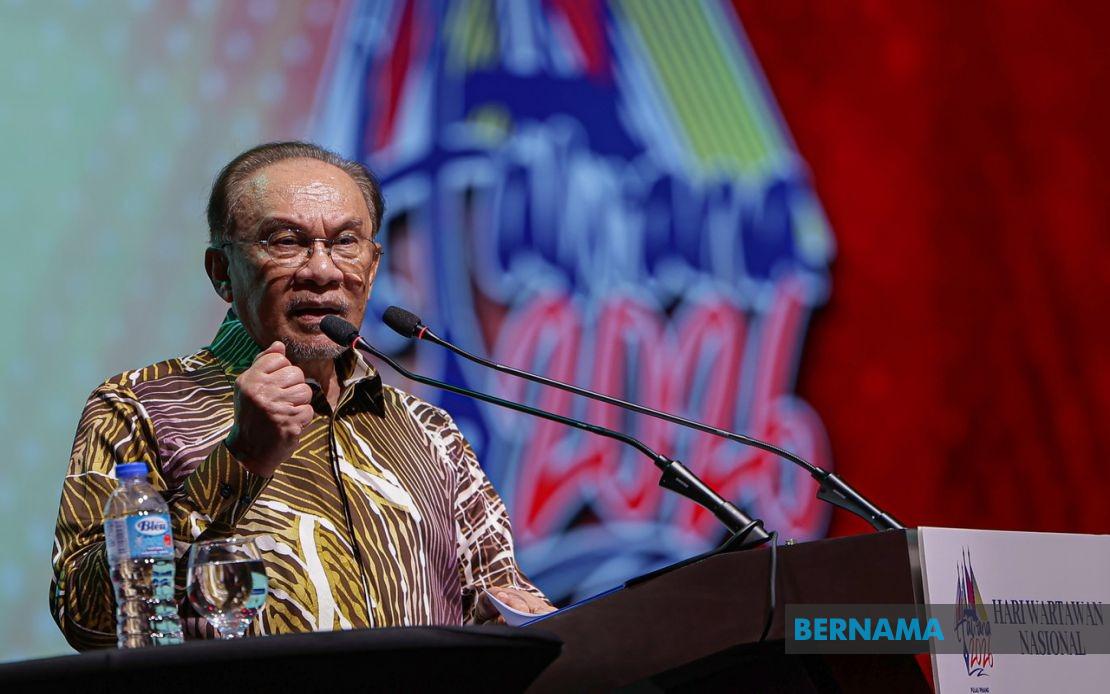
Prime Minister Datuk Seri Anwar Ibrahim has thrown his weight behind the appointment of Tan Sri Nallini Pathmanathan as chairman of the Malaysian Media Council, signalling government backing for what the PM describes as a transformative leadership change aimed at restoring institutional credibility. Speaking at the National Journalists' Day event in Butterworth on June 20, Anwar emphasised that Nallini's distinguished judicial credentials and personal integrity would serve to rehabilitate the council's public image following a period of uncertainty about its independence and effectiveness.
The backing from the country's chief executive carries substantial political weight. Anwar's remarks suggest that the government views the MMC's credibility challenge as a priority issue requiring intervention at the highest level. By publicly endorsing Nallini during a major gathering of media industry figures and government officials, Anwar has effectively staked his administration's reputation on the success of this particular appointment and the council's reform trajectory more broadly.
Nallini's background presents a notable departure from previous leadership at the MMC. Her career as a Federal Court judge positions her as someone with demonstrated independence, formal legal training, and experience in navigating complex matters of public interest. The government's apparent calculation is that appointing someone with such credentials to chair a self-regulatory body will counteract scepticism about media industry governance and demonstrate that the MMC possesses sufficient distance from commercial or political pressures.
The MMC board unanimously endorsed Nallini's appointment during a meeting held on May 26, indicating consensus among industry stakeholders about her suitability for the role. This unanimous backing is significant, as it suggests that even those with competing interests within the media landscape view her appointment as beneficial to the council's legitimacy and function. Such unanimity reduces the likelihood of internal opposition that might otherwise undermine her leadership.
The Malaysian Media Council itself operates under relatively recent legislation. Established through the Malaysian Media Council Act 2025, the body serves as the industry's self-regulatory mechanism, tasked with maintaining journalistic standards, adjudicating public complaints against media outlets, promoting ethical conduct and protecting media freedom as a foundational element of democratic governance. These are substantive responsibilities that require a leader capable of commanding respect from both industry practitioners and the broader public.
Nallini's appointment arrives at a moment when questions about media credibility are resonating across Southeast Asia. The region has witnessed growing concerns about misinformation, polarisation, and the relationship between media institutions and political power. Malaysia, as a significant regional media hub, faces particular scrutiny in how it manages press standards and self-regulation. By selecting someone with Nallini's judicial standing, the MMC and government are attempting to demonstrate that these governance questions are being taken seriously at the institutional level.
The event itself brought together multiple layers of Malaysia's media and government establishment. Communications Minister Datuk Fahmi Fadzil and Penang Chief Minister Chow Kon Yeow attended, alongside senior officials from the Communications Ministry. The presence of Bernama leadership, including chairman Datuk Seri Wong Chun Wai and CEO Datin Paduka Nur-ul Afida Kamaludin, underscored the significance attributed to this leadership transition within official circles.
Anwar's specific remarks—that what matters most is that Nallini possesses credentials of unimpeachable quality and will foster renewed confidence in the council—frames the appointment as being fundamentally about institutional rehabilitation. The Prime Minister is not simply announcing a hiring decision; he is signalling a corrective course correction. This rhetorical framing acknowledges that the MMC's standing requires active restoration and that public confidence is not automatic but must be earned through demonstrated integrity and independent judgment.
For Malaysian media professionals and the broader journalism community, Nallini's appointment potentially signals that self-regulatory mechanisms can operate with sufficient independence from commercial or political interests. This carries particular importance in a regional context where the relationship between media freedom and government authority frequently generates debate. A credible self-regulatory body, especially one headed by someone with Nallini's background, could theoretically reduce pressure for more direct government intervention in media matters.
The timing of this appointment also reflects broader conversations about institutional reform and public trust that have characterised recent Malaysian political discourse. Across multiple sectors, there is evident appetite for governance arrangements that demonstrate independence and impartiality. The government's endorsement of Nallini represents an attempt to position the MMC within this reformist narrative, presenting it as an institution seriously committed to professional standards and ethical conduct.
Looking forward, Nallini's success will be measured against whether the MMC's interventions in disputes between media organisations and complainants are perceived as fair, transparent and genuinely independent. The council must also navigate the inherent tension in self-regulation: maintaining industry credibility while ensuring that the body's decisions carry sufficient weight to influence media behaviour. Nallini's judicial background may help her manage this balance, as her experience in the courts would have exposed her to similar dynamics of procedural fairness and legitimacy.

