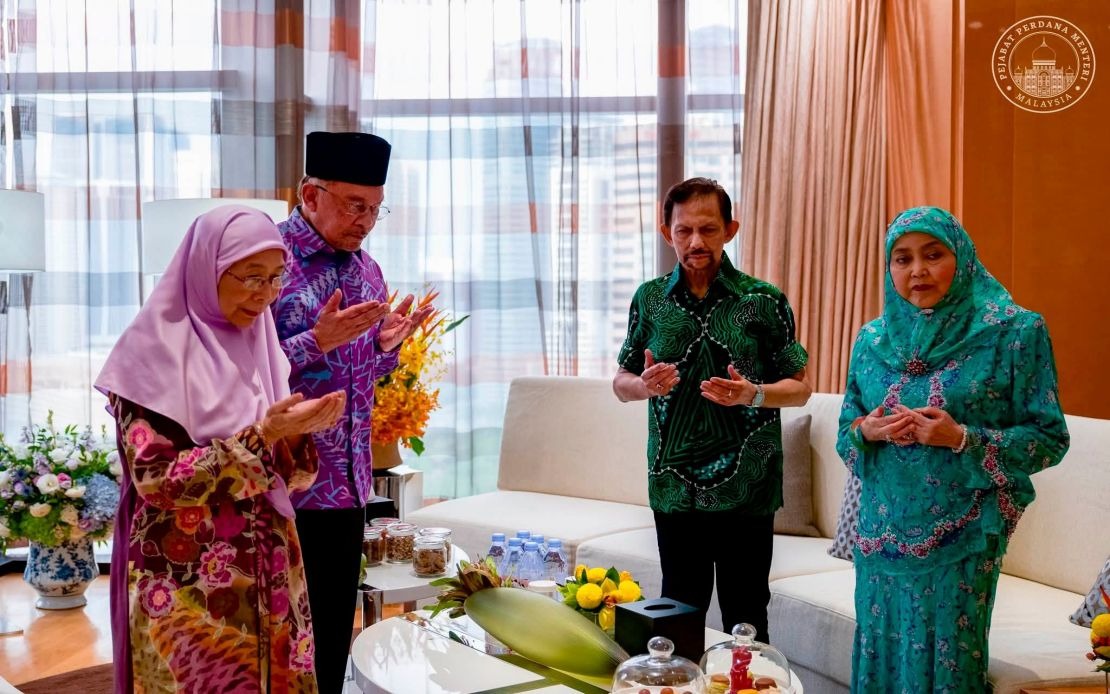
Prime Minister Datuk Seri Anwar Ibrahim has conveyed his personal greetings to Brunei's Sultan Hassanal Bolkiah as the Southeast Asian monarch marked his 80th birthday on July 15. Speaking on behalf of the Malaysian Government and citizenry, Anwar expressed his wishes for His Majesty's continued wise and prudent leadership of Brunei Darussalam in the years ahead. The greeting, shared via social media, underscores the diplomatic warmth that characterises relations between Malaysia and Brunei, two neighbouring nations with deep historical and cultural connections across the island of Borneo.
Sultan Hassanal Bolkiah's passage into his ninth decade represents a significant milestone not only for Brunei but for the broader Southeast Asian region. Born on July 15, 1946, in Bandar Brunei, which was subsequently renamed Bandar Seri Begawan, the sultan ascended to the throne as the 29th monarch of his sultanate in 1967. His more than five decades of continuous reign have shaped Brunei's transformation from a modest protectorate into a prosperous hydrocarbon-rich nation, leveraging its substantial petroleum and natural gas reserves to achieve one of Asia's highest standards of living.
The sultan's longevity on the throne acquired additional historical weight following the death of Queen Elizabeth II in September 2022. His Majesty's accession to the position of world's longest-reigning monarch still actively governing represents a rare distinction, placing him among a select group of rulers whose decades-long tenures have spanned multiple generations of their subjects. This distinction carries particular resonance within the Commonwealth realm and among Southeast Asian nations, where monarchical institutions remain central to national identity and governance structures.
Anwar's birthday message explicitly referenced Malaysia's commitment to deepening bilateral ties with Brunei. The Prime Minister's emphasis on continued cooperation and strengthened relations reflects the pragmatic approach Malaysia has adopted towards its smaller neighbour. The two nations share not merely geographical proximity but also religious, cultural, and commercial interests that have historically provided the foundation for their partnership. From trade arrangements to people-to-people exchanges and coordinated responses to regional challenges, the Malaysia-Brunei relationship serves as a model of productive regional diplomacy.
The gesture of such high-level acknowledgement by Malaysia's Prime Minister carries significance beyond mere ceremonial courtesy. In contemporary Southeast Asian politics, bilateral relations between nations of differing sizes and economic capacities require sustained attention and affirmation to maintain momentum. By marking the sultan's milestone birthday, Anwar demonstrated Malaysia's recognition of Brunei's importance within the broader regional architecture, particularly as both nations navigate challenges ranging from economic diversification to security cooperation.
Brunei's development trajectory under Sultan Hassanal Bolkiah's leadership offers instructive lessons for Southeast Asian governance. Despite its relatively small population of around 400,000 people, the sultanate has achieved macroeconomic stability and consistent growth through careful management of its resource wealth and strategic economic planning. The nation's commitment to establishing itself as an international financial centre and its role within regional organisations such as ASEAN have amplified its influence beyond what its size might ordinarily suggest.
The relationship between Malaysia and Brunei operates within the framework of ASEAN, the regional bloc that has become the institutional cornerstone of Southeast Asian cooperation. Both nations contribute actively to ASEAN's agenda, whether addressing transnational challenges such as maritime security in contested waters, environmental protection, or the maintenance of regional stability. The greetings exchanged between their leaders thus carry implications that extend beyond bilateral relations to encompass the broader regional order.
Sultan Hassanal Bolkiah's eight decades encompass extraordinary historical transformations. He has witnessed Brunei's transition from colonial rule to independence, navigated the Cold War era, and presided over the sultanate's integration into the modern global economy whilst maintaining its Islamic character and traditional monarchy. His reign has been marked by cautious yet deliberate modernisation, balancing economic development with cultural and religious preservation—a balancing act that has attracted scholarly attention and international observation.
The Prime Minister's reference to continued strengthened ties between the two nations suggests Malaysia's forward-looking approach to regional partnerships. As Southeast Asia confronts evolving geopolitical pressures and economic uncertainties, the maintenance and reinforcement of bilateral relationships serve as stabilising forces. Malaysia's engagement with Brunei, irrespective of the latter's smaller economic scale, reflects recognition that durable regional peace and prosperity depend upon respectful, substantive relations among all member states regardless of disparities in size or resources.
Looking ahead, the significance of Sultan Hassanal Bolkiah's milestone birthday extends beyond celebratory symbolism. It prompts reflection on questions of succession planning, leadership continuity, and the long-term trajectory of bilateral relations. For Malaysia, maintaining strong ties with Brunei across potential transitions in either nation's leadership remains strategically important. The birthday greeting thus serves as a marker of ongoing commitment to this essential partnership at a moment when regional dynamics continue to shift and evolve.

