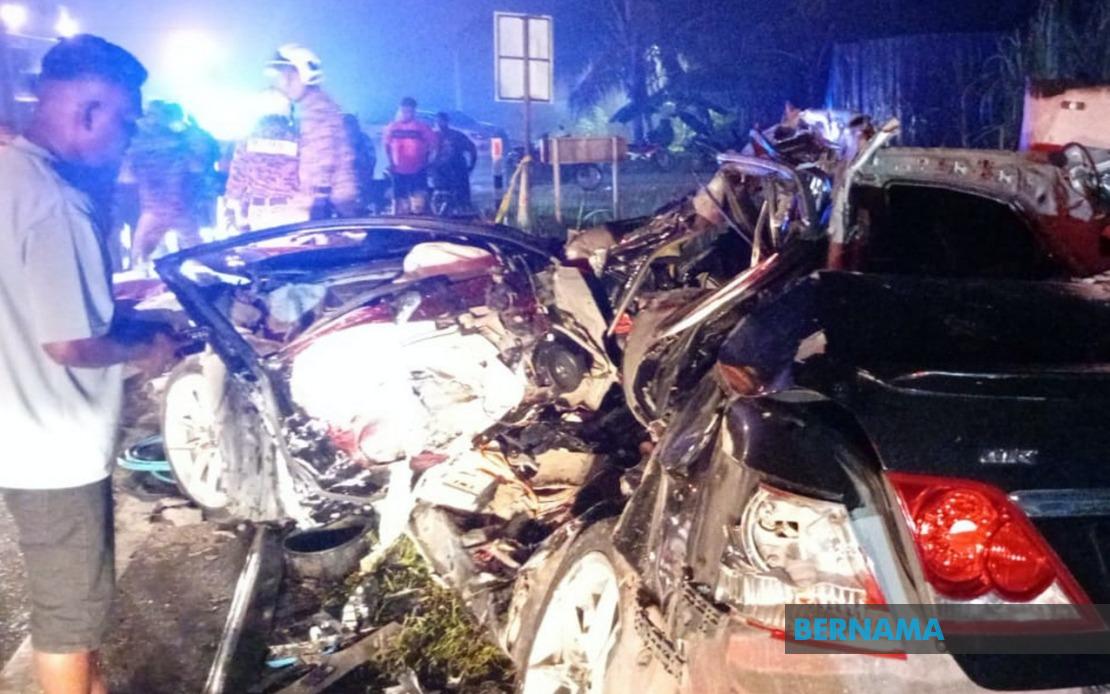
Prime Minister Datuk Seri Anwar Ibrahim has expressed deep sorrow over a fatal road accident that claimed six lives on the Jalan Karak Lama near Bentong in Pahang on Tuesday morning. The tragic incident, which occurred just before dawn, has prompted the nation's leader to renew public discourse around the persistent dangers facing travellers on Malaysian highways and the urgent need for enhanced safety protocols across the road network.
Taking to social media platform X, Anwar acknowledged the devastating impact on bereaved families, stating that both he and his wife, Datuk Seri Dr Wan Azizah Wan Ismail, were profoundly distressed by the catastrophe. His statement extended support and prayers for the injured to recover swiftly, reflecting the traditional compassionate response expected of national leadership when tragedy strikes. The Prime Minister's intervention underscores how fatal accidents, particularly those involving multiple fatalities, now demand immediate high-level attention in Malaysia's political ecosystem.
The collision unfolded at approximately 4 am on Tuesday along Jalan Karak Lama heading towards Temerloh, in proximity to Klink Desa Jambu Rias in Bentong. A Toyota Vios carrying six occupants collided with a one-tonne lorry, leaving all passengers in the car fatally injured at the scene. The driver, V. Mugilan, aged 25, perished alongside passengers K. Dineshvaran, 22, K. Alaganathan, 21, A. Kanabati Raja, 19, S. Kiisven, 17, and M. Paranthaman, 16. The lorry operator, a 31-year-old man, sustained grievous injuries requiring medical intervention.
Preliminary police investigations have established that the Toyota Vios, which was en route from Kuantan to Kuala Lumpur, veered into the opposing traffic lane while navigating a downhill gradient. This loss of vehicle control directly precipitated the collision with the oncoming lorry. The configuration of the Karak route through Bentong—characterised by undulating terrain and winding sections—presents inherent hazards that have historically contributed to multiple fatal incidents along this corridor.
The demographic profile of the victims is particularly striking and concerning. Five of the six deceased were teenagers or in their very early twenties, suggesting that young drivers or young passengers represent a vulnerable segment within Malaysia's road fatality statistics. This pattern mirrors broader trends across Southeast Asia, where youthful inexperience combined with inadequate vehicle maintenance and variable road conditions creates a perilous combination. The concentration of casualties within a single vehicle also illustrates how a single moment of vehicular misjudgement can erase multiple lives simultaneously.
Anwar's statement carried explicit messaging about road safety, characterising the incident as a cautionary reminder that traffic safety demands perpetual vigilance and cannot be relegated to passive acceptance. This rhetorical positioning transforms a tragedy into an educational moment, though critics argue that public statements, while necessary, must be accompanied by substantive policy interventions. The recurring cycle of fatal crashes followed by condolences and pledges to enhance safety has become a recognised pattern in Malaysian public discourse, raising questions about the efficacy of current enforcement and infrastructure strategies.
The Karak highway corridor, which traverses challenging terrain linking the east coast to the Klang Valley, has established itself as a particular hotspot for serious accidents. The pre-dawn timing of Tuesday's crash suggests fatigue-related factors may have contributed, as drivers travelling during night hours frequently exhibit reduced alertness and slower reaction times. Road conditions during early morning hours—potential moisture on surfaces, reduced visibility, and diminished traffic presence that may encourage excessive speed—collectively elevate accident risk during these periods.
For Malaysian road safety advocates, the incident represents another data point in a persistent crisis. Annual fatalities on Malaysian highways remain disturbingly high, with young people constituting a disproportionate share of victims. The tragedy in Bentong serves as a catalyst for renewed discussion regarding mandatory safety features, speed enforcement technologies, improved road design standards, and driver education programmes that specifically target high-risk age groups. These policy discussions, however, often struggle to translate into concrete implementation across the diverse spectrum of Malaysia's road infrastructure.
The response from the Prime Minister's office indicates institutional awareness of the political dimensions surrounding road safety. Fatal accidents, particularly those capturing public attention through their sheer casualty toll or demographic resonance, have become events that demand executive acknowledgement. This reflects evolving expectations about leadership accountability in public safety matters and the recognition that road fatalities constitute a silent public health emergency warranting comparable concern to other catastrophic events.
Moving forward, the Bentong collision will likely prompt calls for targeted safety interventions on the Karak route itself, including enhanced lighting, clearer lane markings, improved drainage to prevent aquaplaning, and potentially speed reduction measures in particularly hazardous sections. Whether such recommendations receive adequate funding and timely implementation remains to be observed. For families of the six victims, the Prime Minister's condolences offer formal acknowledgement of their loss, though the deeper challenge lies in transforming such tragedies into meaningful systemic improvements that prevent future incidents along Malaysian highways.

