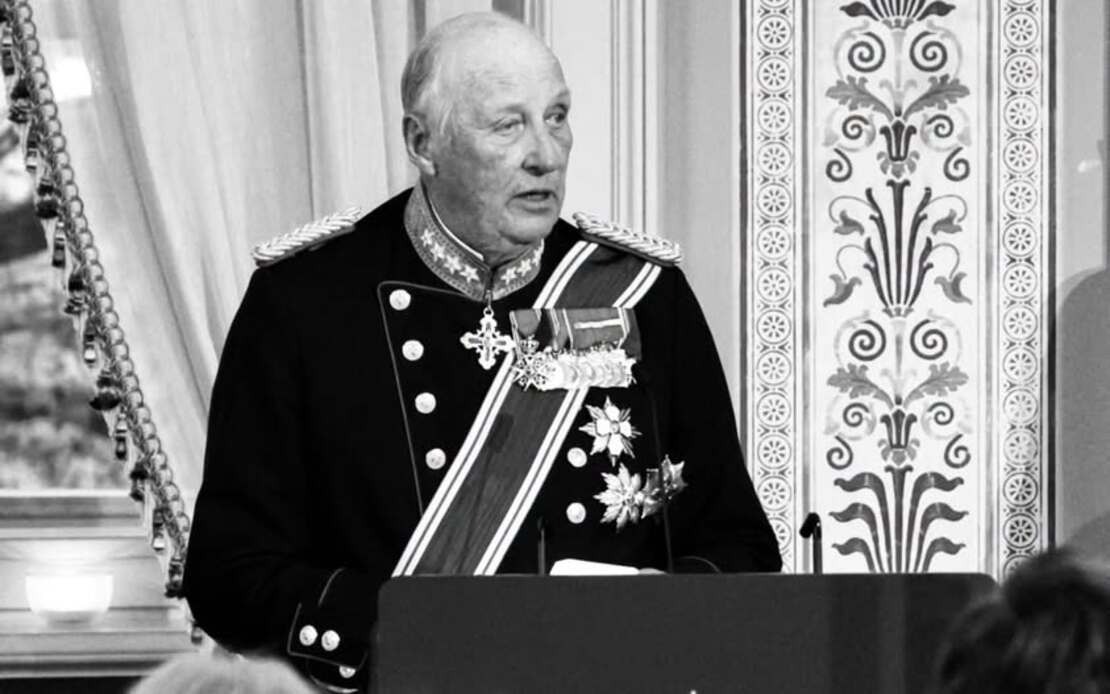
Prime Minister Datuk Seri Anwar Ibrahim has expressed Malaysia's deepest sympathies to the Norwegian people following the death of King Harald V, who died on Friday aged 89 at the National Hospital in Oslo. The Malaysian leader issued a formal statement recognising the significant loss to Norway and the broader international community, underscoring the diplomatic ties maintained between the two nations across decades of cordial relations.
King Harald V had been hospitalised since mid-August and was undergoing cortisone treatment for hemolytic anemia, a blood disorder that ultimately contributed to his passing. His death marks the end of a reign spanning several decades during which the Norwegian monarch became a defining figure in Scandinavian politics and society. The extended period of medical care before his death provided time for royal institutions and the international community to prepare for the transition of power to his successor.
In his condolence message, Anwar highlighted the late king's remarkable capacity to articulate an inclusive vision of Norwegian identity. The Prime Minister particularly emphasised King Harald's ability to recognise and celebrate the country's multicultural character, noting how the monarch had publicly affirmed that Norwegians comprised people of diverse ancestral backgrounds, including those with roots in Afghanistan, Pakistan, Poland and numerous other nations. This recognition of immigration and cultural plurality as integral to national strength resonated with Anwar's own governance philosophy.
Anwar drew particular attention to King Harald's statements regarding the incorporation of foreign-born residents into the Norwegian national fabric. The monarch's assertion that individuals from immigrant communities were equally Norwegian represented an important political statement in contemporary European discourse, where questions of national identity and belonging have become increasingly contested. By highlighting these remarks, Anwar signalled Malaysia's appreciation for multicultural approaches to citizenship and national cohesion.
The Prime Minister further reflected on the philosophical dimension of King Harald's legacy, emphasising the monarch's demonstrated commitment to the weight and solemnity of oath-taking. In the constitutional context of Scandinavian monarchies, where royal figures exercise largely ceremonial powers while binding themselves to constitutional frameworks, such fidelity to commitment represents a cornerstone of institutional legitimacy. Anwar's reference to this quality underscored respect for the rule of law and institutional integrity.
Anwar contended that King Harald's tenure embodied an understanding that national strength fundamentally derives from the dignity afforded to all inhabitants regardless of their background. This observation carries particular resonance for Malaysia, which has navigated its own complex questions regarding ethnic and religious pluralism since independence. The implicit comparison between Norway's multicultural integration challenges and Malaysia's own experience with diverse communities suggests Anwar's openness to learning from international peers facing similar demographic complexities.
The condolence statement represents standard diplomatic protocol in response to the death of a foreign head of state, yet it also reflects genuine engagement with the philosophical positions King Harald articulated throughout his reign. Malaysia and Norway, while geographically distant and culturally distinct, have maintained cordial bilateral relations grounded in shared commitments to international cooperation, trade engagement, and regional stability frameworks.
King Harald's death concludes an era of Norwegian governance characterised by careful stewardship of the nation's wealth, derived substantially from North Sea petroleum resources, alongside sustained investment in social welfare systems and environmental sustainability. His successor, Crown Prince Haakon, inherits both the symbolic responsibilities of constitutional monarchy and the complex challenges facing contemporary Norway, ranging from climate transition to geopolitical positioning in relation to Russian expansion.
For Malaysian readers, the passing of King Harald represents a moment to reflect on how different nations approach questions of national identity and inclusion. While Norway's approach emphasises cultural pluralism within a strong welfare state framework, Malaysia has historically balanced communal identities through constitutional arrangements and affirmative policies. Both nations, however, grapple with the fundamental question of how diverse populations can coexist within shared civic frameworks.
Anwar's invocation of the king's legacy also subtly positions Malaysia within a broader international conversation about inclusive governance. At a time when populist movements in various democracies have emphasised ethnic or religious exclusivity, King Harald's public endorsement of multicultural belonging offered a counternarrative. Malaysia, as a nation that has generally resisted communal polarisation despite periodic tensions, finds alignment with such principles.
The diplomatic exchange, while ceremonial in nature, underscores the interconnected nature of modern international relations. Even geographically distant nations maintain protocols and genuine engagement around significant events. Malaysia's swift and thoughtful response to the Norwegian king's passing demonstrates the country's participation in global communities of practice around governance, democracy, and institutional continuity.
Looking ahead, Malaysia will likely seek to develop its relationship with King Haakon and the Norwegian government, building upon existing frameworks of cooperation in trade, technology, and international forums. Such continuity in diplomatic relations, extended across the transition from one monarch to another, reflects the enduring nature of state-to-state relationships that transcend individual leaders.

