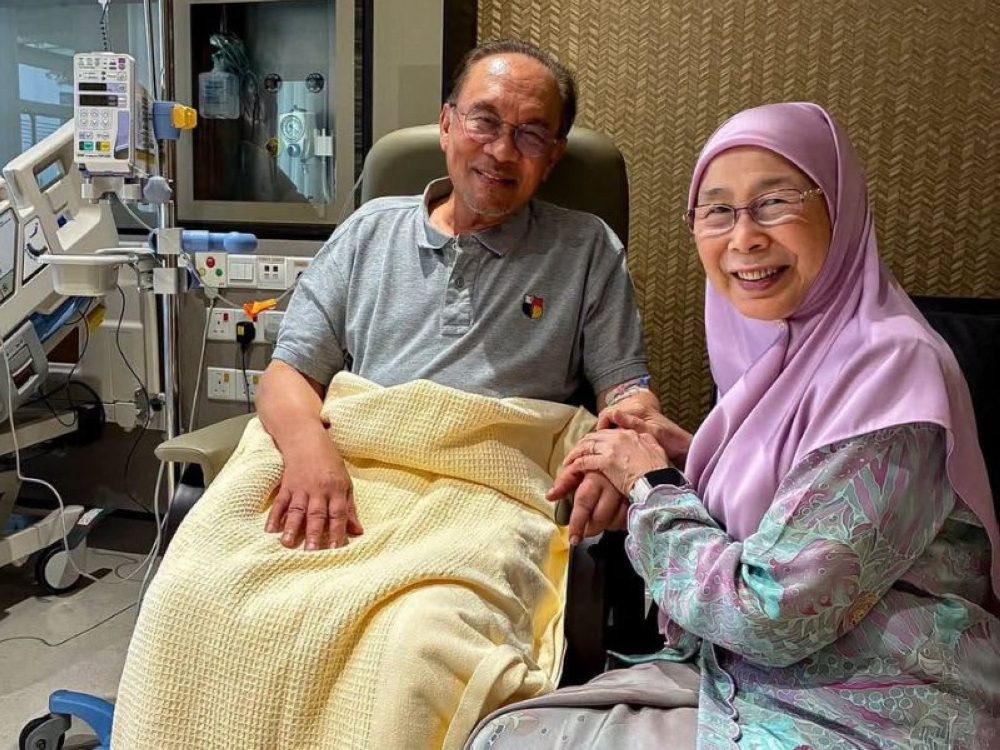
Prime Minister Datuk Seri Anwar Ibrahim is scheduled to be released from hospital today after undergoing surgical treatment for a hernia condition, according to a statement from his wife. The procedure, which required hospitalisation, appears to have progressed without complications, paving the way for the nation's leader to resume his duties from his residence.
The announcement comes as Malaysia's political machinery continues under the stewardship of the Prime Minister's office, with government operations proceeding normally during his absence. Anwar's medical situation underscores the importance of transparency regarding the health status of senior political figures, particularly those holding the highest constitutional office in the country. Such disclosure helps maintain public confidence in the continuity of governance and demonstrates the administration's commitment to openness with citizens about matters affecting national leadership.
Hernia surgery, though often classified as a routine procedure, requires adequate recovery time to ensure complete healing and prevent complications. The decision to discharge Anwar on the same day as his anticipated release suggests that medical professionals have assessed his condition as sufficiently stable for home-based recuperation. This approach aligns with contemporary medical practice, where patients are often managed in outpatient settings rather than remaining hospitalised when clinically appropriate.
The timing of the procedure and recovery cycle raises questions about the management of the Prime Minister's official calendar and delegation of duties during his convalescence. While formal statements have not detailed which ministerial responsibilities may have been temporarily reassigned, the government's administrative framework includes provisions for such contingencies. Deputy Prime Minister and other senior cabinet members typically assume enhanced roles during any period when the Prime Minister requires medical leave.
For Malaysia's political stakeholders and international observers, the transparency surrounding Anwar's health status represents a departure from historical patterns. Previous Malaysian administrations have occasionally been criticised for opacity regarding leadership health matters, creating uncertainty and speculation. This approach of timely disclosure through his wife's confirmation suggests an effort to normalise political leadership health communication within Malaysian democratic practice.
The hernia condition itself—a protrusion of abdominal tissue through weakened muscular walls—affects individuals across all demographic groups and professions. While not typically life-threatening, hernias require surgical correction to prevent incarceration or strangulation of tissue. The fact that Anwar's medical team determined operative intervention necessary indicates either a symptomatic presentation or risk factors warranting prophylactic treatment rather than conservative management.
From a broader governance perspective, the incident highlights the institutional resilience of Malaysia's administrative structures. The country's civil service and established protocols ensure that government operations proceed with minimal disruption during temporary absences of senior leaders. Ministries continue routine functions, parliamentary procedures follow established schedules, and policy implementation remains on track—a testament to institutional stability despite leadership transitions or medical absences.
The recovery period ahead will be significant for observing how Anwar manages the balance between medical recuperation and pressing governmental demands. Prime ministerial roles demand constant engagement with complex policy decisions, diplomatic communications, and political management. The flexibility of modern governance—including virtual meetings and remote work capabilities—may allow partial resumption of duties while respecting medical recovery timelines.
Regional implications merit consideration as well. Malaysia's political stability and effective governance contribute to Southeast Asia's broader economic and security environment. Any extended disruption to executive function could have downstream effects on pending bilateral agreements, trade negotiations, or regional initiatives. However, the apparent straightforwardness of Anwar's medical situation and rapid discharge timeline suggest minimal medium-term governance impact.
Looking forward, the management of this situation may establish a precedent for how contemporary Malaysian political leadership addresses health matters publicly. The shift toward greater transparency could influence expectations regarding other senior officials' health disclosures and strengthen democratic norms around accountability and public information. Citizens' access to reliable information about their leaders' wellbeing contributes to informed political participation and trust in institutions.
As Anwar prepares for discharge and home-based recovery, the government faces the practical challenge of maintaining policy momentum while accommodating the Prime Minister's medical needs. The expected return to normal duties following adequate recuperation will restore full executive capacity and allow Australia to demonstrate continuity in leadership during what appears to be a routine, manageable health intervention.

