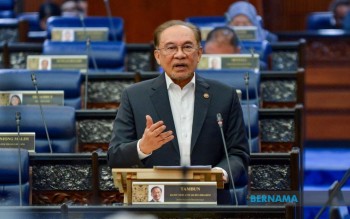
Prime Minister Datuk Seri Anwar Ibrahim has adopted an uncompromising stance regarding any potential corruption or fraud linked to the Retirement Fund (Incorporated)'s investment in eFishery, an aquaculture technology venture. Speaking in Parliament's upper house, Anwar underscored that the government views safeguarding public pension funds with utmost seriousness, particularly given growing concerns about the stewardship of retirement savings in an era of geopolitical volatility and economic uncertainty.
While preliminary assessments have not uncovered evidence of wrongdoing, Anwar — who doubles as Finance Minister — signalled that a full investigation by the Malaysian Anti-Corruption Commission (MACC) is necessary to dispel lingering doubts. This measured approach reflects an attempt to balance public confidence with procedural thoroughness, acknowledging initial findings whilst ensuring independent scrutiny validates the integrity of the transaction.
The Prime Minister revealed he has convened KWAP's leadership to demand complete transparency and cooperation throughout the MACC inquiry. His directive extends beyond investigating the immediate financial transaction to encompassing the entire decision-making architecture, including the investment panel's deliberations and the board's ultimate sign-off. This comprehensive scope suggests officials harbour concerns about potential gaps in governance frameworks rather than confirmed malfeasance.
For Malaysian retirement fund participants, this situation carries substantial implications. KWAP, alongside the Employees Provident Fund (KWSP), represents a crucial repository of deferred wages and savings accumulated over workers' careers. Any mismanagement or fraudulent deployment of these assets strikes at the financial security of millions of ordinary Malaysians approaching retirement. The government's willingness to subject the investment to intensive scrutiny therefore reflects its duty to those whose livelihoods depend on prudent fund stewardship.
The eFishery investment itself exemplifies a broader strategic push by Malaysian financial institutions to diversify into technology-driven sectors perceived as growth engines. Aquaculture technology represents a logical target for development-focused funds, given Southeast Asia's substantial fishing industry and the sector's potential for productivity gains. However, the emerging questions suggest the investment process may have lacked adequate safeguards or oversight mechanisms to prevent conflicts of interest or dubious decision-making.
Anwar's parliamentary response emerged in reply to Senator Mohd Hasbie Muda's inquiry regarding how national retirement funds can maximise returns despite volatile global conditions. The question implicitly raised concerns about whether aggressive investment strategies, particularly in emerging ventures, might expose retirees' accumulated savings to excessive risk. This framing highlights a fundamental tension in pension fund management: balancing growth aspirations against capital preservation obligations.
Senator Wan Martina Wan Yusoff's supplementary question pushed the discussion further toward governance and accountability. Her inquiry about government transformation efforts to vet investment destinations and protect public money underscores legislative scrutiny of how retirement funds allocate resources. This line of questioning reflects broader parliamentary awareness that pension fund performance directly impacts citizens' welfare in their post-employment years, necessitating rigorous due diligence.
The controversy surrounding the eFishery investment arrives amid heightened public sensitivity to governance failures affecting institutional investors. Recent years have witnessed multiple scandals involving misappropriation or imprudent management of public assets, eroding confidence in institutions entrusted with collective savings. Consequently, Anwar's insistence on MACC's independent investigation represents both a commitment to accountability and a strategic response to rekindling public trust.
The government's investigative approach carries implications beyond Malaysia's borders. Foreign investors and international fund managers scrutinise how Southeast Asian nations govern large institutional portfolios, particularly those managing worker savings. A credible investigation into the eFishery transaction, conducted transparently and concluding with clear findings, would signal to global markets that Malaysian regulators maintain standards consistent with developed economies.
For KWAP management, the investigation presents both challenge and opportunity. Transparent cooperation with the MACC provides a pathway to demonstrating that the investment underwent appropriate vetting and governance processes. Conversely, any revelation of procedural shortcomings could trigger reforms strengthening the institutional architecture surrounding future investment decisions.
The situation also illuminates tensions inherent in retirement fund management within developing economies. Pension funds must generate returns sufficient to meet future liabilities, pressuring managers toward higher-yielding but riskier assets. Simultaneously, they bear fiduciary obligations to protect members' capital. Navigating this balance requires robust governance frameworks, experienced investment committees, and effective oversight bodies — institutional strengths that demand continuous cultivation and investment.
Moving forward, Anwar's commitment to MACC's investigation will largely determine whether the episode strengthens public confidence in pension fund stewardship or deepens scepticism about institutional governance. The findings and any subsequent reforms will reverberate across Malaysia's investment ecosystem, potentially affecting how retirement funds approach venture capital allocation and governance mechanisms. For millions of Malaysian workers accumulating pension credits, the outcome carries tangible implications for their financial security in retirement.

