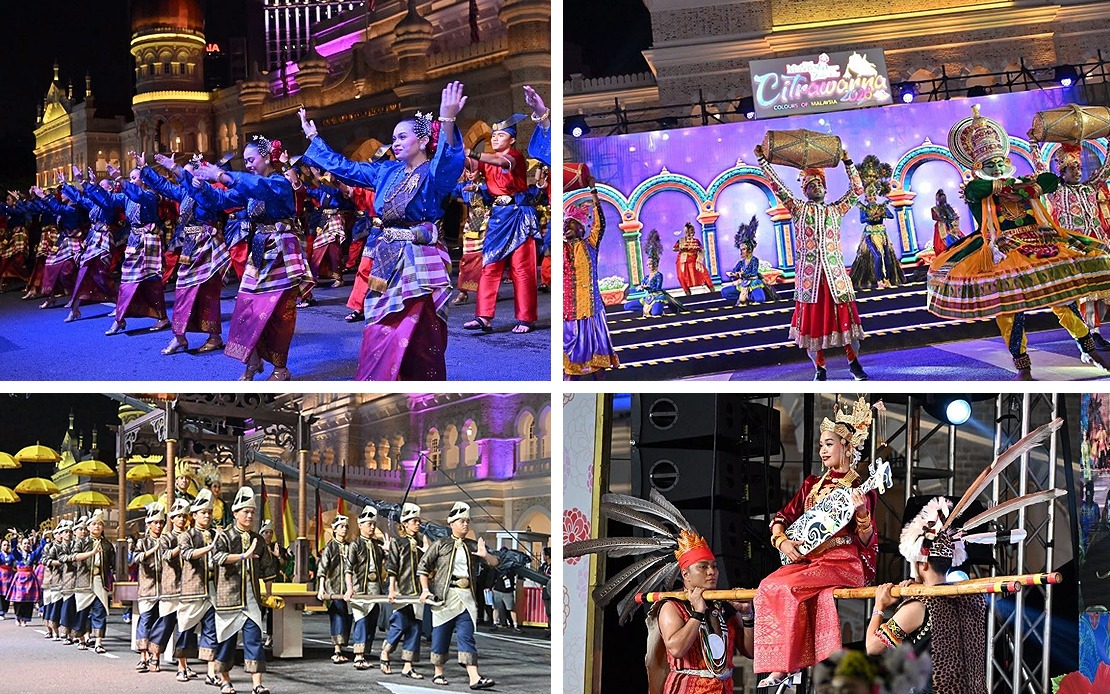
Prime Minister Datuk Seri Anwar Ibrahim presided over the opening ceremony of Citrawarna 2026 at Dataran Merdeka on July 25, marking a significant moment in Malaysia's efforts to position itself as a premier cultural tourism destination ahead of the Visit Malaysia 2026 campaign. The event represents Tourism Malaysia's commitment to showcasing the nation's rich artistic heritage and diverse cultural traditions to both domestic and international audiences, with the participation of senior government officials including Tourism, Arts and Culture Minister Datuk Seri Tiong King Sing and Chief Secretary to the Government Tan Sri Shamsul Azri Abu Bakar.
The three-day festival operates as an integrated cultural showcase organised in collaboration with multiple government and heritage institutions. Kuala Lumpur City Hall, Warisan Kuala Lumpur, the National Department for Culture and Arts, Istana Budaya, and the National Textile Museum combined their resources to create an event designed to illuminate Malaysia's multifaceted cultural landscape. This institutional partnership underscores the government's intention to present a cohesive narrative about Malaysian identity that transcends individual state or community perspectives, instead emphasising the interconnectedness of the nation's 13 states, three Federal Territories, and diverse ethnic populations.
The centrepiece of the festival is the Colours of Parade, an ambitious procession featuring 3,500 dancers representing all constituent states and territories alongside performers from Malaysia's Chinese, Indian, Malay, indigenous, and other communities. This scale of participation—with thousands of performers drawn from across the country—requires substantial coordination and reflects the ambition of organizers to create a visually compelling representation of Malaysian pluralism. The parade format itself carries symbolic weight, transforming Dataran Merdeka into a stage where cultural expression becomes inseparable from national identity messaging.
The international dimension of Citrawarna 2026 demonstrates notable success in attracting foreign visitors, with over 700 international tourists participating through specially curated tourism packages. Visitors hailed from diverse geographic regions including China, India, Mauritius, Japan, Vietnam, Indonesia, Singapore, Kazakhstan, Italy, the Netherlands, Switzerland, and France. This geographic diversity suggests that Malaysia's cultural tourism appeal extends beyond Asian markets into European and African audiences, potentially opening new revenue streams for the tourism sector and indicating that Western markets increasingly view Southeast Asian cultural experiences as compelling travel destinations.
Tourism Malaysia officials characterised the international participation as validation of Malaysia's positioning as a culturally rich destination. The statement noted that foreign visitors' presence enables firsthand experience of Malaysian heritage, traditions, and hospitality standards, suggesting that cultural tourism operates not merely as entertainment but as soft power outreach. For Malaysia, demonstrating cultural sophistication and multicultural harmony to international visitors carries diplomatic implications, particularly in an era where nations compete for tourist spending and international prestige through cultural programming.
Citrawarna 2026 extends beyond the parade through four integrated thematic showcases: the Colours of Parade, Colours of Flavour, Colours of Culture, and Colours of Arts. This modular approach allows visitors to engage with Malaysian culture across multiple sensory and experiential dimensions. The festival encompasses over 70 food and drink stalls, introducing international visitors to Malaysian culinary traditions spanning different ethnic and regional cuisines. The inclusion of 20 cultural activity booths and 10 arts and crafts stalls provides hands-on engagement opportunities, moving beyond passive observation toward interactive participation in cultural practices.
Cultural performances, heritage demonstrations, and traditional games function as educational components within the broader festival structure. By incorporating explanatory elements and participatory activities alongside performances, organisers create frameworks for visitors to understand the historical and social significance underlying artistic practices rather than merely consuming them as exotic spectacle. This approach potentially enhances the perceived authenticity of cultural representations and deepens visitor engagement with Malaysian traditions.
The timing of Citrawarna 2026 within the Visit Malaysia 2026 campaign reflects strategic planning to leverage major tourism initiatives for cultural promotion. The Visit Malaysia 2026 campaign positions Malaysia as a comprehensive tourism destination where cultural, natural, and commercial experiences intertwine. Citrawarna 2026 specifically targets the cultural segment of this broader campaign, attempting to shift Malaysia's tourism brand positioning beyond conventional attractions toward cultural sophistication and heritage preservation.
For Malaysia's tourism industry, the event generates momentum during a period when Southeast Asian destinations compete intensely for international visitor flows. Thailand, Vietnam, and Indonesia have established strong cultural tourism brands; Malaysia's emphasis on multicultural heritage represents a distinctive positioning strategy. By foregrounding the coexistence of multiple ethnic and religious traditions within a unified national framework, Malaysia differentiates itself from neighbours by emphasising intercultural harmony as itself a tourist attraction.
The participation of 3,500 dancers from across Malaysia creates employment and visibility opportunities for cultural practitioners, artists, and performers often marginalised in mainstream economy. The festival provides platforms for traditional arts practitioners and emerging artists to reach international audiences, potentially stimulating demand for cultural products and performances beyond the festival itself. This economic dimension extends Citrawarna's impact beyond ceremonial significance into livelihoods for cultural workers.
The Prime Minister's personal attendance at the opening ceremony signals executive-level prioritisation of cultural tourism within the government's broader economic development strategy. This visibility reinforces messaging that cultural preservation and promotion constitute national priorities rather than peripheral concerns. PM Anwar's participation also connects cultural tourism to administrative credibility, suggesting that government competence in planning large-scale events extends beyond infrastructure into softer dimensions of national identity and international representation.
Citrawarna 2026 ultimately functions as both cultural celebration and strategic policy implementation. The festival showcases Malaysia's multicultural reality while simultaneously constructing a particular narrative about what Malaysian identity encompasses and how it should be presented to international audiences. Success in attracting visitors and generating positive international responses could influence subsequent policy decisions regarding cultural funding and tourism promotion strategies throughout Southeast Asia.

