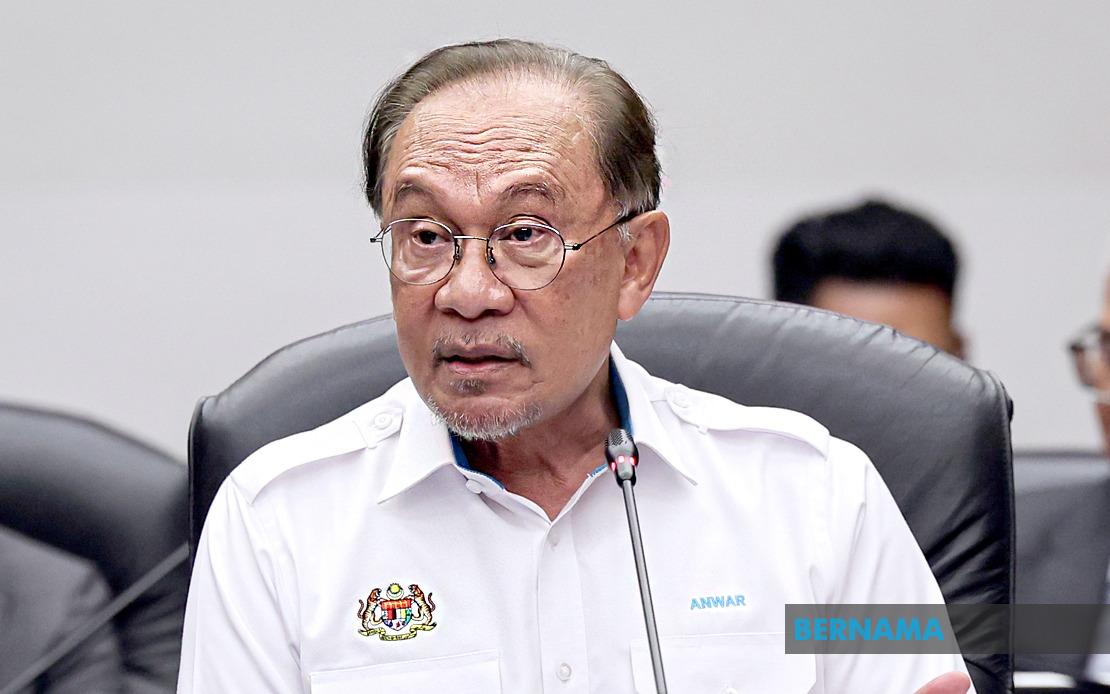
Prime Minister Datuk Seri Anwar Ibrahim has embarked on a two-day working visit to Penang, with an agenda spanning educational institutions, skills development platforms, and heritage restoration efforts. The visit reflects the government's broader focus on strengthening community engagement across multiple demographic groups whilst advancing Malaysia's position in regional halal commerce and Islamic knowledge development.
The Prime Minister commenced his itinerary by launching the Indian Muslim Transformation Framework (IMTF) 2030 Programme at PICCA@Arena Butterworth Convention Centre this evening. This initiative represents a targeted policy response to the specific developmental needs of Malaysia's Indian Muslim community, establishing a structured pathway for advancement across economic, educational, and social dimensions over the next half-decade. The programme's launch in Penang, home to a significant Indian Muslim population, underscores the government's recognition of the state's diversity and the importance of inclusive policy formulation.
During his second day, Anwar will participate in the National Training Week (NTW) 2026 Summit at Universiti Teknologi MARA (UiTM) Permatang Pauh, setting the stage for discussions on skills development and vocational training. This engagement positions the government's human capital development agenda at the forefront of policy discussions, particularly relevant given Malaysia's ongoing efforts to upskill the workforce and remain competitive in a rapidly evolving regional economy.
A centrepiece of the visit involves the official opening of Sekolah Menengah Kebangsaan Agama (SMKA) Sheikh Tahir Jalaluddin in Bukit Mertajam. The school bears the name of one of Penang's most influential Islamic scholars and reform thinkers, honouring his contributions to Islamic knowledge and educational advancement. The institution is specifically designed to integrate da'wah principles with academic rigour, emphasising Islamic values within the context of Malaysia's multicultural society. This approach reflects contemporary efforts to bridge religious education with broader social cohesion objectives.
The launch of the Nuqaba Programme further demonstrates the government's investment in specialised educational pathways. Such programmes typically target high-achieving students and aim to develop leadership capabilities grounded in Islamic principles, contributing to a pipeline of morally-grounded professionals across various sectors. For Malaysian readers, this signals continued government attention to values-based education and the cultivation of principled leadership.
Anwar's subsequent engagement with the Himpunan Usahawan Bumiputera Pulau Pinang (HUBPP) and the 14th Penang International Halal Trade Exhibition (PIHEX) at Seberang Perai Polytechnic addresses economic dimensions of the visit. The halal trade exhibition carries particular weight in the regional context, as Malaysia positions itself as a global halal hub. Penang's participation in this initiative strengthens the state's integration into national halal commerce networks whilst providing bumiputera entrepreneurs—the traditional focus of government support mechanisms—with platforms to expand market access and business networks.
The restoration and ceremonial opening of Fort Cornwallis represents the heritage conservation component of the visit. This 18th-century colonial-era fortification holds significant historical value as a symbol of Penang's development as a trading centre. The government's decision to allocate ministerial attention to heritage conservation reflects broader recognition that historical preservation forms part of national identity and cultural continuity. For Penang specifically, such initiatives enhance tourism prospects and underscore the state's historical importance.
Communications Minister Datuk Seri Fahmi Fadzil's parallel participation in the HUBPP and PIHEX events indicates whole-of-government coordination. His subsequent visit to the Nordin Ahmad Employee Gallery at Sekolah Kebangsaan Permatang Pasir suggests attention to honouring institutional contributions and local narratives of achievement. Such coordinated ministerial presence demonstrates integrated policy delivery across portfolios.
For Malaysian and Southeast Asian observers, this visit exemplifies how contemporary governance increasingly emphasises simultaneous advancement across multiple developmental dimensions—economic, educational, religious, and cultural—rather than compartmentalised sectoral approaches. The geographic focus on Penang, whilst maintaining national policy relevance, acknowledges that different states require tailored engagement strategies reflecting local demographics and economic structures. The diversity of programmes compressed into a two-day schedule also signals the intensive nature of contemporary executive work, with senior ministers managing complex policy portfolios across disparate institutional domains.

