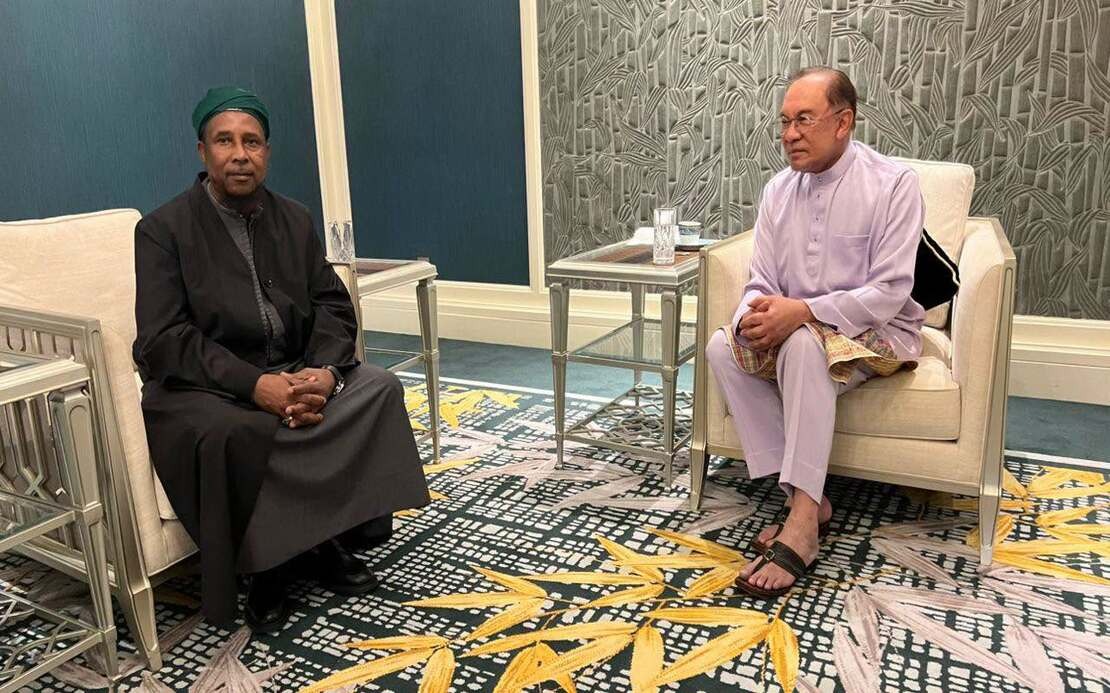
Prime Minister Datuk Seri Anwar Ibrahim extended a final farewell to prominent Gambian Islamic scholar Sheikh Muhammad Haydara Al-Jilani on June 26, marking the conclusion of an extended educational visit that saw the religious figure traverse Malaysia conducting knowledge-sharing sessions and spiritual programmes. The formal meeting at the Prime Minister's office reflected the significance accorded to the scholar's month-long stay, during which he engaged Malaysian Muslim communities through a structured series of dakwah initiatives.
The timing of the encounter held particular symbolic weight, as it coincided with the Day of Ashura—the tenth day of the Islamic month of Muharram—which fell on a Friday. This convergence of religious significance prompted Anwar to view the meeting as more than a customary diplomatic courtesy, but rather as an opportunity to invoke spiritual blessings for the nation. The Prime Minister utilised the occasion to request special prayers from Sheikh Muhammad Haydara, specifically seeking divine grace for Malaysia's continued prosperity, internal peace, and collective well-being.
Sheikh Muhammad Haydara Al-Jilani's extended Malaysian sojourn represented a deliberate programme of Islamic outreach and knowledge dissemination. Throughout his month in the country, the Gambian scholar conducted multiple religious gatherings and educational sessions at designated venues across Malaysia. These sessions blended traditional Islamic knowledge transmission with dhikr practices—rhythmic spiritual remembrance that forms a core component of Islamic devotional culture. The breadth of his itinerary underscored efforts to reach diverse Muslim populations nationwide, fostering engagement across regional and demographic boundaries.
The dakwah programme orchestrated during the scholar's visit constituted part of broader interfaith and intra-Islamic dialogue initiatives increasingly prominent in Malaysian religious circles. Such visits by established Islamic figures from West Africa serve multiple functions within Malaysia's religious landscape. They reinforce Malaysia's positioning as a hub for Islamic learning and spiritual exchange within Southeast Asia, whilst simultaneously demonstrating the Prime Minister's personal commitment to facilitating meaningful religious discourse and community engagement.
For Malaysian Muslims, exposure to international Islamic scholarship carries particular relevance given the country's diverse interpretations of Islamic practice. Gambian Islamic traditions, rooted in West African Islamic heritage, offer perspectives that complement local Malaysian Islamic scholarship. The presence of scholars like Sheikh Muhammad Haydara enriches the intellectual ecosystem by introducing alternative pedagogical approaches to Quranic studies, hadith interpretation, and spiritual disciplines.
The Prime Minister's public acknowledgment of the meeting through his official Facebook post served to legitimise the visit within broader public discourse. By framing the encounter through the lens of national spiritual welfare, Anwar positioned Islamic scholarship not merely as a matter of religious interest but as integral to Malaysia's collective destiny. This rhetorical strategy reflects how contemporary Malaysian politics increasingly integrates explicit Islamic references within governance narratives, appealing to the religious sensibilities of the predominantly Muslim electorate.
The knowledge-sharing sessions conducted by Sheikh Muhammad Haydara throughout Malaysia operated within established patterns of Islamic learning transmission. Dhikr gatherings, in particular, attract significant participation across Malaysian Muslim communities, transcending conventional mosque-based religious instruction. These programmes provide spaces for spiritual renewal and communal bonding, particularly appealing to urban professionals and younger Muslims seeking deeper engagement with Islamic practice beyond routine observance.
The selection of multiple nationwide locations for the scholar's programmes indicates deliberate efforts to ensure geographically inclusive religious outreach. Rather than concentrating activities in major urban centres, the organisers facilitated access across regions, recognising that Islamic learning communities exist throughout Malaysia's diverse geography. This inclusive approach reflects contemporary Malaysian Islamic leadership's commitment to bridging urban-rural divides in religious education access.
Sheikh Muhammad Haydara's visit also carries implications for Malaysia's positioning within broader Islamic world networks. By hosting and extending formal recognition to accomplished international Islamic scholars, Malaysia reinforces its credentials as a centre of Islamic excellence within the Asian context. Such engagements contribute to soft power dynamics, positioning the nation as a welcoming hub for Islamic intellectual exchange and spiritual tourism.
The concluding meeting between the Prime Minister and the Gambian scholar represents the culmination of carefully structured engagement designed to maximise institutional and community benefit. Rather than a purely ceremonial gesture, the farewell audience allowed Anwar to personally engage with a scholar whose teachings had circulated through Malaysian Muslim communities over the preceding month. This direct interaction provides the Prime Minister with contemporary insights into prevailing concerns and intellectual currents within Islamic scholarship relevant to Malaysian context.
Moving forward, the impact of Sheikh Muhammad Haydara's visit will likely manifest through continued engagement with Malaysian Islamic institutions and potential return visits. The networks established and relationships cultivated during this extended tour create foundations for sustained intellectual exchange. For the broader Malaysian Islamic community, the visit contributes to an ongoing process of knowledge accumulation and spiritual development that extends beyond any single scholar's presence, influencing long-term trajectories of religious thought and practice.

