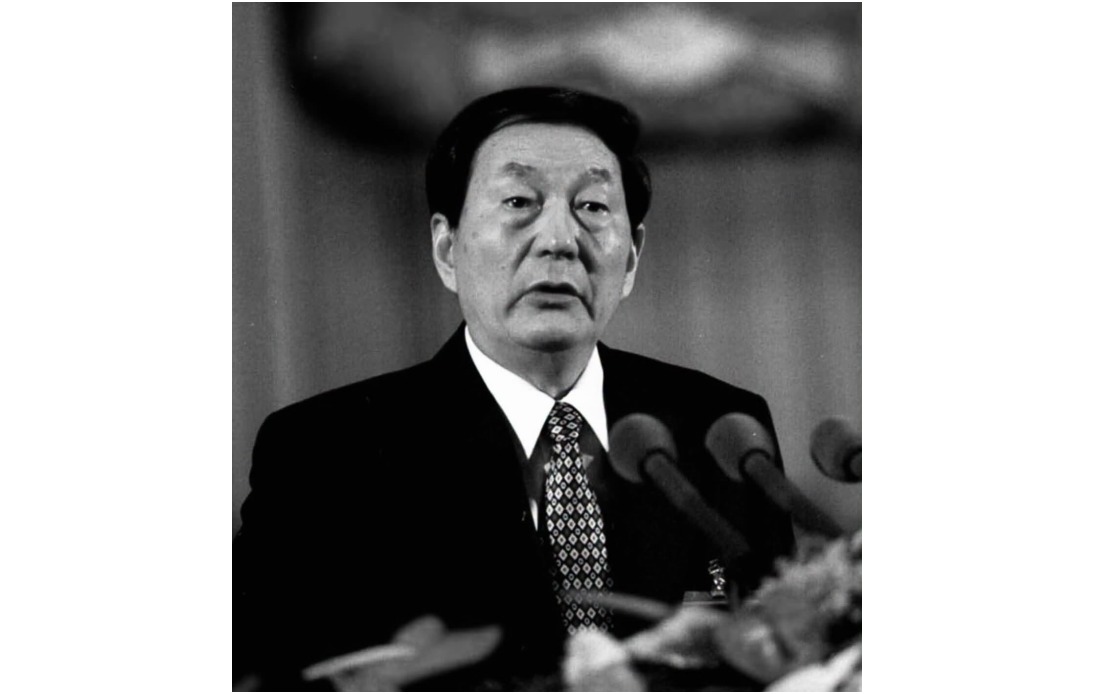
Prime Minister Datuk Seri Anwar Ibrahim has paid tribute to Zhu Rongji, the former Premier of the People's Republic of China who passed away at the age of 97, describing him as a pivotal figure whose economic vision fundamentally reshaped one of the world's largest nations. Speaking through a Facebook post, Anwar characterised Zhu as an irreplaceable architect of modern China's economic trajectory, emphasising the transformative impact his policies had on the country's emergence as a global economic force.
Zhu's tenure as China's Premier, spanning from 1998 to 2003, represented a critical inflection point in Beijing's economic evolution. During his five years in office, he orchestrated sweeping market-oriented reforms that fundamentally restructured the relationship between the state and the economy. His most significant achievement involved the comprehensive overhaul of China's state-owned enterprise sector, a reform programme that stripped away inefficiencies and exposed these behemoths to market discipline. Equally transformative was his orchestration of China's accession to the World Trade Organisation, a milestone that locked the country into global trade frameworks and accelerated its integration into international commerce.
Anwar's reflections on his personal relationship with Zhu reveal the depth of engagement between Malaysian and Chinese leadership during the 1990s, a formative period for bilateral relations. The Prime Minister recalled collaborative efforts with the former Chinese Premier aimed at strengthening economic and financial linkages between the two nations. These institutional frameworks and partnerships, forged during that era, continue to serve as the foundational scaffolding upon which contemporary Malaysia-China relations rest, demonstrating the enduring legacy of their cooperation during a pivotal moment in both countries' development.
Beyond the realm of statecraft and economic policy, Anwar's tribute illuminates Zhu's intellectual sophistication and cultural refinement. The Malaysian leader recounted shared visits to sites of profound historical and philosophical significance, including the ancestral village of Confucius and Tai Shan, one of China's sacred mountains. These journeys were not mere ceremonial exercises but appeared to reflect a genuine meeting of minds between two statesmen interested in the deeper currents of Chinese civilisation and philosophy. Equally memorable, according to Anwar, was an intimate encounter at Zhu's personal library, where the former Premier carefully selected and presented several classical Chinese texts to his Malaysian counterpart—a gesture that speaks to Zhu's erudition and his desire to share the intellectual heritage of his nation.
Zhu's legacy extends far beyond economic statistics or policy accomplishments. Anwar characterised him as possessing exceptional personal qualities, noting that beneath the mantle of high office lay a man animated by steadfast patriotism and an unwavering commitment to his nation's wellbeing. This portrayal suggests that Zhu's transformations were not merely technocratic exercises but rather expressions of a deeper conviction about China's rightful place in the world and the imperative to modernise its economy in service of national rejuvenation. His reforms, while pragmatic and market-oriented, were driven by a sense of purpose rooted in national interest rather than ideological dogmatism.
The significance of Zhu's passing resonates particularly for Southeast Asian nations like Malaysia that have built critical economic and diplomatic relationships with China over the past three decades. His role in steering China's WTO entry established the legal and institutional frameworks within which contemporary trade relationships operate. For Malaysian businesses, manufacturers, and investors, Zhu's reforms created the conditions for deep economic integration with China, generating supply chains, manufacturing networks, and commercial partnerships that now employ millions across the region. The erosion of barriers to Chinese commerce that Zhu championed fundamentally altered the economic landscape in which all Southeast Asian nations operate.
For Malaysian policymakers specifically, Zhu's life and career offer instructive lessons in navigating the complex terrain of economic modernisation. His willingness to undertake painful restructuring of state-owned enterprises, despite the social costs, demonstrates a particular brand of reformist conviction. His successful navigation of China's entry into the WTO, an achievement that required considerable political capital and strategic acumen, underscores the importance of securing advantageous terms when integrating into global trading systems—a lesson potentially relevant as Malaysia contemplates future trade negotiations and regional economic positioning.
Anwar's emphasis on personal friendship alongside official relations highlights an often-underappreciated dimension of international statecraft. The cultivation of genuine personal relationships between leaders can create reservoirs of goodwill and understanding that facilitate cooperation even during periods of diplomatic tension. Zhu's apparent willingness to engage with Anwar not merely as a counterpart but as an intellectual equal, sharing cultural and philosophical perspectives alongside policy discussions, exemplifies this deeper mode of engagement.
The passing of Zhu represents the departure of a figure whose decisions continue to reverberate through the regional and global economy. Malaysian readers, whether they recognise it or not, inhabit an economic landscape substantially shaped by Zhu's reforms. The manufactured goods imported from China, the industrial partnerships with Chinese enterprises, and the competitive pressures that drive Malaysian manufacturing and technology sectors all trace their origins in part to the economic transformation Zhu oversaw. His legacy is not merely historical but constitutive of contemporary Southeast Asian economic reality.

