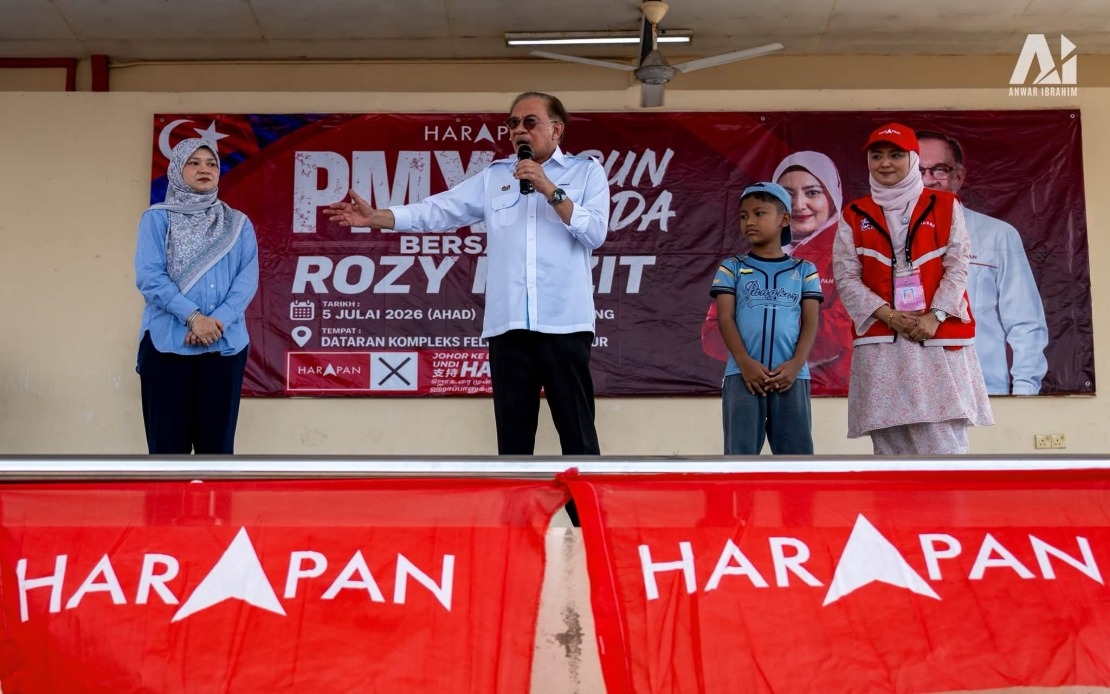
Prime Minister Datuk Seri Anwar Ibrahim has recounted a moving encounter with nine-year-old Muhammad Afif Ikhwan, describing how the youngster's determination to meet him left a lasting impression. The boy's journey to reach the Prime Minister unfolded at Felda Palong Timur in Segamat during a recent public programme, where the encounter, though fleeting, sparked Anwar to take further action by arranging a bicycle to be sent to the child.
The catalyst for this memorable meeting was an act of considerable dedication by the boy's grandmother, Rosimah Mohammad, 58, from Kampung Pudu, Segamat. Determined to help her grandson fulfil what might seem to outsiders like a simple childhood wish, she navigated her motorcycle along the plantation tracks cutting through the oil palm estates. This journey reflects the lengths to which extended family members in rural Malaysia often go to provide meaningful experiences for their children, particularly encounters with national leaders they admire.
Anwar's account of the moment itself emphasises the spontaneity and human connection at play. During the programme, Muhammad Afif managed to extend his arm through the crowd to shake hands with the Prime Minister before being invited onto the stage. For a nine-year-old in a rural setting, such a direct interaction with the nation's leader represents a profound milestone, one that Rosimah clearly recognised as worth the effort to facilitate.
In his Facebook reflection, the Prime Minister articulated why this seemingly small episode resonated so deeply with him. He acknowledged that what adults might dismiss as an insignificant gesture—a brief handshake—carried enormous weight for the boy and his family. The contrast between the grandeur of his position and the simplicity of the child's wish appears to have prompted Anwar to contemplate the importance of remaining emotionally connected to ordinary citizens, particularly those in less urbanised regions.
The Prime Minister's subsequent decision to send a bicycle to Muhammad Afif demonstrates a willingness to translate emotional recognition into tangible support. Rather than allowing the encounter to remain merely symbolic, Anwar ensured that the memory would be reinforced by a practical gift. For a child in a rural plantation community, a new bicycle represents not just a toy but a tool for mobility, independence, and access to wider opportunities.
Anwar's broader commentary on this exchange touches on the tension between the demands of high office and the human obligation to maintain compassion. Overseeing a nation entails navigating complex policy challenges, economic pressures, and institutional complexities. Yet his reflection suggests a conviction that leadership, no matter how demanding, cannot justify emotional disconnection from the people being served. This philosophy aligns with a leadership style that emphasises accessibility and personal connection, particularly with constituencies that might otherwise feel distant from corridors of power.
The story also illuminates the persistent gulf between urban and rural Malaysia. That a grandmother felt compelled to take her grandson on a motorcycle journey through plantation terrain to facilitate a brief meeting with the Prime Minister speaks to how geographically dispersed the nation remains, and how limited access to organised public engagement opportunities can be in peripheral communities. Anwar's response, while generous, implicitly highlights the infrastructure gap that shapes childhood experiences across different parts of the country.
For Muhammad Afif, the ramifications of this encounter extend beyond the novelty of meeting the Prime Minister. Anwar explicitly expressed hope that the experience would motivate the boy to apply himself academically and eventually contribute positively to his family, community, and nation. This reflects an understanding that such encounters can serve as turning points in a child's trajectory, providing inspiration and confidence that might otherwise prove elusive in a village setting.
The episode also carries implications for how political leaders navigate their public image and community engagement. In an era of increasingly mediated politics and managed public appearances, Anwar's choice to highlight this genuine, unscripted moment—and to follow up with a tangible gesture—stands out. It suggests a leadership approach that values authenticity and responsiveness over carefully controlled narratives, at least in this instance.
Rosimah Mohammad's role in this narrative deserves particular recognition, as she embodied the qualities of intergenerational care and sacrifice that remain central to Malaysian family values, especially in rural contexts. Her decision to invest time and energy into facilitating her grandson's wish, without apparent expectation of reward or recognition, represents a form of informal social capital that undergirds many communities beyond the reach of formal institutions.
The bicycle gift, while symbolic, also carries practical significance for a child whose grandmother relies on a motorcycle for transportation. It represents enhanced mobility for Muhammad Afif himself, enabling him to access school, friends, and opportunities within his locality more independently. For a nine-year-old in a plantation community, such independence can be transformative.
As Malaysia grapples with persistent developmental inequalities and the need to ensure no region or demographic feels marginalised by political attention, stories like Muhammad Afif's serve as reminders of the power of direct human connection. Whether such individual gestures can be scaled into systemic solutions addressing rural disadvantage remains an open question, but they demonstrate that the nation's leadership retains the capacity to be moved by the aspirations of its most vulnerable citizens.

