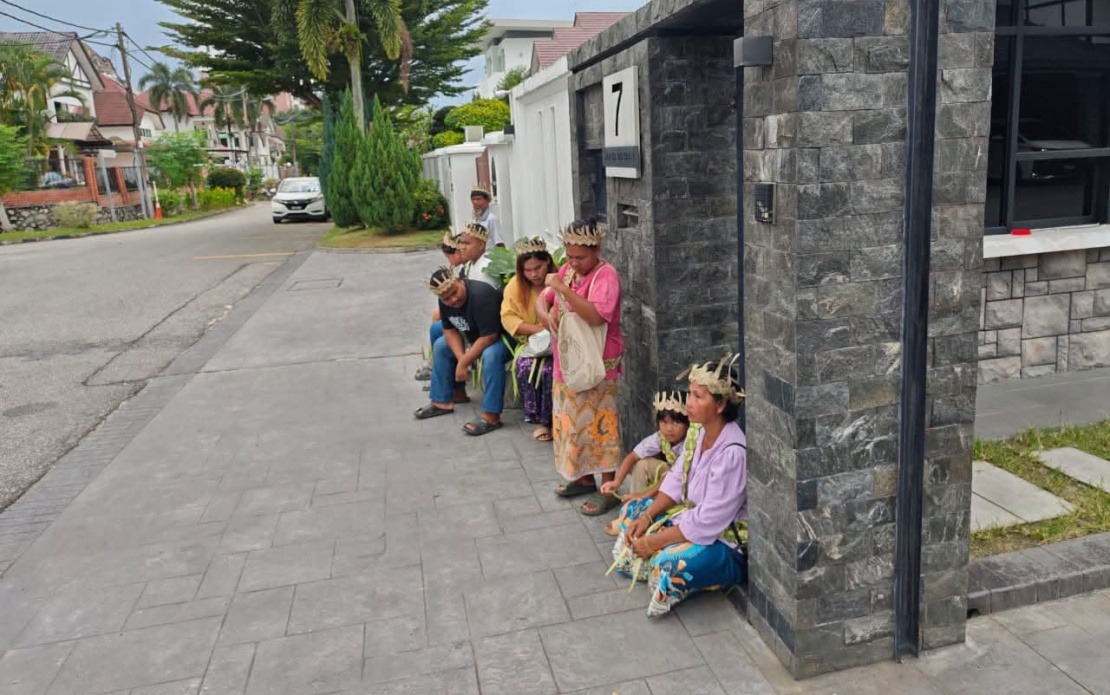
Prime Minister Datuk Seri Anwar Ibrahim has committed to bringing the land grievances of the Orang Asli community in Kampung Sungai Cot, Maran, Pahang to the attention of the state government, according to a statement released on July 17. The undertaking comes after Anwar received a delegation of community representatives at his residence, during which he engaged directly with their concerns about territorial claims and the recent detention of three villagers.
The Kampung Sungai Cot dispute represents one of several longstanding land issues affecting indigenous communities across Malaysia, particularly in Pahang where competing claims over traditional territories have persisted for years. Orang Asli settlements frequently find themselves at the intersection of state land policies, development interests, and historical land rights that remain inadequately documented or legally recognised. The involvement of the Prime Minister's office signals a willingness to escalate the matter beyond routine administrative channels, though the specific details of the land claim remain undisclosed.
During his engagement with the representatives, Anwar acknowledged the detention of three community members, noting their subsequent release by police. The circumstances surrounding their arrest and the charges, if any, were laid against them remain unclear. Such detentions often arise from land occupation disputes or breaches of state regulations, though community advocates argue that enforcement actions can disproportionately affect indigenous groups asserting historical land rights. The apparent swift resolution reflects either procedural resolution or political intervention to de-escalate tensions.
Anwar's public handling of the issue emphasises the need for balanced resolution that respects legal frameworks while addressing indigenous grievances. His statement cautioned all parties against exploiting the situation for political advantage, implying concern that the dispute could become instrumentalised by various interest groups. This measured approach reflects the complexity of indigenous land claims in Malaysia, where substantiation often requires historical documentation that may not exist in formal government records, creating barriers to legal recognition of traditional tenure systems.
The Orang Asli population across Malaysia faces persistent challenges in securing land rights, with studies indicating that a significant proportion of indigenous settlements lack formal legal title to their territories. Federal and state policies have historically prioritised development and resource extraction over indigenous land claims, though recent administrations have acknowledged the need for greater consultation and protection of Orang Asli interests. The commitment to raise Kampung Sungai Cot's case at state level potentially opens dialogue on broader indigenous land governance.
Pahang, as a state with substantial Orang Asli populations and significant forest resources, has been a focal point for both indigenous rights advocacy and resource development projects. The state government's receptiveness to federal intervention on land matters may depend on whether the disputed land holds development potential or conflicts with existing state development plans. Coordination between federal and state administrations on indigenous affairs remains inconsistent, with some states more responsive to indigenous rights concerns than others.
The reference to allowing solutions that are fair, prudent, and lawful suggests the Prime Minister's recognition that Orang Asli land disputes require approaches that move beyond adversarial legal processes. Procedural justice, community consultation, and recognition of customary land use practices represent emerging principles in Malaysian indigenous affairs, though their implementation remains uneven. Whether Pahang authorities will embrace such approaches in this instance remains to be seen.
For the broader Orang Asli community, Anwar's intervention carries both symbolic and practical significance. Symbolic recognition from the highest political office can elevate awareness of indigenous concerns and potentially influence bureaucratic responsiveness. Practically, however, land disputes require concrete legal mechanisms—such as formal recognition of customary tenure or compensation arrangements—that depend on sustained political commitment and legislative reform. The outcome of this specific case may signal the government's willingness to pursue substantive protections for indigenous land rights or remain limited to diplomatic gestures.
The absence of further detail on the Prime Minister's timeline for engaging Pahang authorities or specific proposals for resolution leaves the matter's trajectory uncertain. Indigenous rights advocates will likely monitor whether federal intervention translates into meaningful progress or becomes absorbed into administrative processes that delay substantive outcomes. The precedent set by this case could influence how similar disputes involving other Orang Asli communities are approached across Malaysia, making its handling consequential for indigenous affairs policy more broadly.

