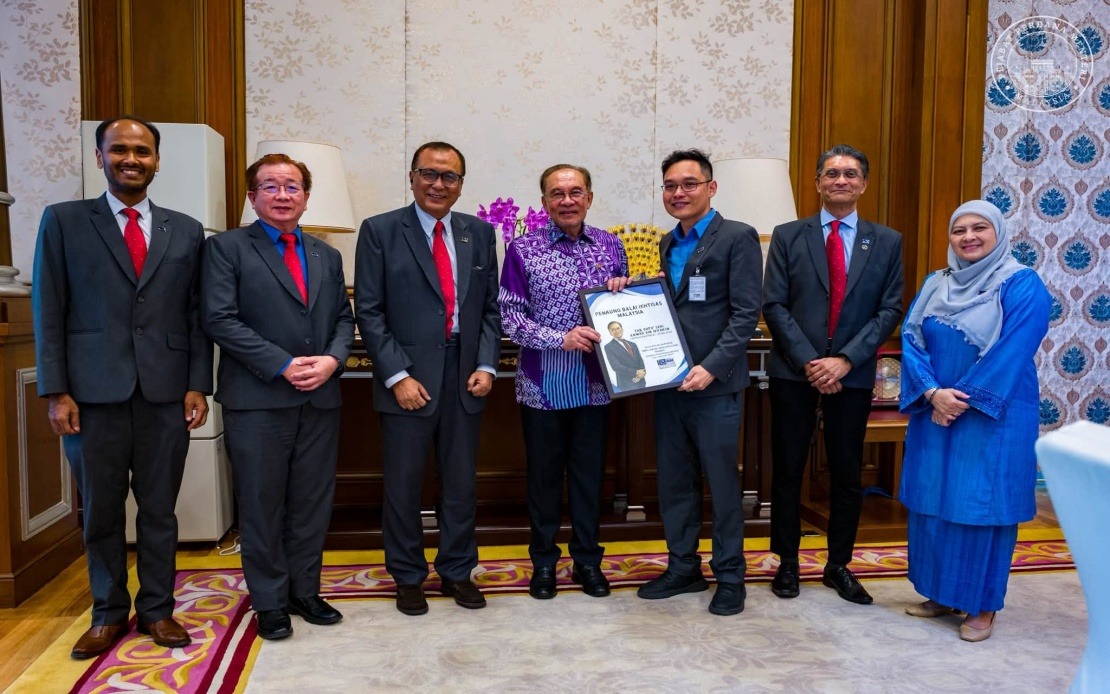
Prime Minister Datuk Seri Anwar Ibrahim has placed artificial intelligence capability and professional talent development at the centre of Malaysia's economic strategy, signalling the government's determination to harness human capital alongside technological advancement. The emphasis emerged during a meeting with Balai Ikhtisas Malaysia (BIM), known internationally as the Malaysian Professional Centre, where both parties explored pathways to strengthen the nation's competitive positioning in an increasingly digital and knowledge-driven region.
The visit by a BIM delegation headed by its president, Prof ChM Dr Juan Joon Ching, underscores growing recognition within Malaysia's professional community that the country must act decisively to prepare its workforce for the demands of artificial intelligence integration. Rather than viewing technology as a threat to employment, the government appears committed to framing AI adoption as an opportunity to elevate professional standards and create new avenues for innovation and growth across sectors.
Anwar's framing of professionals as strategic partners reveals a deliberate shift in policy thinking. By positioning the private professional sector and government as collaborative stakeholders rather than separate entities, the administration signals its intent to leverage expertise beyond the civil service. This approach acknowledges that Malaysia's competitiveness increasingly depends on the quality and adaptability of its private professional workforce, whether in law, engineering, accounting, health, or emerging technology fields.
The MADANI agenda, which anchors the current government's development philosophy around human-centred advancement and wellbeing, serves as the broader context for these discussions. Within this framework, talent development becomes more than a narrow economic concern; it reflects a commitment to ensuring that professional opportunities benefit society broadly rather than concentrating advantage among a narrow elite. This messaging matters for Malaysian readers concerned with social mobility and equitable access to high-value career pathways.
Artificial intelligence readiness for professionals carries particular weight in Southeast Asia, where competition for digital talent and technological leadership intensifies across the region. Singapore, Vietnam, and Thailand have all announced significant AI investment strategies. Malaysia's focus on ensuring its professional community—accountants, lawyers, engineers, management consultants—understands and can operate effectively within AI-augmented environments positions the country to retain and attract talent in these critical sectors. The regional dimension cannot be understated; allowing professional capability to stagnate relative to neighbouring economies risks brain drain and reduced foreign investment in knowledge-intensive industries.
The government's emphasis on strengthening ties between policymakers and the professional community suggests recognition that top-down directives alone prove insufficient for economic transformation. Professionals working in diverse fields possess ground-level insights into skills gaps, regulatory obstacles, and market opportunities that government planners may not fully appreciate. Regular dialogue creates space for these perspectives to inform policy evolution, potentially making interventions more effective and better calibrated to real-world conditions.
Anwar's acceptance of an invitation to Hari Ikhtisas Malaysia—a dedicated observance honouring the professional community's contributions to national development—signals symbolic commitment to elevating the status and role of private professionals in national discourse. Such ceremonial recognition, while appearing ceremonial, carries substantive meaning by designating professionals as acknowledged partners in the national project rather than peripheral actors or potential obstacles to be managed.
The emphasis on developing talent with "integrity, competitiveness and vision" articulates particular values the administration wishes to embed in Malaysia's professional culture. Integrity acknowledges growing public concern about ethical standards in business and professional practice. Competitiveness reflects the reality that Malaysian professionals must meet world-class standards to thrive globally. Vision suggests the government seeks not merely technically skilled practitioners but leaders capable of imagining and building new sectors and opportunities.
For Malaysian organisations and professional institutions, this meeting signals government receptiveness to coordinated efforts around skills development and AI integration. Industry bodies may find this climate conducive to proposing collaborative training initiatives, regulatory modernisation, or frameworks to help members navigate technological transition. The accessibility shown by the Prime Minister during this engagement suggests pathways exist for professional associations to influence policy formation around education, licensing, and practice standards.
The broader implication for Malaysia's economic strategy centres on whether the country can develop a distinctly competitive advantage in having professional workforces that combine technical excellence, ethical rigour, and cultural sensitivity. As artificial intelligence commodifies certain technical skills and shifts labour demand toward roles requiring human judgement, emotional intelligence, and ethical reasoning, Malaysia's ability to cultivate these higher-order capabilities becomes economically decisive. This meeting suggests the government recognises this challenge and seeks to mobilise professional sectors in response.
Moving forward, translation of these expressed commitments into concrete policy and funding mechanisms will determine whether this engagement represents genuine strategic reorientation or largely rhetorical acknowledgement. Observers should watch for announcements regarding professional development funding, AI literacy programmes, regulatory reforms enabling technology adoption, and formal channels through which BIM and comparable bodies can systematically advise government on professional sector needs and opportunities.

