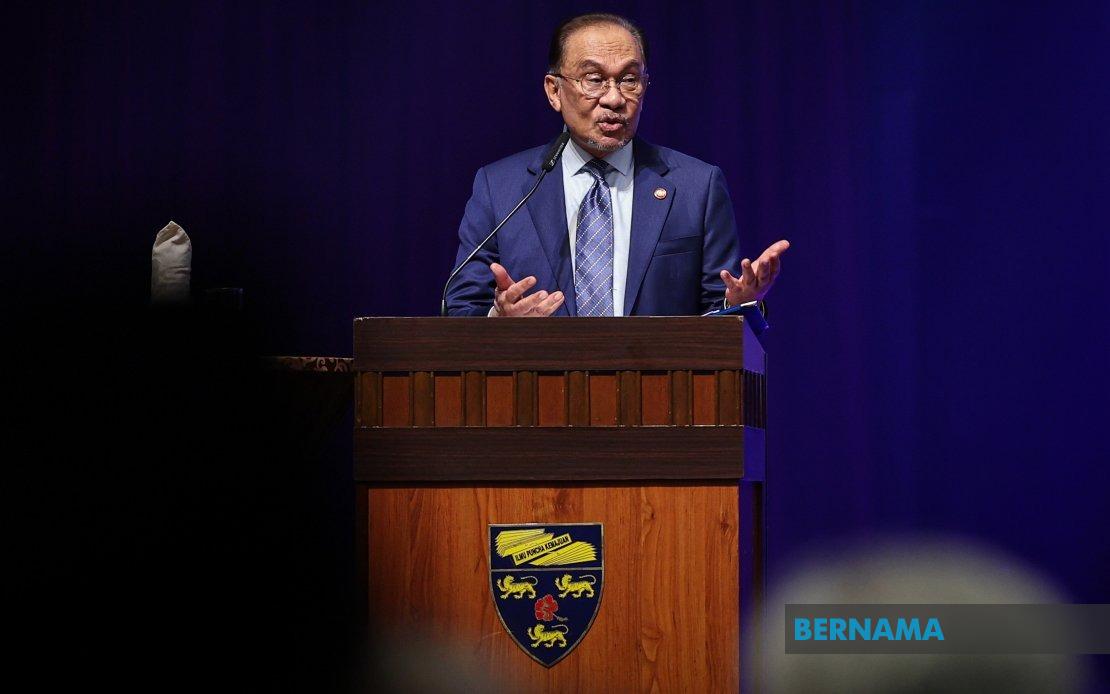
Prime Minister Datuk Seri Anwar Ibrahim has reached out to a gravedigger in Kuala Terengganu who has been struggling with mouth cancer for the past three years, providing direct financial support to help defray mounting medical expenses. Rosli Abdullah, 52, received a cash donation of RM2,000 on July 9 at the Flat Batas Baru surau, presented by Azhar Abd Hamid, deputy director of the Terengganu Federal Development Department and representative of the Implementation Coordination Unit (ICU) of the Prime Minister's Department (JPM).
The contribution was specifically intended to ease the financial strain on Rosli as he faces an upcoming surgical procedure. Azhar indicated that the donation represented the Prime Minister's personal commitment to assisting vulnerable citizens facing severe health crises. Beyond the immediate cash relief, officials discovered that Rosli had not been enrolled in the e-Kasih scheme, Malaysia's digital social welfare assistance programme designed to reach low-income households and individuals facing hardship. Upon identifying that his circumstances met the programme's eligibility criteria, the authorities committed to registering him immediately, which would unlock additional government support mechanisms to sustain him through his medical journey.
Rosli's health situation has deteriorated markedly over recent months, according to Mohd Radzali Mohamad, deputy chairman of the Flat Batas Baru surau where the gravedigger has resided for over three decades. The swelling in his mouth and right cheek has rendered him unable to speak for the past month, a devastating development that has isolated him further from human interaction. More critically, the condition has prevented him from consuming solid food for two weeks; he now survives entirely on liquids delivered through a feeding tube, a stark indication of how advanced his condition has become.
The medical trajectory of Rosli's illness reveals a troubling pattern of recurrence. He underwent surgical intervention twice previously, yet the cancer has returned with renewed aggression, necessitating further hospitalisation and surgical treatment. The Sultanah Nur Zahirah Hospital in Terengganu, recognising the complexity of his case and the inadequacy of its current facilities to provide definitive care, has referred him to the Universiti Sains Malaysia Hospital in Kubang Kerian, Kelantan, a tertiary medical centre equipped for advanced oncological procedures. This referral suggests that Rosli faces a long treatment process involving multiple specialist interventions across different healthcare facilities.
Rosli's personal circumstances amplify the gravity of his predicament. He lives alone and has never married, meaning he lacks the family support networks that typically provide both emotional comfort and practical assistance during prolonged illness. Before his health collapsed, he earned a modest living by digging graves and performing maintenance work around the surau, a position that offered dignity and self-sufficiency despite its humility. His deteriorating physical condition has now rendered him incapable of performing these duties, severing his only income source and leaving him entirely dependent on the compassion and charity of the surau management for basic survival.
The surau community, recognising Rosli's vulnerability, has mobilised a donation fund specifically earmarked for his medical and surgical expenses. However, despite the goodwill of the institution and its patrons, the funds accumulated so far have proven insufficient to meet the mounting costs of his treatment regimen. This funding gap underscores a persistent challenge in Malaysia's social safety net: even well-intentioned community efforts often struggle to bridge the substantial financial requirements of serious medical conditions, particularly for individuals without family connections or stable employment.
The intervention by the Prime Minister's office through the Implementation Coordination Unit represents a deliberate pivot toward identifying and assisting vulnerable citizens who fall through conventional support structures. The fact that a 52-year-old man earning his living as a gravedigger had not been previously enrolled in e-Kasih, despite clearly meeting poverty and hardship criteria, suggests systemic gaps in how social assistance programmes identify beneficiaries. The subsequent registration process signals an attempt to improve the reach and responsiveness of government welfare mechanisms to capture individuals in desperate straits who may lack the knowledge, documentation, or social connections to navigate bureaucratic pathways independently.
For Malaysian policymakers and social welfare administrators, Rosli's case illustrates broader questions about the adequacy and accessibility of support systems for citizens facing terminal illnesses without family safety nets. While the PM's personal intervention provides immediate relief and symbolic acknowledgment of his plight, it also highlights that sporadic acts of philanthropy from high-level officials cannot substitute for robust, universal social safety mechanisms. The gap between the moment of government assistance and sustainable, comprehensive support remains a challenge in Malaysia's welfare architecture.
The situation also reflects the difficult realities facing low-wage workers in Malaysia who lack formal employment structures, health insurance coverage, or accumulated savings to manage catastrophic health events. A gravedigger's income, while providing daily sustenance, offers no buffer against the financial avalanche of cancer treatment, hospitalisation, and surgical procedures that can easily exceed tens of thousands of ringgit. The absence of comprehensive social health insurance or catastrophic illness coverage for non-formal sector workers leaves individuals like Rosli vulnerable to financial devastation when serious illness strikes.
Mohd Radzali's characterisation of Rosli as wholly reliant on the surau management's charity paints a portrait of profound isolation and vulnerability. For someone who has called the Flat Batas Baru surau home for over thirty years, the institution represents not merely a place of worship but a complete social ecosystem—his residence, his community, his source of employment, and now his lifeline during crisis. This interdependence, while demonstrating the surau's vital role as a social institution, also highlights how precarious such arrangements can be when medical emergencies arise.
The months ahead will determine whether the combination of the Prime Minister's donation, the newly activated e-Kasih assistance, ongoing surau fundraising, and government hospital referrals can collectively sustain Rosli through his surgical treatment and recovery. His case serves as a reminder that beneath Malaysia's development statistics and GDP growth figures exist citizens facing absolute destitution when illness strikes, and that building more effective, anticipatory social safety nets remains an urgent imperative for policymakers seeking to ensure no vulnerable Malaysian is left behind.

