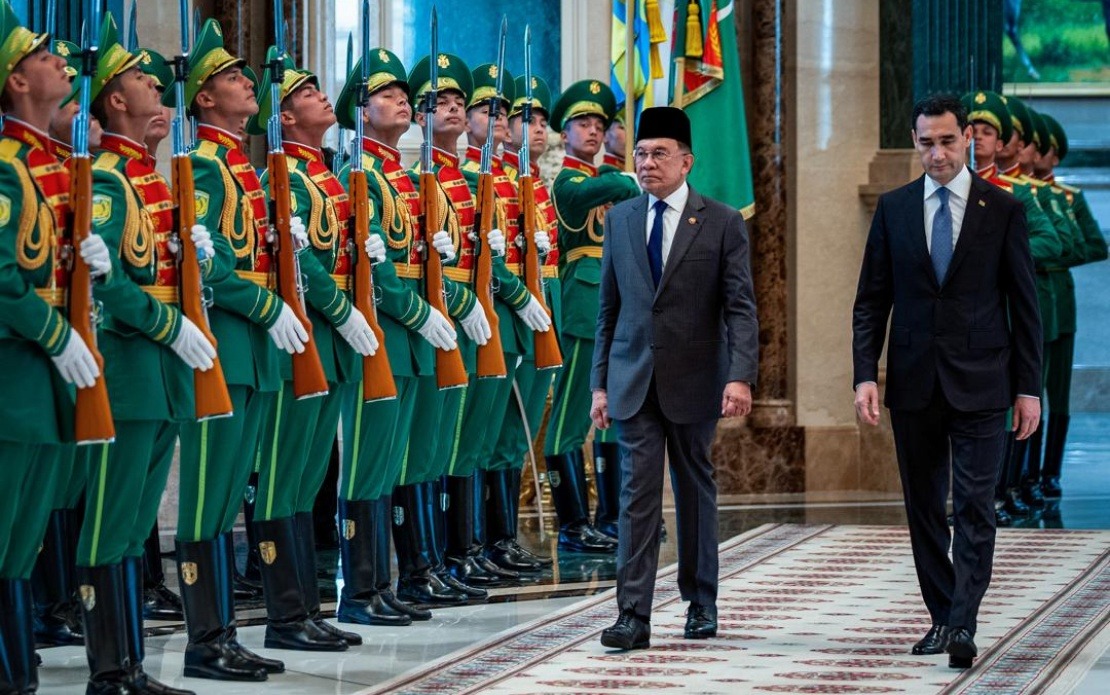
Prime Minister Datuk Seri Anwar Ibrahim has been accorded a formal state reception at the Presidential Palace in Ashgabat, underscoring the significance Turkmenistan places on deepening ties with Malaysia. The ceremonial welcome, featuring a full guard of honour and the playing of both nations' national anthems, marked a symbolic moment in bilateral relations as Anwar undertakes his maiden official visit to the Central Asian republic since assuming office as Malaysia's 10th Prime Minister in November 2022.
The visit, which commenced on June 18 and spans two days, carries particular weight given Malaysia's strategic interests in Central Asia. Turkmenistan, a major energy-producing nation with substantial oil and gas reserves, represents an important economic partner for the region. Anwar's presence in Ashgabat demonstrates Malaysia's commitment to broadening its diplomatic and commercial footprint beyond traditional Southeast Asian and Middle Eastern partners, positioning the nation as a player with global ambitions and diverse partnership portfolios.
Upon his arrival at the presidential residence, Anwar was received by Turkmenistan President Serdar Berdimuhamedov, setting the tone for high-level engagement. The ceremonial protocols observed—including the formal introduction of Malaysian delegation members to the Turkmenistan cabinet ministers and senior government officials—reflect the protocol-conscious nature of state visits and signal mutual respect between the leadership. Such formal courtesies, while ceremonial in nature, carry diplomatic significance in establishing the foundation for substantive discussions.
Following the initial reception formalities, Anwar and President Berdimuhamedov engaged in what diplomatic terminology designates as a "four-eyed meeting"—a closed-door discussion between the two leaders without broader delegations present. This private session typically allows leaders to speak candidly about strategic priorities and sensitive matters before engaging in the more structured bilateral talks that followed. The format indicates both sides valued direct, unrestricted dialogue on issues of mutual concern.
The subsequent bilateral meeting brought together broader delegations from both nations to address matters of shared interest and explore avenues for enhanced cooperation. While specific agenda items have not been detailed in immediate reports, such high-level encounters typically encompass trade relations, investment opportunities, cultural exchanges, and diplomatic coordination on regional and international issues. For Malaysia, engagement with Central Asian nations carries implications for its broader foreign policy architecture, particularly as it seeks to diversify trading partners and reduce dependence on traditional economic relationships.
Turkmenistan's geopolitical position makes it strategically valuable for Malaysia's outreach initiatives. Located at the intersection of Asia and Europe, the nation serves as a bridge connecting markets and serves as a crucial transit route for energy supplies destined for multiple regions. Malaysia's interest in strengthening ties reflects recognition of Turkmenistan's importance in the evolving global energy landscape and its potential as a source of diversified economic partnerships during a period of significant geopolitical realignment.
For Southeast Asian observers, Anwar's Central Asian foray represents an important signal about Malaysia's diplomatic orientation under his premiership. Having assumed office amid domestic political challenges, the prime minister has prioritised international engagement as a means of projecting stability and establishing Malaysia's credentials as a mature, globally-engaged nation. Such visits demonstrate his administration's capacity to manage multiple diplomatic channels simultaneously while addressing pressing domestic priorities.
The timing of this first official visit to Turkmenistan is noteworthy. More than seven months into Anwar's tenure as prime minister, the decision to undertake a Central Asian mission suggests careful calibration of Malaysia's diplomatic calendar. The visit reflects both the invitation extended by Turkmenistan's leadership and Malaysia's strategic assessment of regional priorities. It also demonstrates how Malaysia continues to maintain diplomatic engagement across diverse geographies despite ongoing domestic political considerations and economic pressures.
Beyond the ceremonial aspects, the substantive outcomes of Anwar's discussions with President Berdimuhamedov will likely shape Malaysia's engagement strategy in Central Asia for years ahead. Potential areas of cooperation could encompass trade and investment frameworks, educational and cultural exchanges, and coordination on multilateral platforms where both nations maintain presence. For Malaysian business interests, the visit may open pathways for companies seeking to establish operations or partnerships within Turkmenistan's energy sector and related industries.
The visit also carries significance for Malaysia's positioning within broader Asian geopolitical dynamics. As China and Russia maintain substantial interests in Central Asia, Malaysia's independent engagement with nations like Turkmenistan demonstrates its commitment to a non-aligned foreign policy approach. This balancing act—maintaining relations with various global powers while avoiding excessive alignment with any single bloc—has long characterised Malaysian diplomacy and appears to continue under Anwar's leadership.
Regional analysts will monitor whether this inaugural visit catalyses more frequent high-level exchanges between Kuala Lumpur and Ashgabat. Increased diplomatic engagement often correlates with expanded economic and people-to-people interactions, potentially benefiting Malaysian exporters, investors, and professionals seeking opportunities in Central Asia. Similarly, enhanced Malaysian presence in the region could attract Turkmen interest in Southeast Asian markets and investment opportunities.

