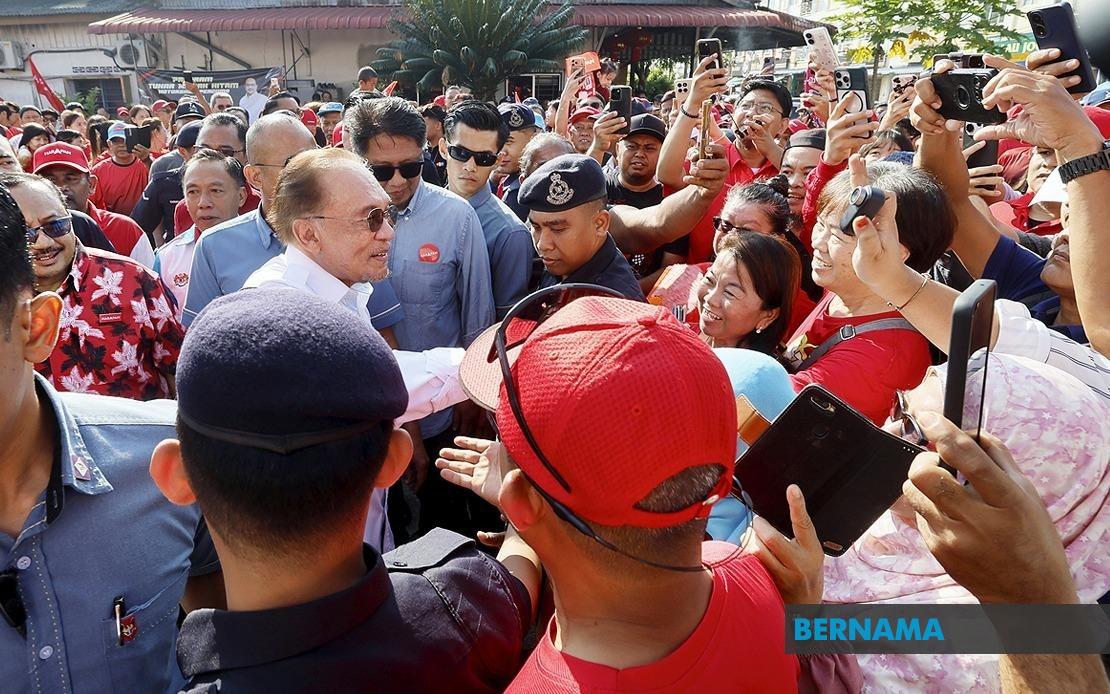
Prime Minister Datuk Seri Anwar Ibrahim set aside time during a campaign visit to Batu Pahat on Tuesday to reconnect with Abdul Razak Pelangga, 86, and his wife Jamilah Samsudin, 64, whose determination to meet the nation's leader captivated social media users across Malaysia. The couple became the subject of widespread attention after Abdul Razak pedalled his trishaw for nearly a kilometre during an unscheduled breakfast stop in Senggarang the previous Sunday, driven by his wife's desire to pay respects to the Prime Minister. Their reunion took place against the backdrop of the "Yok! Meriahkan Johor! Undi Harapan" programme, a Pakatan Harapan-organised event designed to energise voters ahead of critical state elections.
During their encounter, Anwar engaged the couple with good humour, exchanging light-hearted banter with Abdul Razak about his impressive physical stamina and the feat of propelling a trishaw at his advanced age. The interaction exemplified the informal and personable approach that has characterised much of Anwar's public engagements, particularly during campaigning. Beyond the pleasantries, the Prime Minister took the opportunity to express genuine appreciation for the couple's backing, acknowledging their loyalty as constituents and supporters of the coalition's broader political agenda in the state.
The event underscored the emotional resonance that grassroots political engagement can generate in Malaysian society. The original incident—an elderly man manually propelling a three-wheeled vehicle substantial distances to greet a national leader—struck a chord with many Malaysians because it represented an authentic expression of civic participation untainted by cynicism or political calculation. In an era marked by declining faith in institutions and widespread scepticism about political promises, such gestures of genuine civic involvement retain considerable symbolic value and demonstrate the continuing relevance of personal connections in political life.
Packatan Harapan's decision to feature the couple prominently during its campaign machinery reflects a broader strategy of leveraging human-interest narratives to mobilise voter enthusiasm. The presence of Datuk Fahmi Fadzil, the Minister of Communications and PH Communications director, at the event suggested that the coalition recognised the promotional potential of the story. By creating photographic opportunities and media moments around the couple's reunion with Anwar, the campaign effectively amplified a positive message about accessibility and responsiveness to ordinary citizens' concerns and aspirations.
The Johor state election context gives additional weight to this campaign event. As one of Malaysia's most economically significant and politically influential states, Johor has historically served as a bellwether for national political trends. The coalition's visible courtship of voters through such personal encounters reflects the competitive intensity of the contest, where even marginal shifts in voter sentiment could determine seat allocations and government formation. The presence of Pakatan Harapan candidates standing for Senggarang, Semerah, and Penggaram constituencies further illustrated how local community engagement feeds into broader electoral calculations across multiple constituencies.
From a regional perspective, the episode reveals something about political communication styles across Southeast Asia. Unlike more confrontational or transactional approaches to voter engagement, the Malaysian example demonstrates a softer, relationship-oriented model that emphasises reciprocal respect and genuine human connection. For other nations in the region grappling with voter disengagement and democratic fatigue, such moments offer a reminder that authenticity and accessibility—even when carefully curated by political communications teams—retain considerable persuasive power with electorates.
The couple's story also touches on demographic considerations relevant to Malaysian politics. As the nation's population ages and pensioners represent an increasingly substantial voting bloc, political parties must develop strategies to address the concerns and preferences of older citizens. Abdul Razak and Jamilah's prominence in campaign messaging signals an implicit recognition that senior voters merit visibility and representation in political discourse. Their experience—combining physical activity, spousal support, and civic determination—offers a counternarrative to assumptions about elderly citizens being passive or politically disengaged.
The Saturday election referred to in the original report marked a crucial moment for the Johor electorate and broader Malaysian politics. With early voting having concluded by the time of Anwar's reunion with the couple, the campaign's final push aimed to consolidate support and mobilise undecided voters. Events like the Senggarang programme served as focal points for media coverage and social conversation, extending the campaign's reach beyond formal political structures into everyday public discourse through viral moments and sympathetic human-interest reporting.
For observers tracking Malaysian political dynamics, the incident exemplifies how modern campaigns blend traditional door-to-door grassroots engagement with contemporary digital and media strategies. The couple's initial encounter became newsworthy partly because it was captured and circulated through social media, creating organic media interest that campaign organisers subsequently amplified through scheduled public appearances. This convergence of spontaneous citizen activism and deliberate political communication strategy represents the contemporary reality of electoral competition in Malaysia, where campaigns must navigate both traditional relationship-building and the unpredictable dynamics of viral online content.

