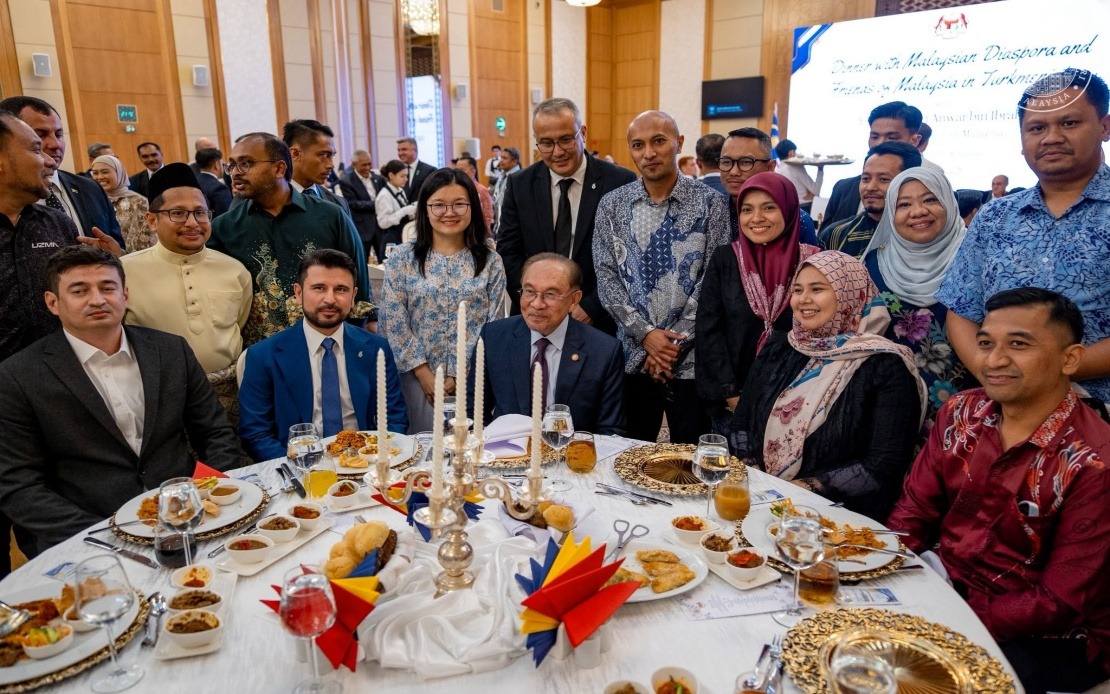
Prime Minister Datuk Seri Anwar Ibrahim has made a point of engaging directly with the Malaysian diaspora community during his official visit to Turkmenistan, underscoring Putrajaya's renewed focus on maintaining meaningful connections with citizens living abroad. The interaction took place in Ashgabat as part of a two-day state visit to the Central Asian nation, marking Anwar's inaugural official engagement with Turkmenistan at the highest level.
The encounter with overseas Malaysians reflects a broader strategic approach by the MADANI Government to recognise the diaspora not merely as expatriates pursuing career opportunities, but as vital stakeholders in advancing national interests beyond Malaysia's borders. In remarks shared publicly, Anwar emphasised that despite geographical distance, the sense of community and shared national pride among Malaysians in Ashgabat remained vibrant and emotionally resonant, creating an atmosphere reminiscent of gatherings in Kuala Lumpur itself.
Anwar characterised members of the Malaysian diaspora as informal ambassadors for the country, individuals who actively contribute to shaping Malaysia's international reputation through their professional endeavours and personal conduct. This framing elevates the status of overseas Malaysians from temporary migrants to strategic assets in Malaysia's soft power architecture. The Prime Minister's public acknowledgement of their role signals that the government views diaspora engagement as integral to its diplomatic and economic objectives across multiple regions.
The visit itself was reciprocal in nature, following Turkmenistan President Serdar Berdimuhamedov's official trip to Malaysia in December 2024. This exchange represents the consolidation of bilateral relations between the two nations and demonstrates Malaysia's commitment to building substantive partnerships beyond traditional trade-focused interactions. Central Asia has historically occupied a peripheral position in Malaysian foreign policy calculations, making Anwar's personal engagement a notable shift toward geographic diversification.
According to Anwar, the Turkmenistan visit encompasses objectives that extend well beyond conventional commercial considerations. The Prime Minister articulated a vision encompassing expanded diplomatic friendship, deeper mutual understanding, and collaborative opportunities across multiple domains that could yield mutual benefits. This multifaceted approach reflects recognition that 21st-century state relations require foundations built on cultural, educational, and people-to-people exchanges alongside economic transactions.
For the Malaysian diaspora in Ashgabat and across Central Asia more broadly, the Prime Minister's visit carries practical significance. Anwar's exhortation for overseas Malaysians to maintain active connection with developments at home demonstrates an understanding that diaspora communities risk progressive disconnection from national affairs when engagement from the homeland becomes sporadic or purely administrative. By initiating direct dialogue, the Prime Minister sends a signal that their contributions and concerns warrant high-level attention.
The timing and location of this diaspora engagement also carry broader implications for Malaysia's positioning in Central Asia. The region presents emerging opportunities for Malaysian businesses, particularly in energy, telecommunications, and infrastructure sectors. A strengthened relationship with Malaysian communities already established in Turkmenistan and neighbouring countries could facilitate smoother business operations, better market intelligence, and enhanced cultural diplomacy. These informal networks often prove invaluable in navigating unfamiliar regulatory environments and building trust with local counterparts.
Anwar's emphasis on keeping the diaspora informed about Malaysia's developmental trajectory speaks to a recognition that overseas citizens increasingly influence perceptions of their home country within their adopted communities. As Malaysia pursues ambitious economic and social transformation goals under the MADANI framework, having a well-informed diaspora capable of articulating these narratives to international audiences multiplies the government's communication effectiveness. The diaspora becomes a multiplier force for explaining Malaysia's vision and attracting investment and talent.
The visit also highlights Malaysia's broader diplomatic strategy of deepening engagement with non-traditional partners in Central Asia, a region increasingly important to global geopolitics and economic corridors. By nurturing connections with Malaysian communities in these territories, Malaysia positions itself as a responsible nation that values its citizens regardless of where they reside, while simultaneously building the human infrastructure necessary for sustained bilateral relations and commercial activities.
Moving forward, this engagement pattern suggests that the MADANI Government intends to institutionalise greater interaction between senior leadership and diaspora communities. Regular high-level visits, transparent communication about national policy directions, and recognition of diaspora contributions could strengthen emotional bonds and practical collaboration. For Malaysian readers, this approach underscores the government's understanding that national strength increasingly depends on mobilising the talents, networks, and resources of citizens distributed globally, transforming the diaspora from peripheral concern into central strategic asset.

