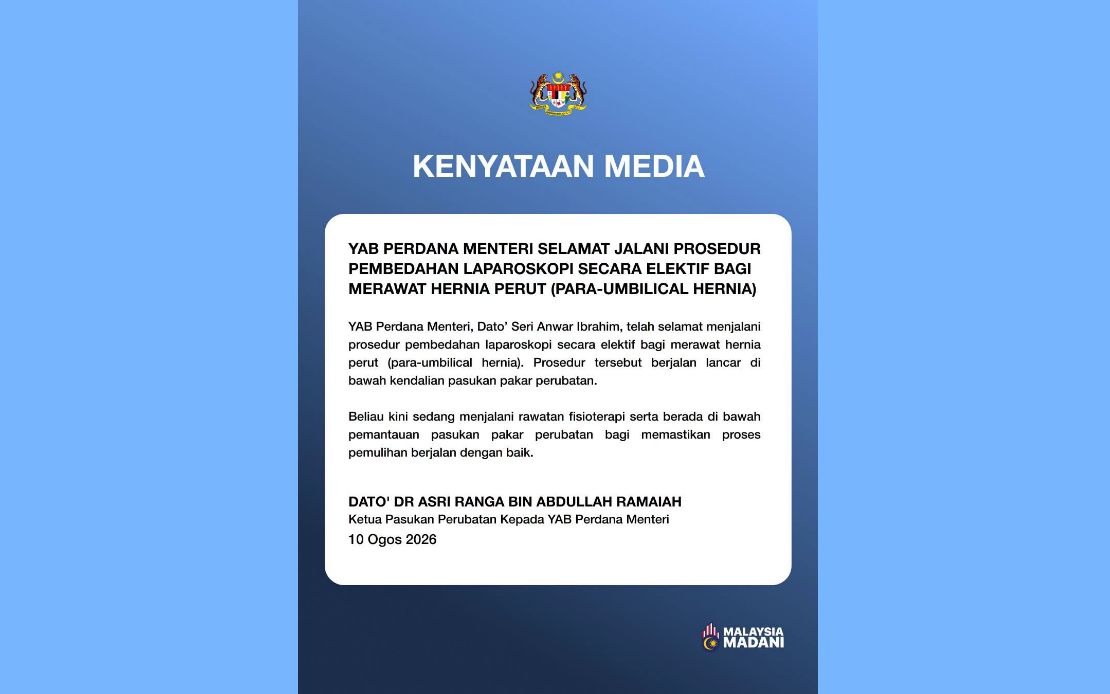
Prime Minister Datuk Seri Anwar Ibrahim has successfully completed an elective laparoscopic surgical procedure to address a para-umbilical hernia, according to an official statement from his medical team on August 10. The minimally invasive operation proceeded without complications, marking a planned intervention to treat the abdominal condition that had been identified during routine health assessments. The use of laparoscopic techniques, which involve small incisions and specialised instruments, reflects contemporary surgical practice for hernia repair and typically allows for faster recovery compared to traditional open surgery methods.
The surgical team, led by Datuk Dr Asri Ranga Abdullah Ramaiah, head of the Prime Minister's Medical Team, confirmed the operation's success and the patient's stable condition immediately following the procedure. The choice of elective timing and advanced surgical approach demonstrates a proactive approach to maintaining the Prime Minister's health and fitness for office. Such preventive surgical interventions, when planned and executed at optimal times, can prevent potential complications that might arise from leaving hernia conditions untreated, which could otherwise impact mobility or cause acute medical emergencies.
Following the procedure, Anwar has commenced a structured physiotherapy regimen designed to facilitate optimal healing and restore full functional capacity. The medical specialists overseeing his care have implemented comprehensive monitoring protocols to track his recovery trajectory. This post-operative care framework is essential for ensuring that muscular and tissue healing occurs appropriately, particularly in the abdominal region where movement and physical strain are integral to daily functioning.
The Prime Minister's senior press secretary Tunku Nashrul Abaidah indicated that a two-day observation period has been prescribed as part of standard post-operative protocol. During this time, Anwar will remain under the direct supervision of the specialist medical team to ensure no complications emerge and that vital parameters remain stable. This cautious approach aligns with best medical practices for abdominal surgery, even when minimally invasive techniques are employed, as it allows clinicians to intervene immediately should any unexpected issues develop.
The timing of this surgical intervention carries significance for Malaysia's governance continuity. Scheduling elective procedures during periods when the government machinery can function effectively under established protocols ensures minimal disruption to ministerial duties and national administration. Deputy leadership structures and established procedures would manage routine governmental operations during the Prime Minister's recovery period, maintaining administrative continuity without requiring any extraordinary measures or constitutional interventions.
For citizens and international observers, such transparency regarding the Prime Minister's health represents an important aspect of democratic governance. Public disclosure of medical procedures affecting senior state officials, when appropriately handled, reinforces institutional confidence and prevents the emergence of unfounded speculation or rumours that could undermine political stability. The official communications channel through established media outlets and government statements demonstrates institutional commitment to clear, factual health reporting.
The nation's medical community would likely view this successful outcome as reflective of Malaysia's healthcare infrastructure capabilities. That the Prime Minister's condition was diagnosed, scheduled for corrective treatment, and executed through advanced laparoscopic procedures underscores the availability of sophisticated surgical expertise and technology within the country's healthcare system. Such high-level medical interventions, when successful, demonstrate the standards of care accessible through Malaysian medical institutions.
From a regional perspective, the event carries subtle implications for ASEAN governance. Continuity of leadership and transparent health management strengthen confidence among neighbouring nations in Malaysia's institutional stability. Leaders across Southeast Asia, many managing similar pressures and health considerations while maintaining demanding executive roles, would note Malaysia's demonstrated capacity to manage such situations through established protocols and specialist medical oversight.
The public messaging from the Prime Minister's office, requesting prayers and well-wishes for his recovery, reflects the cultural and religious dimensions of Malaysian public life. Such appeals to collective goodwill, while acknowledging the spiritual dimensions valued across Malaysian society, also serve to engage citizens in the recovery process, fostering a sense of shared investment in the Prime Minister's well-being and return to full duties.
Expectations now centre on Anwar's recovery trajectory and timeline for resuming full executive responsibilities. The two-day observation period provides the medical team with concrete data regarding post-operative progress, allowing them to establish realistic timelines for the Prime Minister's gradual return to normal activities and eventually to the full demands of his office. Successful and uncomplicated abdominal hernia repairs using modern laparoscopic methods typically permit relatively swift return to light duties within days, with full physical capability restored within weeks.
The incident ultimately demonstrates how institutional medical protocols, professional surgical expertise, and transparent communication converge to manage the health challenges inevitably confronting senior political figures. In Malaysia's context, where the Prime Minister carries considerable executive responsibilities and represents the nation on regional and international stages, maintaining optimal health and demonstrating effective institutional management of medical challenges contributes significantly to both domestic governance and international standing.

